 Playa del Carmen
The story goes like this: Tulum is a barefoot village on a white beach, and Playa del Carmen is its loud, overbuilt neighbour up the highway. The photographs support it. If you are about to rent somewhere for six months, you should know that almost none of it describes where you would live.
Where the beach is
Tulum is three separate places that share a name. The town, Tulum Pueblo, had about 33,000 people at the last census, and it lines a highway inland, with taquerias, cheap rooms and no sea. The beach is a separate strip, a hotel zone running roughly ten kilometres south toward the Sian Ka'an reserve, and it is the part in the photographs. Few people can afford to live there, and its internet is the least dependable in the area. The third place is where most long-stay foreigners end up: Aldea Zama and La Veleta, newly built districts of condos and cranes cut out of the jungle, a ride from either of the others.
So the barefoot life in Tulum involves a scooter, a bicycle or a taxi, and then the question of how you get onto the sand. North of Avenida Cobá the shoreline up to the ruins lies inside Jaguar National Park, which opened with an entrance fee that caused protests. After complaints, the southern access was kept free, and in September 2025 fifteen hotels and beach clubs agreed to let the public through with no cover charge. Foreign residents with proof of a Tulum address can get into the park free as well. All beaches in Mexico are public by law, and Tulum's have needed a good deal of negotiation to make that true.
In Playa del Carmen, you walk to the end of your street.
Playa beyond Quinta Avenida
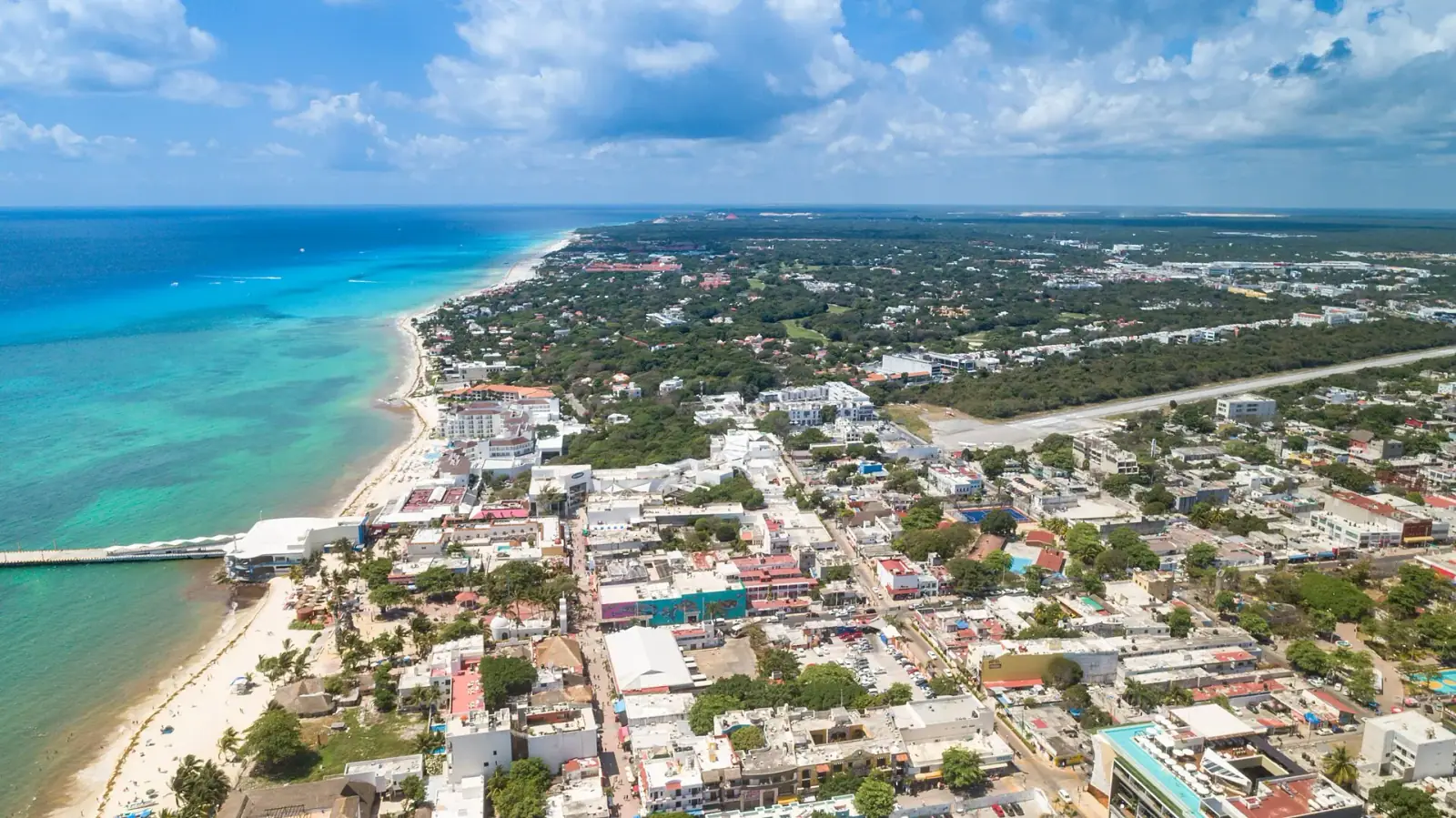
Quinta Avenida, the pedestrian strip of souvenir shops and cruise crowds, deserves its reputation. It is also one street in a city of around 300,000 people, roughly nine times the size of Tulum town, and most of that city does not look like it. West of the strip, around Calle 38 and CTM, you find coworking spaces, gyms and apartments with residential fibre. Ferries cross the channel to Cozumel, and so a dive before lunch is a normal thing to plan. Outages here are mostly storm events. In Tulum, power cuts and poor roads are part of ordinary life, because building ran ahead of everything underneath it.
The prices also undercut the myth. On our estimate a month in Playa comes to about $2,400 and Tulum about $2,800, so the "simple" place is the dearer one.
What the story gets right
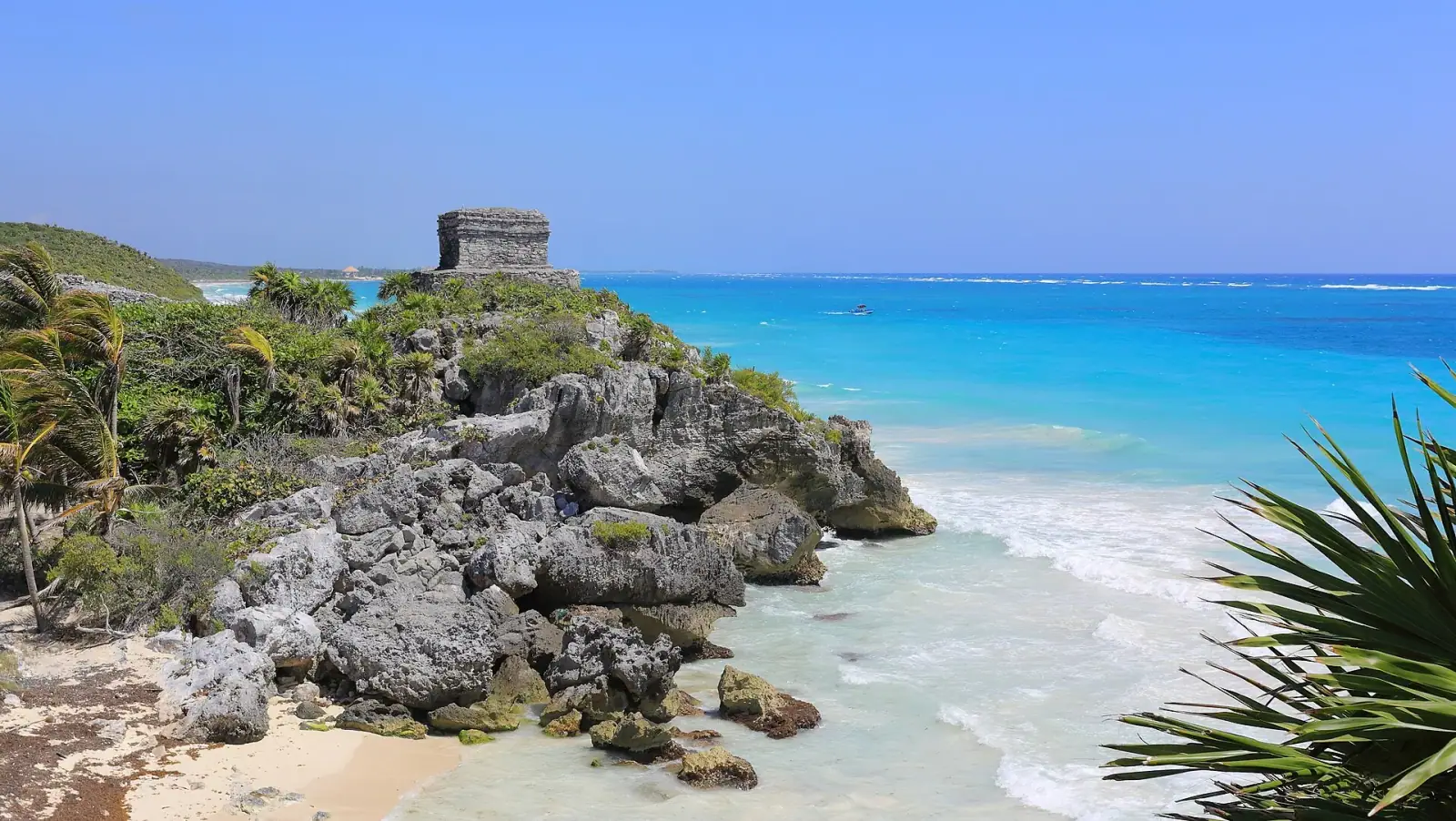
Tulum has things Playa cannot copy. Its Maya ruins stand on a cliff above the water, and were the third most visited archaeological site in Mexico in 2017. The cenotes, Gran Cenote among them, are close by. Sian Ka'an begins where the road runs out. Getting there has become much easier: Tulum's airport began commercial service in December 2023 about 20 kilometres southwest of town, and its Tren Maya station opened in September 2024. The same railway was rerouted in 2022 to skip central Playa, so do not expect to stroll to the platform there.
Sargassum weed has been arriving on Caribbean coasts in heavy waves since 2011, and it does not check which municipality it is in. Nor do the hurricanes of August to October.
Where we would live
If you have a job to do, live in Playa. Colectivos cover the distance in about 45 minutes, so Tulum works as a Saturday: ruins early, a swim in a cenote, dinner, and back to a flat where the Wi-Fi stayed on. Before you book anything longer in Tulum itself, read up on how residency works in Mexico, because the free park entry and the local rates depend on having it. And ask any landlord in Aldea Zama two blunt questions: what does the building next door look like now, and what will it look like in six months?
 United States
 United Kingdom
 Germany
 Canada
 Australia
 India