 Medellín
 Lima
Buy an umbrella in Medellín and you will use it on about one day in two. Buy one in Lima and it will gather dust for as long as you stay.
That sounds like a point for Lima. It is the opposite, and the umbrella is the most useful way to understand how these two cities feel from week to week, since money will not separate them: we estimate $1,800 a month in Medellín and $1,800 in Lima.
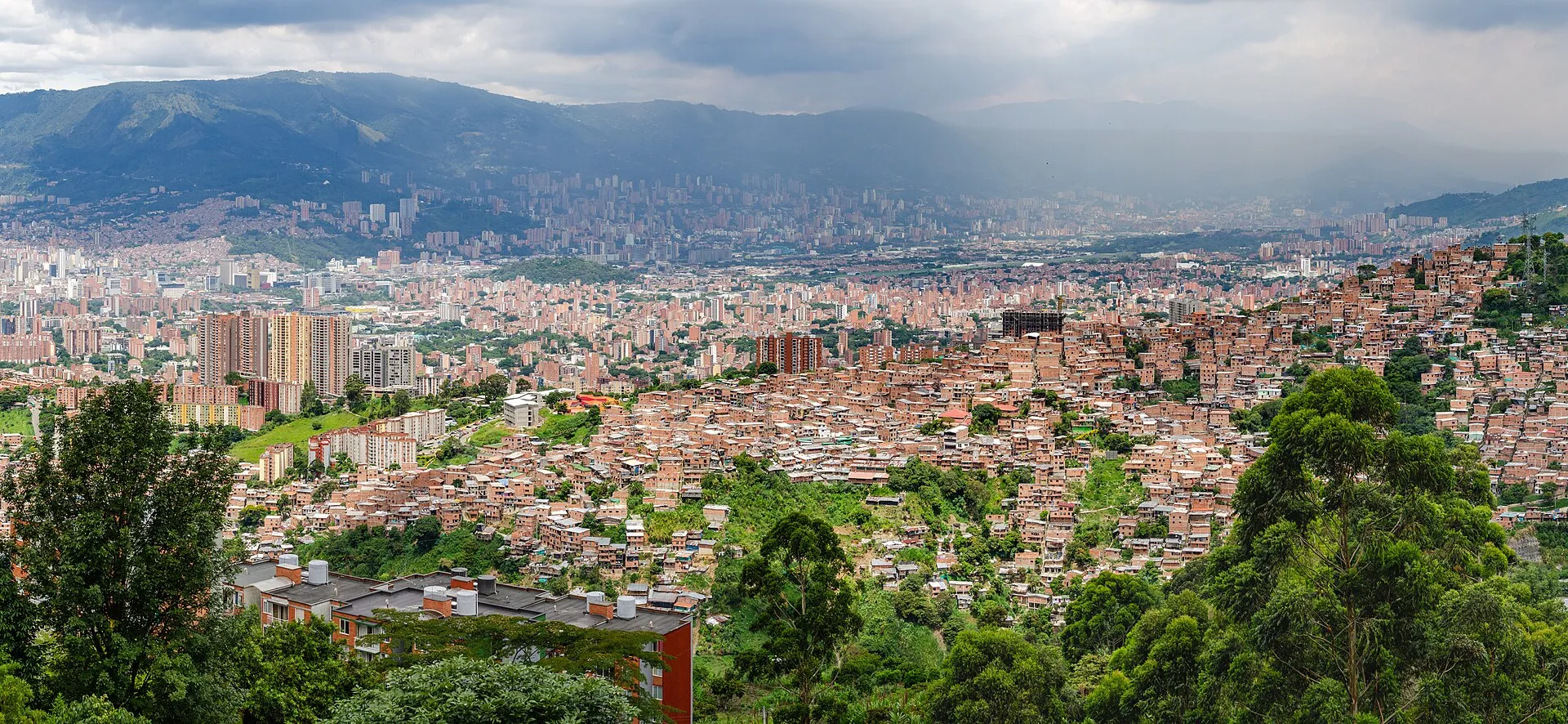
Medellín gets about 2,238 millimetres of rain a year, spread over some 173 days. Yet it is called the City of Eternal Spring and means it. At about 1,495 metres in the Aburrá Valley, it stays between roughly 17 and 28°C in every month of the year. The weather tends to run on a daily rhythm rather than seasons: a bright morning, clouds building over the valley walls, a heavy downpour that sends everyone under a shop awning in Laureles for half an hour, then wet streets shining in the sun. You always have a reason to go outside.
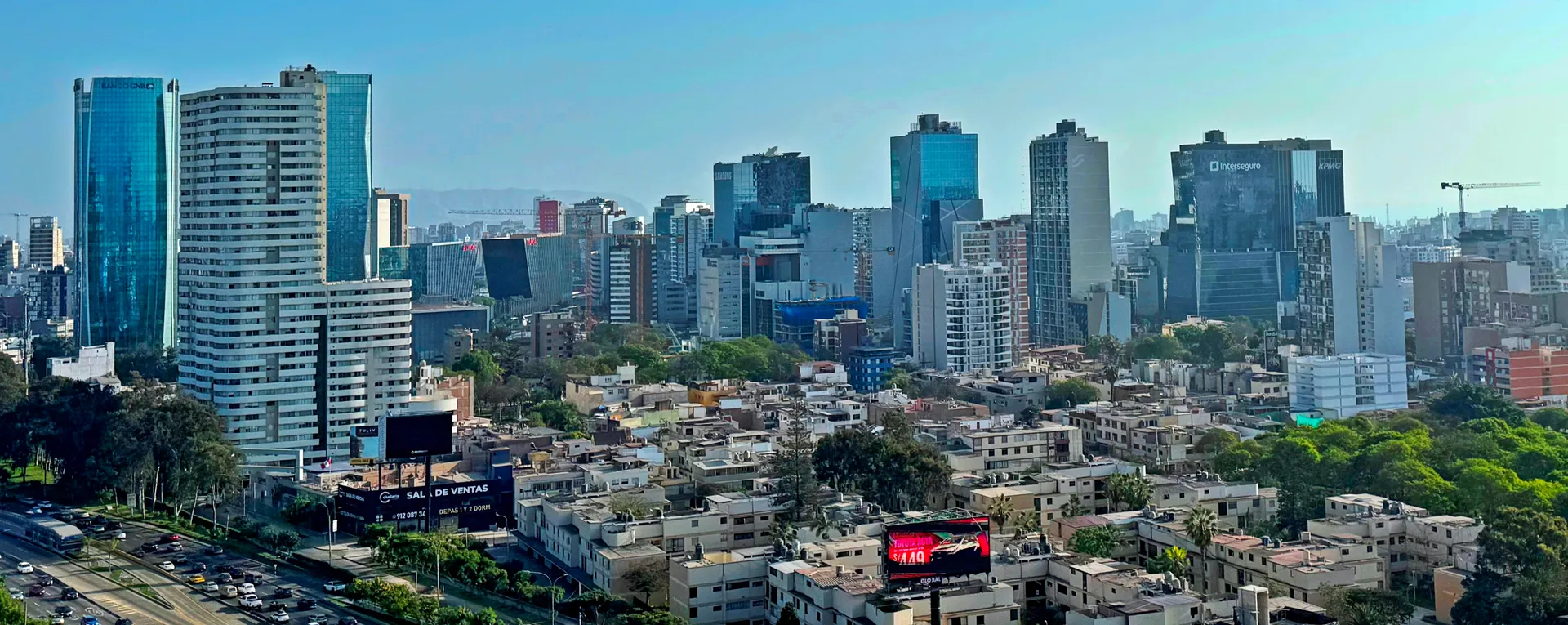
Lima is a desert on the Pacific, and its coastal districts receive 10 to 30 millimetres in a whole year. Nothing resembling a storm interrupts your plans. What you get from June to September is garúa, a morning drizzle too fine to open anything against, under a low lid of cloud that hardly lifts. August has about 28 hours of sunshine across the entire month, under an hour a day. Temperatures sit around 15 to 19°C with very high humidity, in flats that rarely have heating, so laundry takes its time. Then, from about January to March, the lid comes off, and Miraflores and Barranco become a beach city with highs of 27°C above the surfers at the bottom of the cliffs.
So ask yourself how you take grey. If months without shadows tend to flatten your mood, no restaurant will fix it.
Food
And the restaurants are the strongest reason to take that risk. Central, in Barranco, topped the World's 50 Best list in 2023 with dishes built from little-known ingredients from the coast, the Andes and the Amazon. You do not need its prices to see the point: a plate of ceviche at the Surquillo market makes the case at lunch. Medellín feeds you cheerfully, with heaped bandeja paisa and arepas, and nobody flies there for dinner.
Safety, and getting across town
Both cities ask you to pay attention, in different ways. Lima's worry is organised crime: Lima and Callao have spent long stretches under a state of emergency over extortion, renewed again in mid-2026. That falls mostly on bus lines and small businesses in districts you are unlikely to live in, but it shapes the mood of the city, and it means staying within a fairly small map of Miraflores, Barranco and San Isidro. Medellín's danger is closer to you personally. Phone snatching is common, and drink-spiking with scopolamine, often after a date arranged through an app, has robbed many foreign visitors. Meet dates in public, watch your drink, and keep them out of your flat until you know them.
Moving around tips firmly towards Medellín. Its metro runs the length of the valley, and the cable cars built since 2004 climb to hillside districts, so a car is optional. Lima's Line 1 misses Miraflores and Barranco altogether, leaving you with the Metropolitano bus or a slow Uber. Even the airports follow suit. Medellín's is over the mountains in Rionegro, but a tunnel gets you there in about 45 minutes. Lima's new terminal opened in June 2025 with no rail link and access by temporary bridges, and the 17 kilometres to Miraflores can take an hour.
Medellín also has the clearer long-stay route: Colombia's nomad visa is pegged to three minimum wages, about $1,640 a month.
For a year's base we would pick Medellín, and it is not close. But go to Lima anyway, for six weeks from January, when the sun is out and every one of those restaurants is still there.
 United States
 United Kingdom
 Germany
 Canada
 Australia
 India