 Medellín
Eleven kilometres of stone wall run around old Cartagena, built in stages from 1614 to 1796. Francis Drake's capture of the city in 1586 is what set the fortifying in motion, and it worked: in 1741 a British force of more than 27,000 came for Cartagena under Admiral Vernon, took the outer forts, and was broken at San Felipe, where the assault ladders turned out too short and disease did the rest. Those walls kept out the most powerful navy of the age. Today they sort out who pays what, and that is the thing to understand before you rent here.
What the wall does now
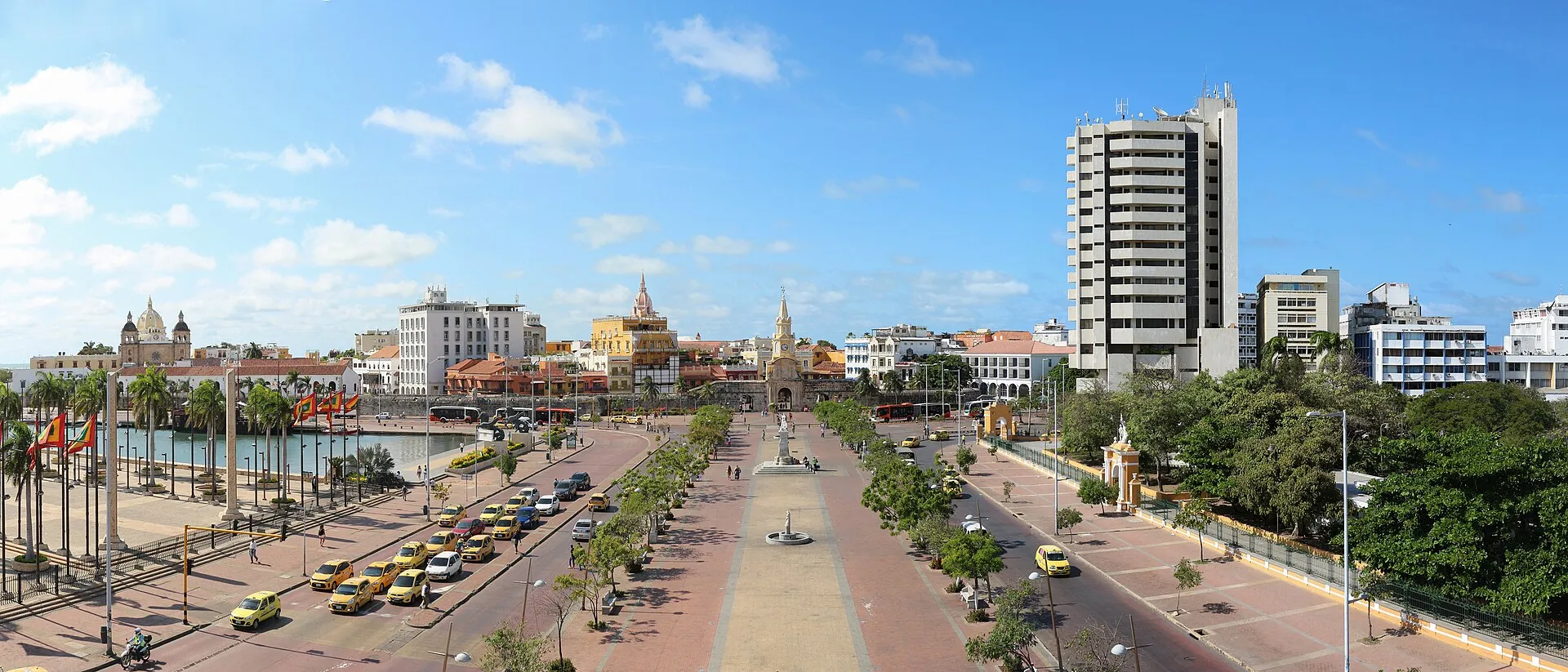
Inside are the Centro and San Diego, a UNESCO site since 1984, with its balconies and plazas and the Clock Tower gate. You can walk the top of the ramparts at sunset with the Caribbean on one side and the domes on the other. But the wall also makes a sealed market. A furnished one-bedroom in the Centro or across in Bocagrande's towers runs $875 to $2,500 by our figures, while Manga, Cabrero and Pie de la Popa, close by, ask $375 to $875. San Diego is the one spot inside that stays quiet enough to work.
And no wall shuts out the heat. Every month of the year it reaches 31°C or 32°C by day and rarely falls below 24°C at night, with humidity around 80 percent. You will spend your working hours in a sealed, air-conditioned room, and your electricity bill will show it. That leaves the beautiful part of the city for the hours after five, which is when the worst of the heat has gone and the place is at its best. For a fortnight that is a fine bargain. Over a year, on our estimate of about $2,000 a month, you are paying a premium to look at a place through a window.
Medellín's valley and its cable cars
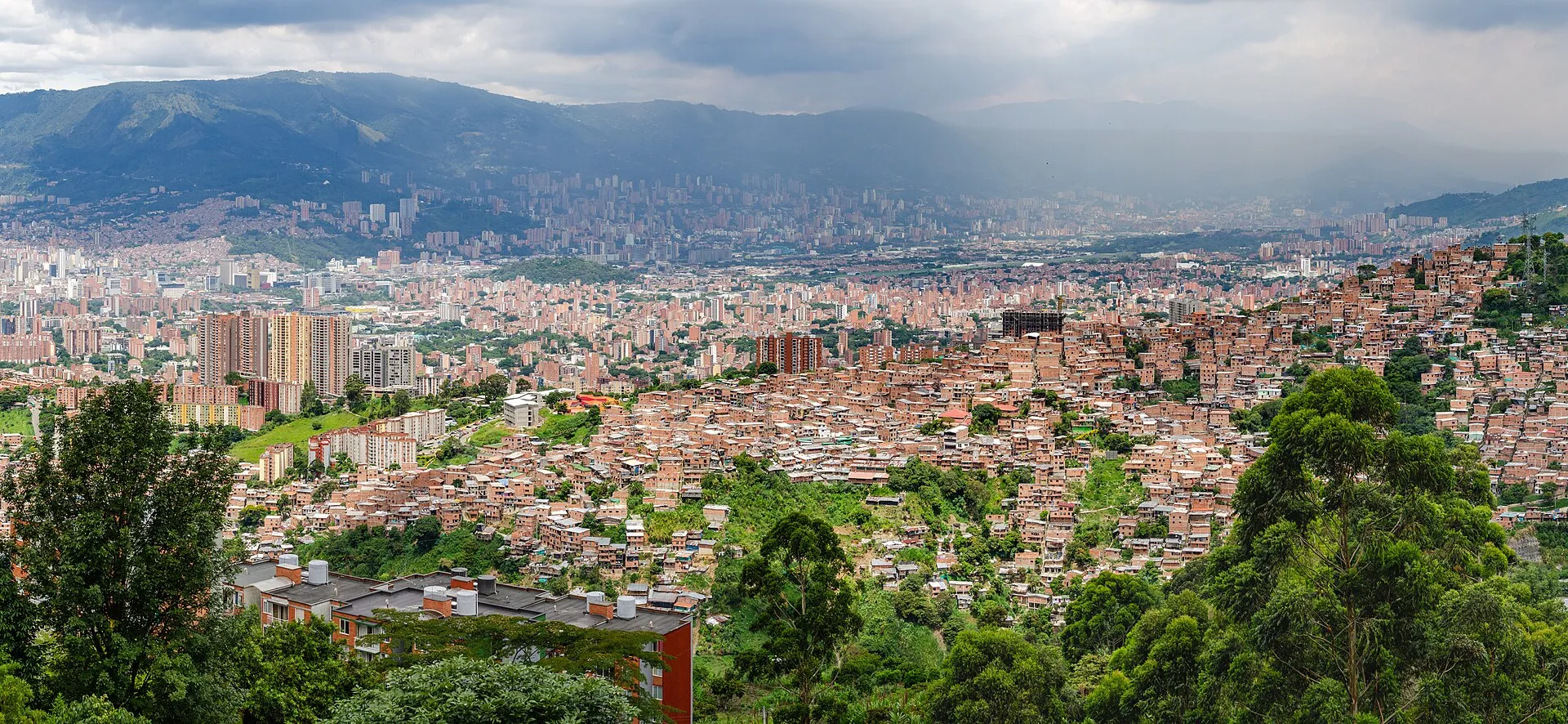
Now take the short flight south to Medellín, at about $1,800 a month on the same reckoning. It has no wall and no need of one, because it has done the opposite: a city of 2.4 million poured up the sides of a valley at 1,500 metres has spent thirty years connecting itself. Colombia's only rail metro opened here in 1995 and carried about 202 million passengers last year. From 2004 cable cars began climbing to the hillside barrios, and in 2011 outdoor escalators arrived in Comuna 13. Your flat in Laureles or El Poblado will rarely need air conditioning, with days of about 28°C and nights of 18°C in every month.
That open valley has its own costs. The same bowl that gives you the climate traps exhaust, and air quality crises come back predictably, above all in March. The other danger is social. The US Embassy warned in January 2024 about dating apps after eight American deaths in two months, several linked to the apps, and police have gone after the networks that drug foreigners around Parque Lleras. Meet new people in public places and keep your own drink in your hand.
Everything official is identical between the two: same clock, and the same $1,640 monthly income for Colombia's nomad visa. So settle on Medellín as your address. Then, when the March air turns bad, book a flight, get a room in San Diego, and go up on the wall at six.
 United States
 United Kingdom
 Germany
 Canada
 Australia
 India