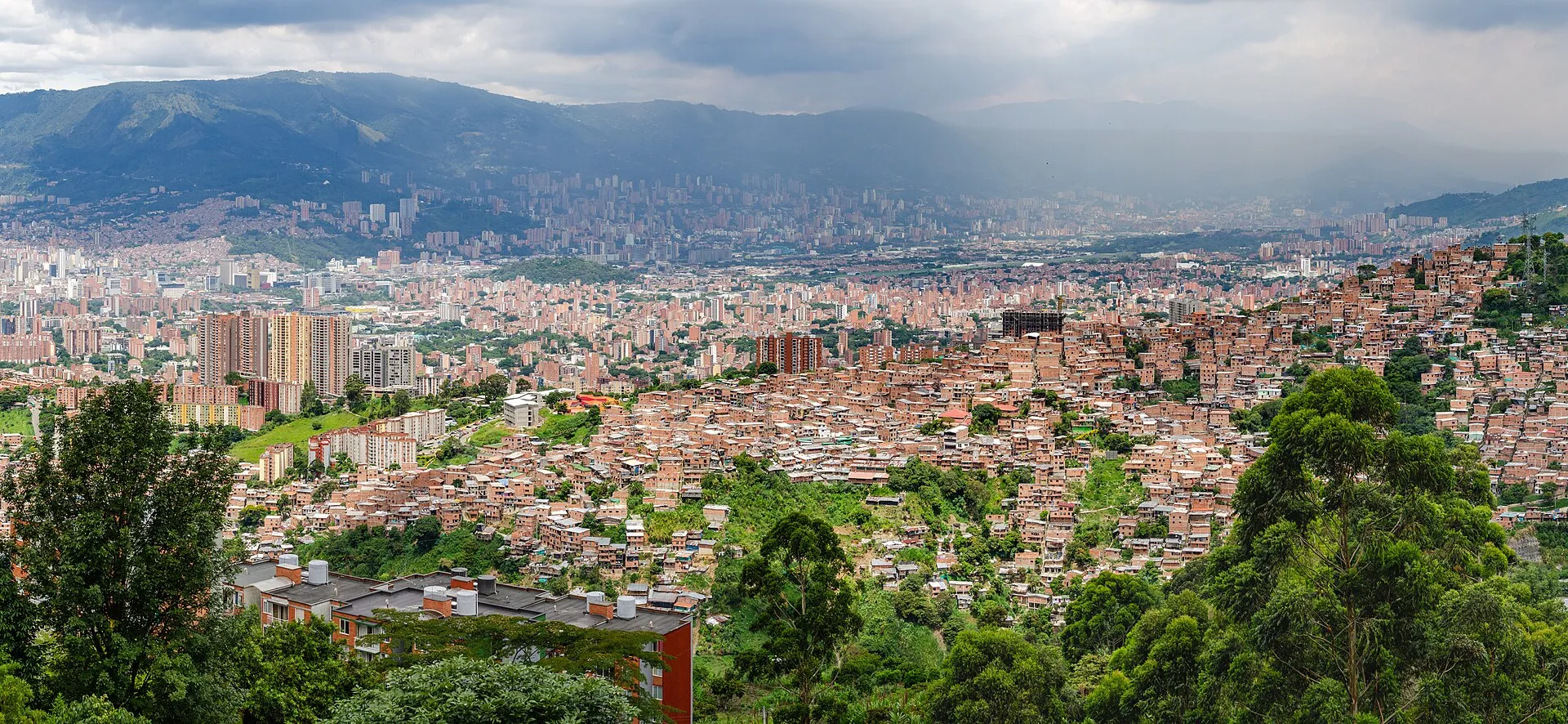
 Medellín
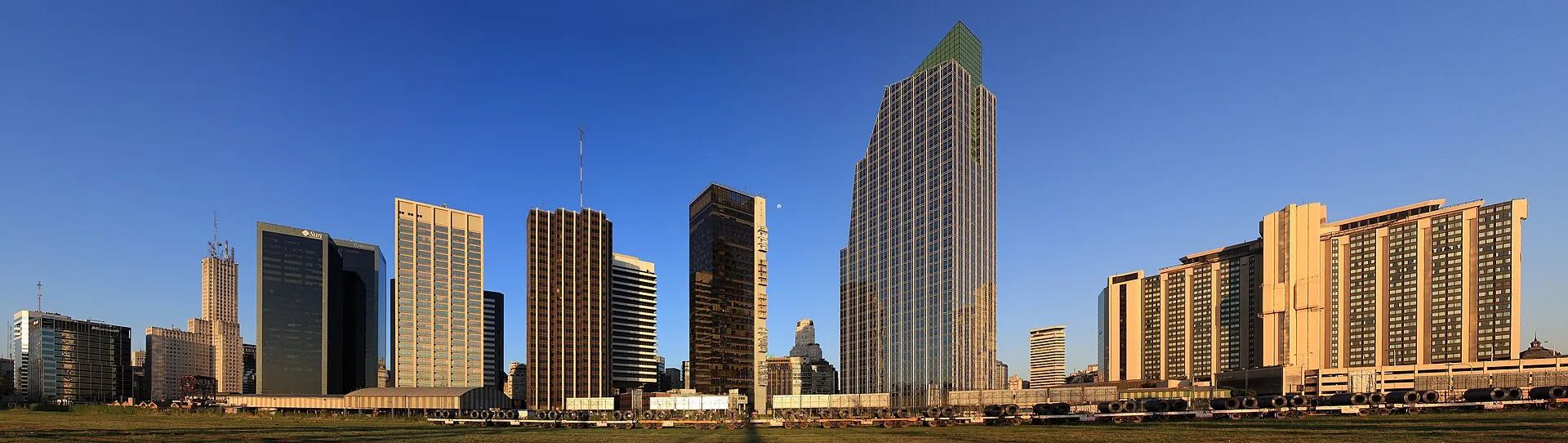
 Buenos Aires
The plane to Medellín does not land in Medellín. It lands in Rionegro, on a high plateau at 2,142 metres, and the city is in the next valley, about 650 metres further down. The plane to Buenos Aires lands on flat ground beside a motorway, and the city simply starts to thicken around you. Those two arrivals tell you a surprising amount about the two lives on offer.
The ride in
From José María Córdova airport, your car goes into the 8.2-kilometre Túnel de Oriente, opened in 2019, and comes out in the Aburrá Valley with the city laid along its floor and climbing up both sides. It takes about 45 minutes to the centre. The old toll-free mountain roads take about twice that, and you will only want them for the view. Your ears notice the descent before you notice the temperature, which has probably settled somewhere between 18°C and 28°C, the range it keeps in every month of the year. Leave your coat in the bag.
Ezeiza is about 35 kilometres out, at kilometre 33.5 of the Riccheri motorway, the only road in. There is no train. The official desk in arrivals will sell you a fixed-price car for about $30 to $40, the Tienda León shuttle to Puerto Madero costs around $13, and you should allow 45 to 75 minutes either way. It is an unromantic hour, all of it on the flat, in a city that sits just 25 metres above sea level. Nothing about it prepares you for the avenues at the far end.
The first evening
In Medellín, you could be at a table in Provenza by seven, among other people with laptop bags. El Poblado is set up for this, and Line A of the metro, running since 1995, has a station with its name on it. From there the Metrocable gondolas climb to hillside neighbourhoods such as Santo Domingo. Within two days you will know what you need to know. Do learn one thing early, though: in nightlife areas such as Parque Lleras, organised groups drug and rob foreigners, and local authorities count hundreds of such incidents a year.
Buenos Aires does not hurry to introduce itself. Dinner is commonly nine o'clock, later at weekends, so your first evening is a long walk through Palermo, a medialuna and a coffee to fill the gap, perhaps a look at El Ateneo Grand Splendid on Santa Fe, a 1919 theatre where bookshelves replaced the seats in 2000. Line D will get you to Palermo on a Subte that began in 1913, the first underground railway in Latin America. It also stops around eleven, and has since a "temporary" change in 1994, so you will go home on a colectivo.
The first month
By week four, what looked like a difference of arrival has become a difference of depth. Medellín's ease is real and it does not wear off, but the foreign life is concentrated in a few districts, and Laureles, with its circular streets, is about as far as most people move. Buenos Aires keeps opening: more than 3 million people in the city proper, and a Recoleta, a San Telmo and a Palermo that hardly resemble one another.
The money has changed too. Anyone who remembers arriving in Argentina with a roll of dollars for the black market should update that memory. Currency controls were lifted in April 2025 and the two exchange rates have stayed close since, while inflation, at 117.8 percent in 2024, was still 31.8 percent in the year to September 2025. Our current estimate is around $1,600 a month in Buenos Aires against around $1,800 in Medellín, but only the first of those is likely to move under your feet. A good set lunch is the better deal there for now, at about $2.50 to $4.50 against $4.50 to $8.
The visas split the same way as everything else. Colombia wants proof of about $1,640 a month and gives you up to two years. Argentina sets no income figure at all, but its permit runs for 180 days, renewable once, and you must have spent half of that first stretch in the country. Our nomad visa page has the detail. Buenos Aires is also two hours further east, which makes European mornings far easier.
For a two-month stay with a heavy workload, Medellín wins and it is not close. For anything longer we would take Buenos Aires, and land in October or November, when spring is at its best and the January heat is still some way off.
 United States
 United Kingdom
 Germany
 Canada
 Australia
 India