 Lisbon
 Seville
Graça, from the top of the hill to the flea market
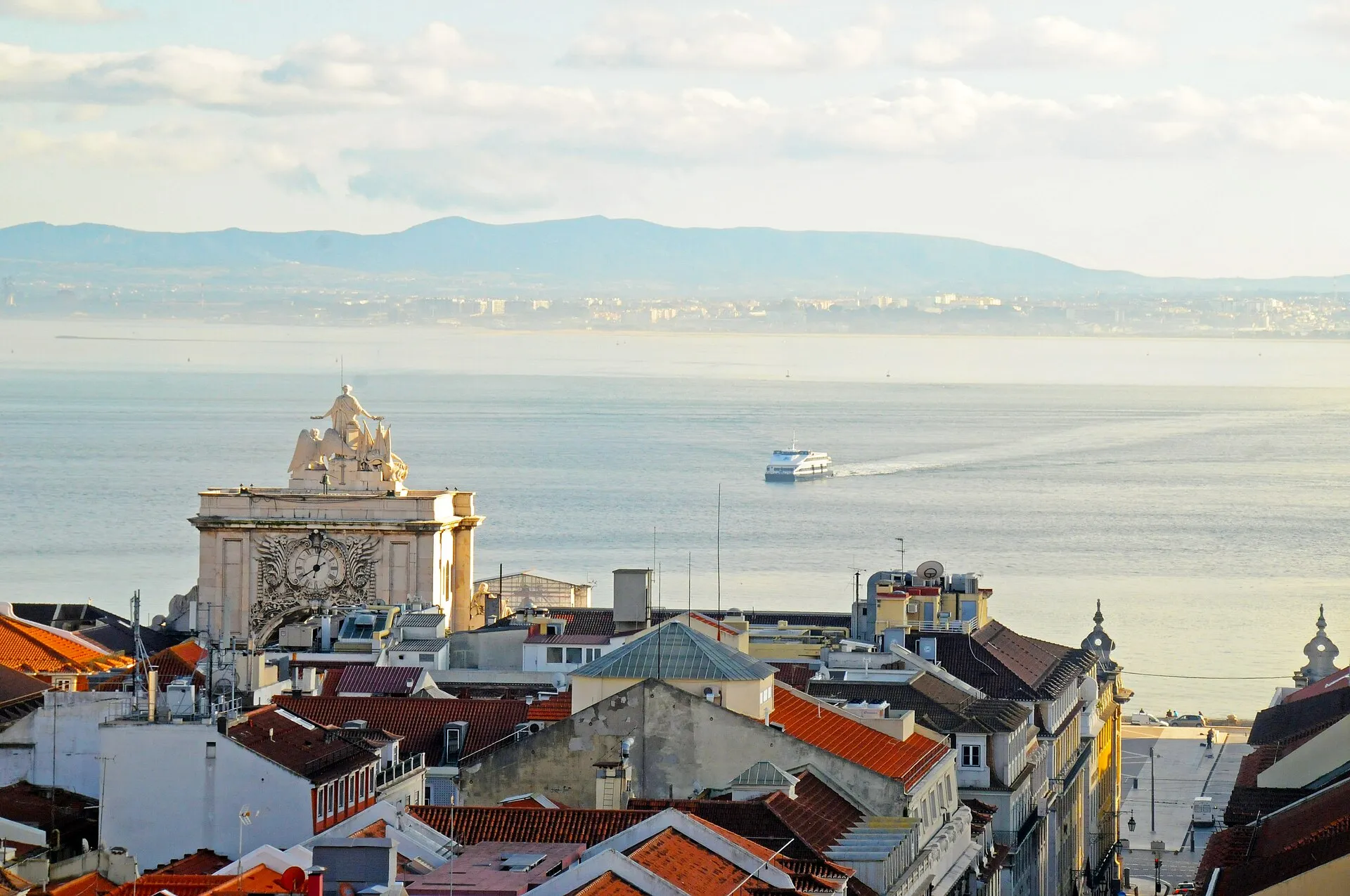
Begin at the chapel of Nossa Senhora do Monte, on one of the highest points in Lisbon, where the Miradouro da Senhora do Monte gives you the castle, the river and most of the city laid out in terracotta. Everything from here is downhill or, on the way home, brutally uphill. The Calçada do Monte drops toward Largo da Graça, the neighbourhood's square, where the 28 tram comes through on its way from Martim Moniz to Estrela. Behind the square is the old Graça convent with its garden and a second viewpoint, the Miradouro da Graça, facing the castle.
Graça was a dense working parish once, 15,100 people in 1960 and 5,787 by 2011, and much of that population has gone. Tucked into the side streets are Vila Berta and Estrela d'Ouro, named pockets of housing you could easily walk past. Even so it feels lived in, more than Alfama just below, which is where the crowds go.
Keep walking downhill and the streets open onto Campo de Santa Clara, where the Feira da Ladra has been selling second-hand everything on Tuesdays and Saturdays since 1882, spread out under the white dome of Santa Engrácia. That church was started in 1681 and finished in 1966, which is why "obras de Santa Engrácia" is Portuguese for a job that never ends. That is a morning's walk, and you can do it even in high summer: July days stop at about 28°C, and the city gets some 2,875 hours of sun a year.
Triana, from the bridge to Calle Betis
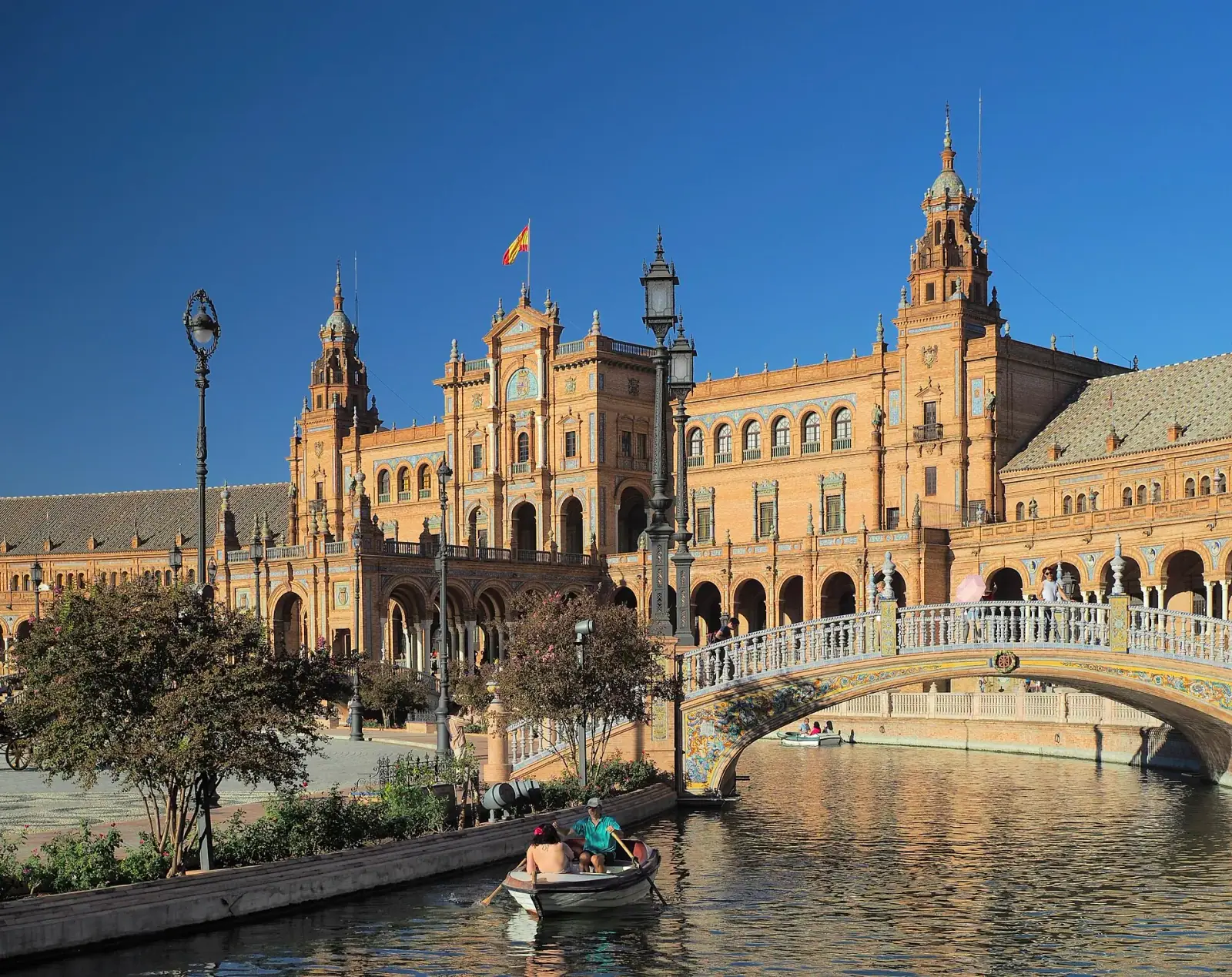
In Seville you start by crossing water. The iron Puente de Isabel II takes you over the Guadalquivir to a small Neo-Mudéjar chapel at its far end, and at once you are in a place that thinks of itself as separate from the city behind you. Its people call themselves trianeros, and for centuries they were sailors and potters. The flat ground is a relief after Graça.
The bridge lands you at the Altozano, with its monuments to flamenco and to the bullfighter Juan Belmonte. Right beside it is the Mercado de Triana, Monday to Saturday, tapas stalls and fishmongers over the foundations of the Castillo de San Jorge. The Inquisition worked from that castle from 1481 to 1785, and there is a museum to it in the basement, directly beneath the lunch crowd.
Calle Pureza leads away from the river end of the bridge, Triana's spine, past Santa Ana, which the neighbourhood calls its cathedral, and the Capilla de los Marineros, home of the Esperanza de Triana, whose Holy Week procession the whole district claims as its own. Cut across to Calle Alfarería, potters' street, where a few corrales survive, the old communal homes built around a patio, and the former Santa Ana factory is now a ceramics museum. Finish on Calle Betis at dusk with the river at your feet and the city's towers across the water.
July is the catch. The average July high here is above 36°C, the official record is 46.6°C, and this is said to be the first city in the world to give a heat wave a name, Zoe. You will not walk Calle Pureza at four in the afternoon. You will lie in a shuttered room until the evening, like everyone else.
What you take home from both
Graça is more beautiful from above, and Triana is more enjoyable at ground level. Lisbon asks for your knees and your money: we estimate about $3,500 a month, and a local tenant's one-bedroom rent alone runs near $890. Seville is a lot gentler at about $2,400 a month, with local rents near $550, but its airport, its foreign community and its English are all smaller, and Triana itself has little coworking, so you may find yourself crossing that bridge each morning.
From October to May we would take Triana, and the saving with it. For a full year, with no plan to escape in summer, Lisbon is the only sane answer. Before you commit to Seville, decide where you will be spending August, because it should not be there.
 United States
 United Kingdom
 Germany
 Canada
 Australia
 India