 Las Palmas
The island with 152 beaches is the harder place to go for a swim before work. The port city of 380,000 people is where you can walk out of a flat at seven, leave your shoes on the sand and be in flat water by ten past. That is the first of three things about this pair that run backwards, and together they settle it for most people.
Beaches
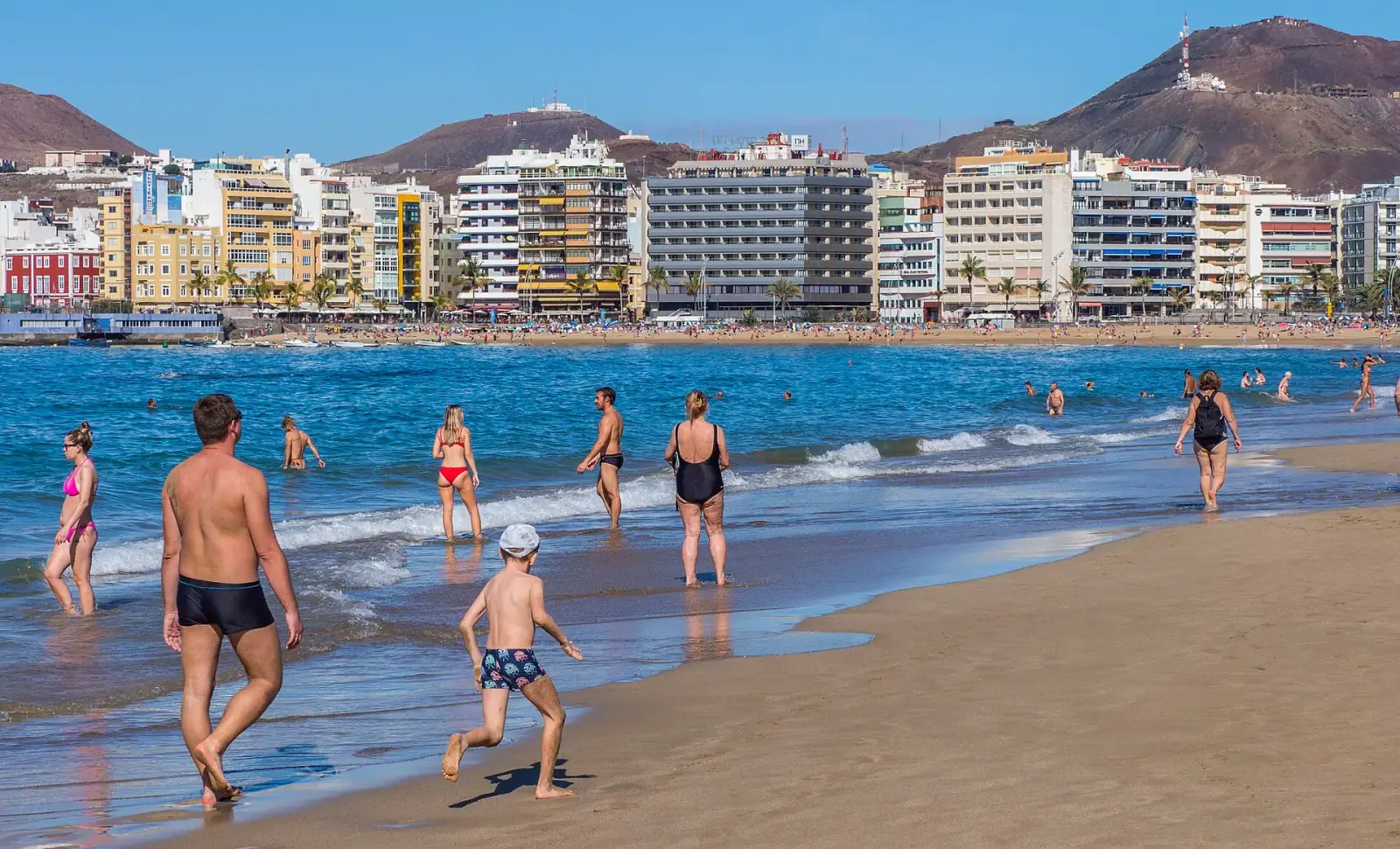
Las Palmas has one beach, more or less, and it does nearly everything. Las Canteras runs for 3.1 kilometres along the western side of the city, with a promenade its whole length from the Alfredo Kraus Auditorium to La Puntilla. About 200 metres out lies La Barra, a natural sandstone reef that breaks the Atlantic before it arrives, so the northern end behaves like a very large swimming pool. You can swim out to it. At the southern end, La Cícer has no such shelter, and that is where Gran Canaria's surfing began around 1970. The desks at the coworking spaces in Guanarteme and La Isleta are a few streets back.
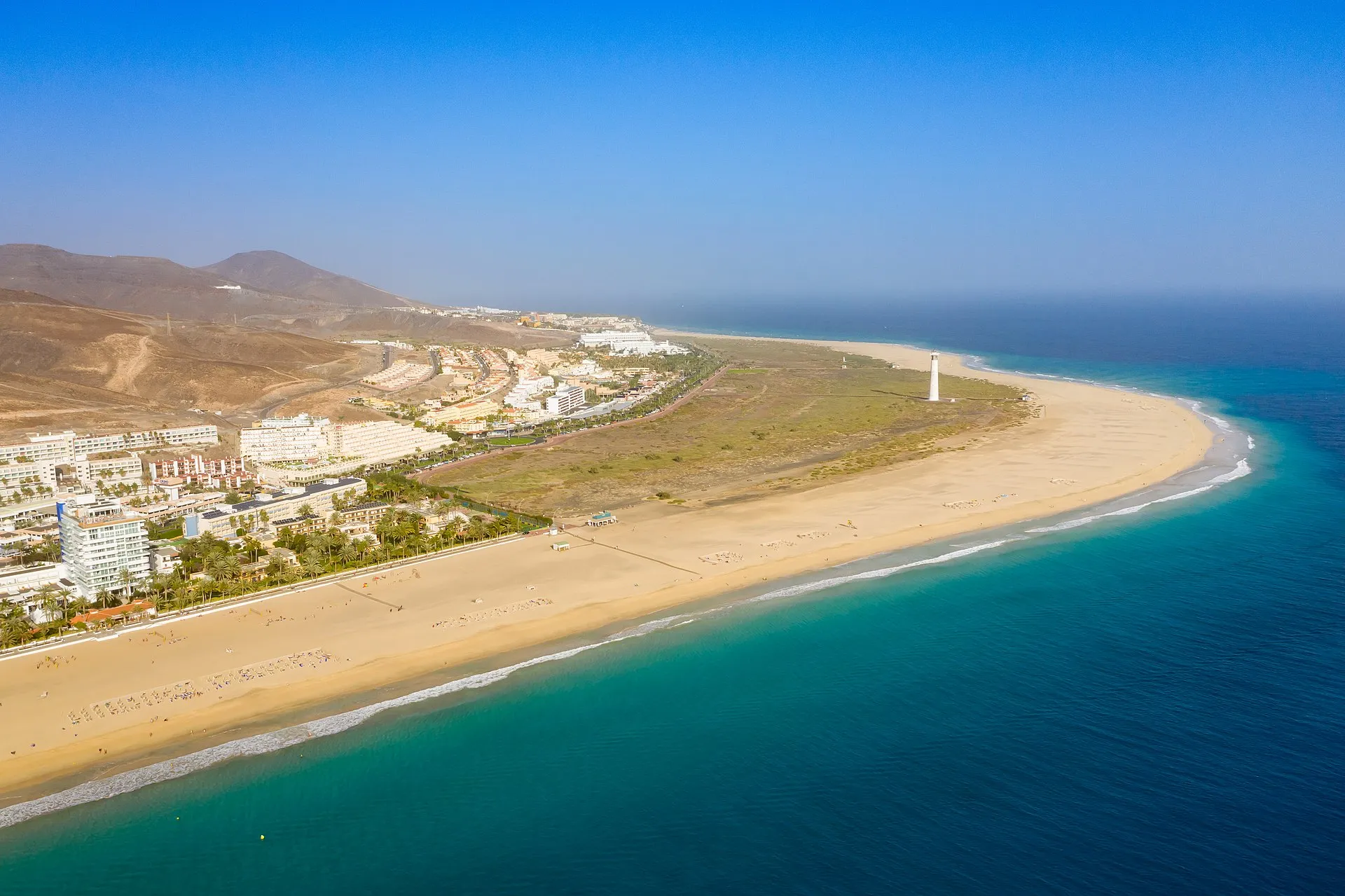
Fuerteventura has more and whiter sand: some 50 kilometres of it, with the dunes of El Jable behind Corralejo and the lagoons of El Cotillo on the west coast. But the island is long and narrow, it is windy all year, and those beaches are spread over 77 kilometres of shore. On this island you drive to the beach, and then you check which way the wind is blowing. For a kitesurfer that is the whole point. For someone who wanted a quick dip at lunch, it is a surprise.
The bill
Here the second reversal comes in. Local tenants on a new lease pay slightly more on the sparsely populated island, about $510 for a one-bedroom against $480 in the city, on official figures. Our estimates for a remote worker point the other way, at about $2,400 a month in Las Palmas and $1,700 on Fuerteventura, because a remote worker here tends to rent a furnished flat near Las Canteras, not a local's long lease.
Look closely at that lower number, though. It assumes you live modestly. In Corralejo, eating out regularly, you are closer to $2,300, and a basic rental car adds $230 to $400 a month, since the Tiadhe buses to El Cotillo and Morro Jable thin out badly at weekends. In Las Palmas, a Bono card brings a yellow guagua down to about 50 cents a ride, and you will hardly need that. For someone who actually uses the island, the saving can disappear.
Clouds and dust
The third one concerns the sun. The Canaries' most famous big city spends much of July and August under what people here call the panza de burro, the donkey's belly, a low lid of cloud pushed against the north of Gran Canaria by the trade winds. It is warm and bright and grey, and it can be a letdown after a flight from northern Europe. Fuerteventura, low and bare, gets about 3,000 hours of sun a year against some 2,800 in Las Palmas, and it looks every bit of it. It is also about 100 kilometres from the Sahara. When calima arrives, red dust cuts visibility and temperatures can jump by 10°C. The rain that does fall mostly runs off into the sea, which leaves the island drinking from electric desalination plants.
Where we would sign
Take Las Palmas for the first stay. It has hospitals, a carnival, the old stone streets of Vegueta where the city began in 1478, and enough people passing through that nobody has to plan a social life. Our Las Palmas guide goes through the districts. Fuerteventura deserves a different kind of person: someone who rides wind, likes silence, and is happy with a desk at Surfescape in Lajares and a small crowd who all know each other.
The ferry between the islands takes about two hours, so a trial costs you almost nothing. Before you take a lease on Fuerteventura, rent the car for a month. How often it leaves the driveway will tell you whether you came for the island or for the idea of it.
 United States
 United Kingdom
 Germany
 Canada
 Australia
 India