Kotor Budva
Head to head
Kotor vs Budva

Kotor vs Budva: Which Is Better for Digital Nomads?

Overall: Kotor and Budva are neck and neck at 7.8

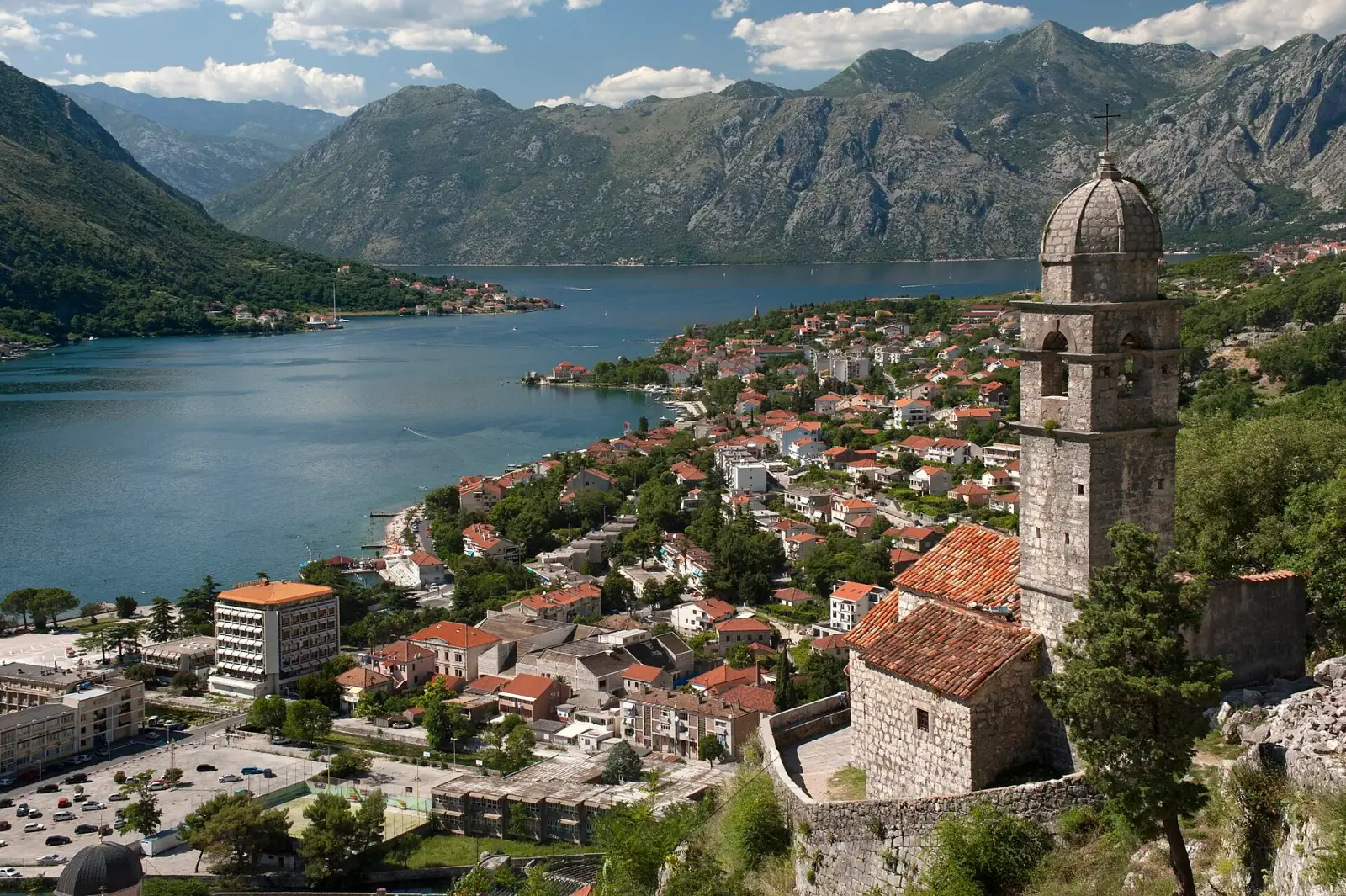
Kotor, plenty of guides will tell you, sits on Europe's southernmost fjord. It does not. This bay is a ria, the drowned valley of a river that no longer exists, 28 kilometres long and no more than 60 metres deep, pinched at the Verige strait to a gap of 340 metres. The mistake is harmless, except that it comes with a set of other beliefs about Kotor and Budva, and some of those will cost you money.

The calm retreat

Kotor is supposed to be the peaceful one. At six in the morning it is. The old town is a tangle of stone lanes and cats behind 4.5 kilometres of Venetian walls, with the bay flat as a plate in front and the mountain straight behind. Then the ships come in, about 500 a year by a 2024 count, with passengers paying about $1 to enter, and the director of the local tourist organisation has said life for neighbours grows harder each season. The 1,350 steps to the fortress, at about $17 a ticket, are part of the same day out.

The answer is simple enough. Sleep north of the walls in Dobrota, on the waterfront promenade with its own restaurants, and treat the old town as somewhere to go in the evening, once the ships have gone. Kotor Nest, the coworking room inside an old town building, fits only eight to ten people, so ask before you count on it.

The sunny Mediterranean

Norway would recognise this weather. Orjen climbs to 1,895 metres right behind the bay, and it collects some of the heaviest rainfall on the continent. Risan, at the head of the inner bay, gets around 3,500 millimetres a year. Crkvice, up the hill behind it, has averaged more than 4,700. November storms can drop enormous totals in a few days, and August is often bone dry.

Budva, on the open coast, is less extreme, but its annual total of about 2,000 millimetres would surprise anyone who booked for the postcard, with over 300 in November alone. It does have around 2,600 hours of sunshine, and it faces the open sea where Kotor faces a wall of rock. Between November and March, expect rain in both, and an old town that largely empties.

The ancient town and the cheap resort

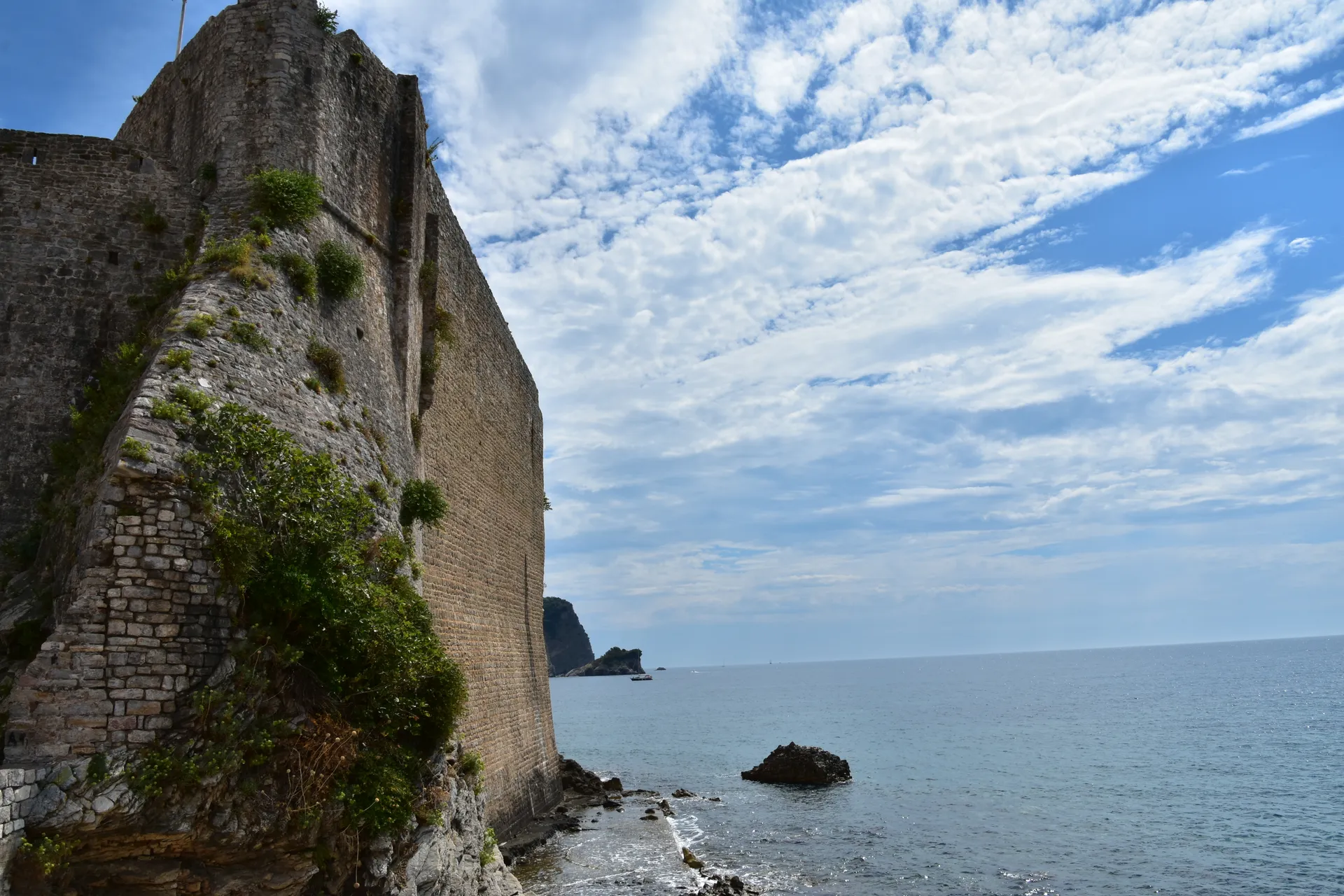
Budva's age is real: the earliest record is from the fifth century BC. The stones you are looking at are newer than they seem, though, because the earthquake of 15 April 1979 badly damaged the old town, and repairs went on until 1987. The strip around it is much more recent. Foreign money, largely Russian, drove a building boom after independence in 2006, with weak planning and the traffic and parking trouble to prove it. Nobody should come for the architecture beyond the walls.

That boom is why Budva is what it is. It has 17,479 people against Kotor's 13,347, far more flats, a promenade running along the 1.6 kilometres of Slovenska Plaža, little Mogren under the rocks beyond the old town, and long, open Jaz to the west. On our estimate a month costs about $1,000 there and $2,000 in Kotor. We doubt it survives a beachfront lease in August.

Some of the poster is out of date. Sveti Stefan, the islet down the coast on every poster, has been shut since 2020, with the hotel in dispute and no reopening date. And Budva's work scene comes down to a few cafés, so that small room in Kotor is more than it has.

What is true of both

They are close enough to treat as one place. Buses between them run about every half hour, the Vrmac tunnel cuts out the long way round the bay, and Tivat airport serves both. So you can live on one side and spend Saturdays on the other. We also compare Kotor with Dubrovnik, the bigger stone town up the coast.

The date that matters most is on the visa. Montenegro's digital nomad permit asks for about $2,070 a month, or $2,760 with a degree, and it is legislated to close at the end of 2026. Our visa page has the rule. Only weeks remain.

For a spring or autumn month, take a flat in Dobrota and pay the difference, because no view on this coast matches it. For a whole year on a budget, Budva wins. Spend a week of rain in each before you sign, since rain is the one thing nobody photographs.

Kotor vs Budva: side by side

All 13 categories we rate, each out of 10. Green is strong, amber is middling, red is weak.

KotorBudva
7 Climate 8
6 Cost of living 7
5 WiFi 6
6 Nightlife 6
10 Nature 8
8 Safety 8
6 Food 7
5 Community 3
6 English 6
8 Visa 8
8 Culture 8
6 Cleanliness 6
8 Air quality 8

Kotor and Budva at a glance

16 kmapart in a straight line
Same timein January
$1,000a month less in Budva
ElevationKotor9 mBudva8 m
Time zoneUTC+1 in January, UTC+2 in Julyin both
Nearest airportKotorTivat Airport (TIV), 5 kmBudvaPodgorica Airport / Podgorica Golubovci Airbase (TGD), 35 km
Main languageMontenegrinin both
CurrencyEuro (€, EUR)in both
PlugsType C/F, 230V / 50Hzin both
Tap waterSafe to drinkin both
Emergency number112in both
TippingRound up or 10%in both
Ride-hailingLocal taxisin both
In the Schengen areaNoin both

Population is the Natural Earth figure for the urban area around each city, elevation from the Copernicus height model, airports from OurAirports.

Where they differ most

The three biggest gaps between the two, in the words of each city guide.

Nature

Kotor

The Bay of Kotor is one of Europe's most dramatic coastal landscapes, flanked by steep karst mountains rising nearly 1,700 metres. Hiking trails lead from the Old Town up to San Giovanni fortress and beyond.

Budva

Budva's setting is a real draw: a walled old town on a small peninsula ringed by beaches like Mogren and Slovenska Plaza, backed by hills and close to the dramatic Bay of Kotor.

Remote-work community

Kotor

The nomad and expat community in Kotor is small but growing, concentrated around coliving spaces like Kotor Nest and Playworking. You will find a handful of like-minded people but not the dense networking environment of larger hubs like Lisbon or Chiang Mai.

Budva

Budva has a small but growing digital-nomad presence, helped by Montenegro's welcoming stance and the appealing coastal lifestyle. In summer the town is packed with tourists rather than a settled remote-work crowd, and the year-round community is genuinely thin because so much empties or closes off-season.

Climate

Kotor

Kotor has a Mediterranean climate with hot, dry summers (July highs around 33°C) and mild, wet winters (13°C). Summer humidity inside the walled Old Town can feel intense. Spring (April-May) and autumn (September-October) offer the most comfortable working conditions, with warm days, low humidity, and minimal rain.

Budva

Budva enjoys a classic sunny Mediterranean climate with hot, dry summers and mild, wetter winters. Expect long stretches of blue-sky beach days from late spring through early autumn, with the sea comfortably swimmable roughly June to September.

From the score notes in the Kotor and Budva guides, where each one is explained in full.

Month by month: the weather

Each bar runs from the average daily low to the average daily high. Rain is below.

KotorBudvaScale runs from 5C to 32C, rain up to 447 mm
See the numbers
KotorBudva
Jan13C / 5C, 197 mm11C / 5C, 270 mm
Feb14C / 5C, 190 mm13C / 6C, 157 mm
Mar16C / 7C, 174 mm14C / 8C, 166 mm
Apr19C / 10C, 162 mm17C / 11C, 186 mm
May24C / 14C, 105 mm22C / 16C, 169 mm
Jun28C / 18C, 71 mm27C / 21C, 68 mm
Jul31C / 20C, 39 mm30C / 23C, 48 mm
Aug32C / 21C, 63 mm30C / 23C, 92 mm
Sep27C / 17C, 142 mm26C / 20C, 199 mm
Oct23C / 13C, 173 mm22C / 16C, 198 mm
Nov18C / 10C, 231 mm18C / 12C, 447 mm
Dec14C / 6C, 246 mm14C / 8C, 368 mm

Kotor: weather-station averages for 1991-2020. Budva: ERA5 reanalysis averages for 2019-2023.

What a month costs

Kotor$2,000
Budva$1,000

Our own estimate for a comfortable month for one remote worker, the same figure the city guides use.

Entry rules for common passports

Tourist entry on arrival. Every passport is in the visa finder, and remote-work visas are on the nomad visa page.

United States
Visa-free, 90 daysin both
United Kingdom
Visa-free, 90 daysin both
Germany
Visa-free, 90 daysin both
Canada
Visa-free, 90 daysin both
Australia
Visa-free, 90 daysin both
India
Visa requiredin both

Where you would live and work

The areas people choose in each city, and some of the places they work from.

Kotor

Neighbourhoods

  • Old TownKotor's UNESCO walled wonder
  • Fortress/City WallsKotor's dramatic hillside climb
  • DobrotaKotor's waterfront residential strip
  • MuoKotor's southern bay village
  • PrčanjKotor's captain's village

Places to work

Kotor Nest ColivingPlayworkingForza CafeLetrika Caffe BarDojmi
More on the Kotor guide →
Budva

Neighbourhoods

  • Stari Grad (Old Town)Walled medieval heart on the peninsula
  • Slovenska Plaza / Main StripBeachfront buzz and summer energy
  • BeciciQuieter beach resort next door
  • Sveti Stefan / PetrovacIconic islet and southern-coast bases

Places to work

Greg's CafeCasper Cocktail & Coffee BarForza Cafe
More on the Budva guide →

Services in a language you speak

Providers in our directory who work in a language other than the local one, from official registers, consular lists and the providers’ own websites.

Where each city wins

Kotor is stronger on

NatureCommunity
Kotor guide →

Budva is stronger on

ClimateCost of LivingWiFiFood
Budva guide →

Add a third city in the comparison tool →

Frequently asked questions

Is Kotor or Budva cheaper for digital nomads?

Budva is the cheaper base, around $1,000 a month versus $2,000 in Kotor, a difference of about $1,000.

Which has better WiFi, Kotor or Budva?

Budva scores higher for WiFi (6/10 versus 5/10).

Which is safer, Kotor or Budva?

Both rate 8/10 on safety.

Kotor or Budva: which is better overall for remote work?

They tie on the overall Nomad Score (7.8/10), so it comes down to your priorities.