Jeju Island Busan
Head to head
Jeju Island vs Busan

Jeju Island vs Busan: Which Is Better for Digital Nomads?

Overall: Jeju Island and Busan are neck and neck at 7.4

Five years explain most of what you will notice about these two places. Between 1948 and 1953 one of them lost about a tenth of its people and the other took in more people than it could hold. The stone walls and silences of Jeju come from that time, and so do the staircases and the noodles of Busan. A remote worker does not need the history to rent a flat, but it tells you what kind of place you are renting in.

Jeju in 1948

On 3 April 1948 an uprising began on the island, and the suppression that followed killed somewhere between 14,000 and 30,000 people, most of them at the hands of security forces. About 230 of the island's 400 villages were burned, and only 170 remained afterwards. Some 40,000 people fled to Japan. For almost fifty years, simply talking about it could get you beaten or jailed. A president apologised in 2003, and the Jeju 4.3 Peace Park opened in Bonggae-dong in 2008.

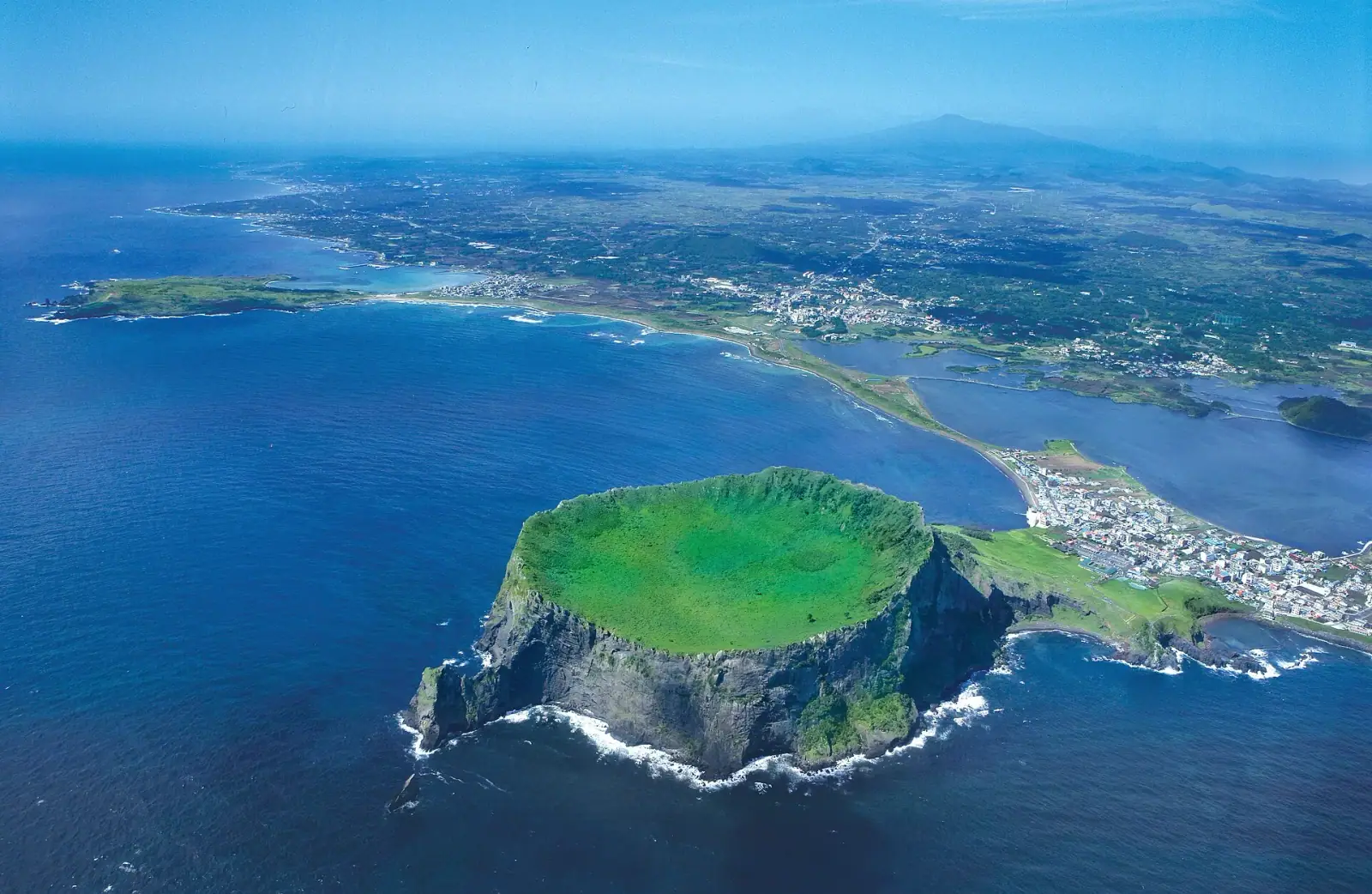
You will feel the result without being told, once you know to look. Jeju Island today has about 666,000 people, spread thinly around one volcano, and a culture that is unusually its own: an endangered language, shaman rites, and the haenyeo, the women who dive without tanks, of whom about 4,500 were still active in 2014, most over 60. The Olle trails run 437 kilometres through villages walled in black basalt laid without mortar. They are lovely, and some of the green gaps between them were once villages too.

You will meet few foreigners and little English. Nor will you get far without a rental car, at $28 to $42 a day, since the $1 city buses are slow. For a person who wants to work in the morning and walk alone through the afternoon, nothing else in Korea comes close.

Busan from 1950

When the North Korean army overran most of the peninsula in 1950, it never took Busan, so the country came to it. The city was the provisional capital for 1,023 days, with the president in a former governor's residence that is now a museum. About half a million refugees were reported there by early 1951. By 1960 more than a million people were living in a city with capacity for about 250,000, and mountains cover roughly 70 percent of its land. So people built upward.

That is why this seaside city looks the way it does. Fifteen minutes uphill from Busan Station, the 168 steep steps of Choryang were once the fastest way home, and there is now a small monorail for older residents. In Uam-dong, refugees partitioned an old livestock quarantine shed into homes. Gamcheon, the pastel village every visitor photographs, is a slightly different story: its first houses are older, and it grew in 1955 when about 800 families of a religious community arrived. Artists came in 2009.

You eat the same history at lunch. Milmyeon is cold noodle soup remade in wheat flour by wartime refugees. Dwaeji gukbap, a pork and rice soup, dates from the same years. Gukje Market, near Nampo station, sits where displaced people set up stalls selling whatever they could find, and it still trades in kitchenware and tools.

A city built by arrivals is easier to arrive in. You can go from Haeundae to Seomyeon on a four-line metro for $1 to $1.50, and work from Pathfinder, a coworking chain with hot desks at about $63 a month. There is a beach at the end of your train line, and Seoul is a little over two hours by the fastest KTX. You will still want Korean when you look for a flat.

What is the same

Korea's workation visa treats them alike. Both lie outside the Seoul region, so the income test starts at the lower end, $3,030 a month for under-35s, and our visa page sets out how it rises with age. The monthly bill is also close, at about $2,200 on Jeju and $2,400 in Busan on our estimate, though a month of that rental car would swamp the difference. Summer is wet in both, with more than 270 millimetres in the worst month. Busan is colder on a January night, near freezing against about 4°C on the island.

Live in Busan. It has the trains, the food and the other people, and you can compare it with the capital on our Seoul and Busan page. Then give Jeju a week at the start of April, when the island holds its memorial at the Peace Park, and walk an Olle route afterwards. You will look at those walls differently.

Jeju Island vs Busan: side by side

All 13 categories we rate, each out of 10. Green is strong, amber is middling, red is weak.

Jeju IslandBusan
7 Climate 6
6 Cost of living 5
7 WiFi 8
4 Nightlife 7
10 Nature 7
10 Safety 9
7 Food 9
4 Community 5
4 English 4
7 Visa 7
6 Culture 7
8 Cleanliness 8
7 Air quality 5

Jeju Island and Busan at a glance

302 kmapart in a straight line
Same timein January
$200a month less in Jeju Island
Population, urban areaJeju Island408,000Busan3,480,000
ElevationJeju Island99 mBusan26 m
Time zoneUTC+9in both
Nearest airportJeju IslandJeju International Airport (CJU), 3 kmBusanGimhae International Airport (PUS), 13 km
Main languageKoreanin both
CurrencyWon (₩, KRW)in both
PlugsType C/F, 220V / 60Hzin both
Tap waterSafe; locals often bottlein both
Emergency number112 / 119in both
TippingNo tippingin both
Ride-hailingKakao Tin both
In the Schengen areaNoin both

Population is the Natural Earth figure for the urban area around each city, elevation from the Copernicus height model, airports from OurAirports.

Where they differ most

The three biggest gaps between the two, in the words of each city guide.

Nightlife

Jeju Island

Nightlife on Jeju is modest compared to Seoul. Jeju City's Tapdong waterfront area has bars and craft beer spots, including the well-regarded Magpie Brewing taproom. There are small clubs and late-night venues, but the scene is largely oriented toward domestic Korean tourists visiting for weekend breaks.

Busan

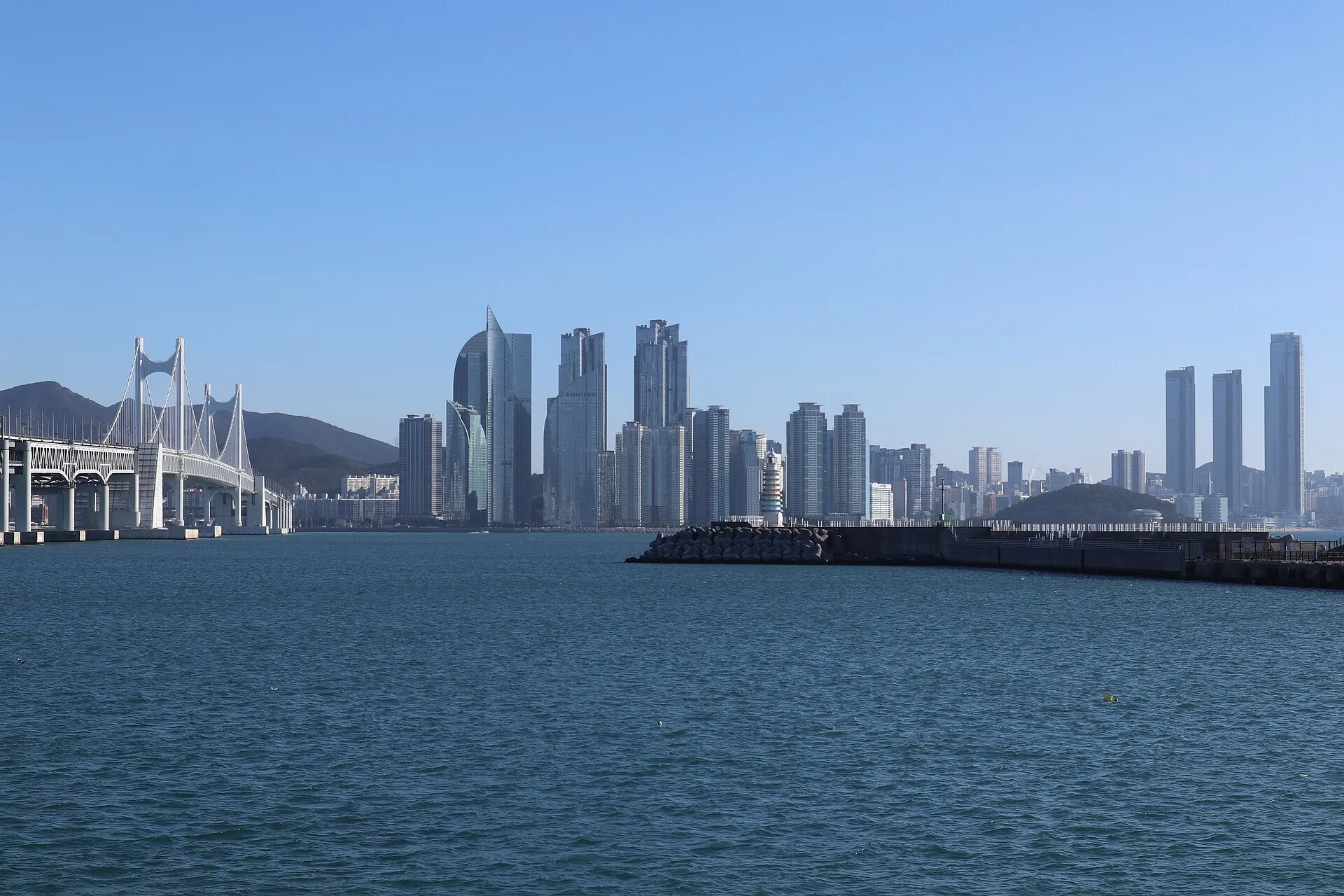
Busan has an active nightlife centered on Gwangan and Haeundae. Gwangalli Beach's strip has craft beer bars, rooftop bars, and live music venues with views of the illuminated Diamond Bridge. Seomyeon is busier and louder, with clubs open until dawn. Haeundae caters more to tourists with international bars.

Nature

Jeju Island

Jeju's nature is the island's headline attraction. Hallasan, a dormant volcano and South Korea's highest peak, sits at the center of the island and is hikeable year-round.

Busan

Busan is unusually green and coastal for a major city. Haeundae and Gwangan beaches are metro-accessible. Taejongdae cliff park, Geumjeongsan fortress mountain, and Igidae coastal trail are all within easy reach.

Food

Jeju Island

Jeju has a distinct food identity built on its island ingredients. Signature dishes include heukdwaeji (Jeju black pork) grilled over briquette fire, abalone porridge, raw and grilled abalone, galchi (hairtail fish), and fresh seafood from local haenyeo divers. Eating well is affordable at local restaurants.

Busan

Busan has a distinct food identity from Seoul, built heavily on seafood from Jagalchi fish market, milmyeon cold noodles, and gukbap rice soup. Local restaurants are excellent and inexpensive. The Gwangan area has a growing craft beer and Western food scene. Seomyeon covers all major Korean cuisines.

From the score notes in the Jeju Island and Busan guides, where each one is explained in full.

Month by month: the weather

Each bar runs from the average daily low to the average daily high. Rain is below.

Jeju IslandBusanScale runs from 0C to 30C, rain up to 327 mm
See the numbers
Jeju IslandBusan
Jan9C / 4C, 68 mm8C / 0C, 35 mm
Feb10C / 4C, 57 mm10C / 2C, 50 mm
Mar13C / 7C, 91 mm14C / 5C, 90 mm
Apr18C / 11C, 90 mm18C / 10C, 141 mm
May22C / 15C, 96 mm22C / 15C, 156 mm
Jun25C / 19C, 171 mm25C / 18C, 188 mm
Jul29C / 24C, 210 mm28C / 22C, 327 mm
Aug30C / 25C, 272 mm30C / 24C, 267 mm
Sep26C / 21C, 228 mm26C / 20C, 161 mm
Oct22C / 16C, 95 mm23C / 15C, 80 mm
Nov16C / 10C, 70 mm17C / 8C, 50 mm
Dec11C / 6C, 56 mm10C / 2C, 34 mm

Jeju Island: weather-station averages for 1991-2020. Busan: weather-station averages for 1991-2020.

What a month costs

Jeju Island$2,200
Busan$2,400

Our own estimate for a comfortable month for one remote worker, the same figure the city guides use.

Entry rules for common passports

Tourist entry on arrival. Every passport is in the visa finder, and remote-work visas are on the nomad visa page.

United States
Visa-free, 90 daysin both
United Kingdom
Visa-free, 90 daysin both
Germany
Visa-free, 90 daysin both
Canada
Visa-free, 180 daysin both
Australia
Visa-free, 90 daysin both
India
eVisain both

Where you would live and work

The areas people choose in each city, and some of the places they work from.

Jeju Island

Neighbourhoods

  • Jeju CityIsland capital with black pork BBQ
  • SeogwipoSouthern coast with natural wonders
  • Hallasan National ParkSacred mountain at island center
  • Udo IslandIsland off an island with emerald waters
  • AewolCafé culture and sunset coast

Places to work

J-SpaceO-Peace JejuRe:flow JejuCoffee Temple JejuWorkmode Jeju City Cafes
More on the Jeju Island guide →
Busan

Neighbourhoods

  • HaeundaeBusan's iconic beach playground
  • SeomyeonBusan's urban commercial heart
  • Gamcheon Culture VillageBusan's colorful hillside art village
  • Nampo-dong/BIFF SquareBusan's traditional market district
  • GwangalliBusan's local beach with bridge views

Places to work

Pathfinder Coworking Busan National UniversityWeWork BIFCNomad WorkCoffee Smith CentumCoffee Sugamo Inn
More on the Busan guide →

Services in a language you speak

Providers in our directory who work in a language other than the local one, from official registers, consular lists and the providers’ own websites.

Estate agents
0Jeju Island
73Busan
Translators
0Jeju Island
6Busan
Dentists
0Jeju Island
4Busan
Pharmacies
0Jeju Island
1Busan
Lawyers
0Jeju Island
1Busan

Where each city wins

Jeju Island is stronger on

NatureAir QualityClimateCost of LivingSafety
Jeju Island guide →

Busan is stronger on

NightlifeFoodWiFiCommunityCulture
Busan guide →

Add a third city in the comparison tool →

Frequently asked questions

Is Jeju Island or Busan cheaper for digital nomads?

Jeju Island is the cheaper base, around $2,200 a month versus $2,400 in Busan, a difference of about $200.

Which has better WiFi, Jeju Island or Busan?

Busan scores higher for WiFi (8/10 versus 7/10).

Which is safer, Jeju Island or Busan?

Jeju Island rates higher on safety (10/10 versus 9/10).

Jeju Island or Busan: which is better overall for remote work?

They tie on the overall Nomad Score (7.4/10), so it comes down to your priorities.