 Wellington
New Zealand's clock shapes this choice before the scenery does. In the southern summer the country runs 13 hours ahead of London and 21 ahead of Los Angeles, so your 7 a.m. is 6 p.m. the evening before in London and 10 a.m. in Los Angeles. Work with either place and your calls gather at the two ends of the day, leaving a long quiet stretch in the middle. Both towns share that clock. What separates them is what you can do with the gap, so follow one day through each.
7 a.m.
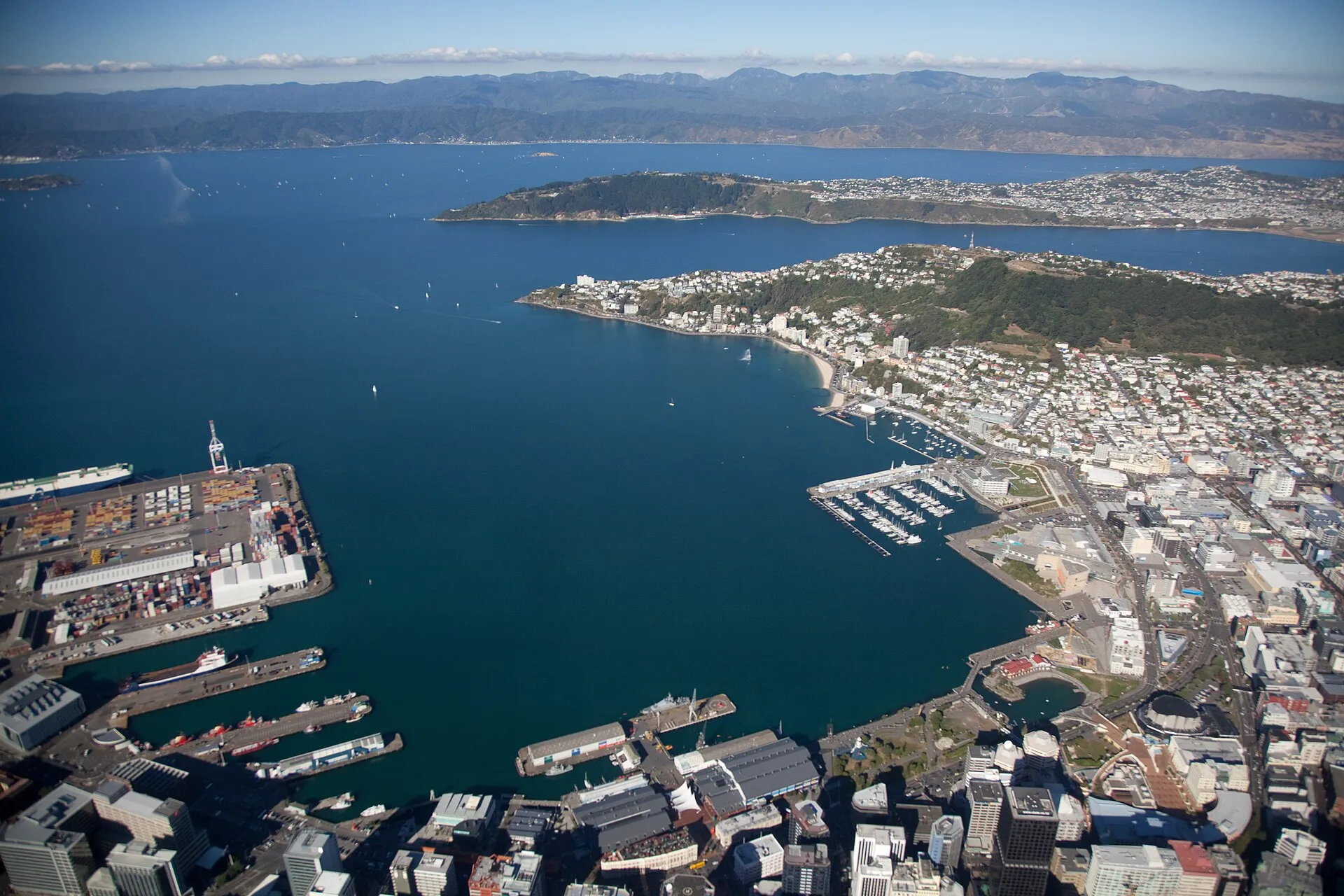
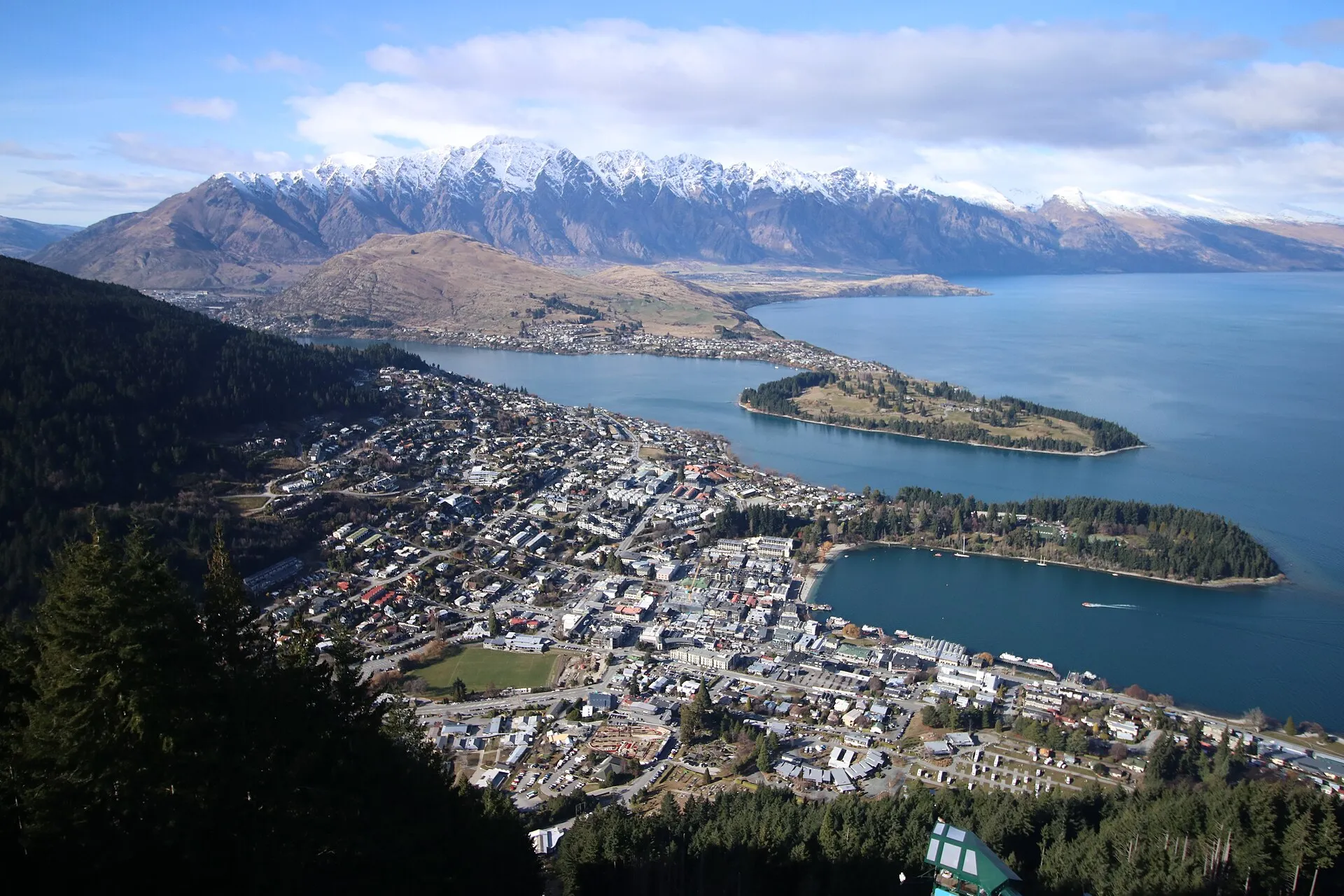
In Wellington you could be taking those calls in a wooden villa on Mount Victoria, the harbour below you and the wind leaning on the glass. No city in the world has a higher average wind speed, at 27 km/h, and you will stop mentioning it after a month. In Queenstown your flat is more likely to be in Frankton, out by the airport and the supermarkets, because the lakefront belongs to visitors. On a July morning it may be 2°C outside. The connection will not be your problem: the town's fibre rollout finished in 2020.
Noon
Wellington's lunch hour is a pleasure of small distances. Walk down to Lambton Quay and step into a side lane, Cable Car Lane, where the red cars have been climbing since 1902: five minutes and 120 metres later you are in Kelburn at the gate of the Botanic Garden. Come back down and eat on Cuba Street, where the Bucket Fountain, tipping water from one bright pail to the next, still soaks anyone standing too close.
In Queenstown you will walk to Shotover Street, where Fergburger began in a garage off Cow Lane, and take your lunch to the shore. Lake Wakatipu is 80 kilometres long and 420 metres deep, and it behaves oddly: in Queenstown Bay the surface rises and falls about 20 centimetres every 27 minutes or so, a slow standing wave across the whole lake. Sit there long enough and you can watch the water move up the stones.
3 p.m.
This is Queenstown's hour, and there is no contest. Coronet Peak, New Zealand's first commercial ski field, is 25 minutes away, and on Wednesday, Friday and Saturday nights from July to mid-September it stays open under lights. In summer the Skyline gondola carries your bike to Bob's Peak, about 450 metres above the lake, and you ride down before your evening calls.
Wellington's answer is gentler. You can go to Zealandia, a fenced 225-hectare valley on the edge of the suburbs that once held the city's water supply, where tuatara live and from which kākā have spread across the suburbs. It is lovely, and it is a walk, where Queenstown is a sport.
9 p.m.
Now the positions reverse. Your European clients are starting their morning, and when you close the laptop you are in one of two very different places. Wellington has about 210,000 people in the city and 434,000 around it, along with Parliament, Te Papa, the film and special-effects trade, and a bar or a gig somewhere near Courtenay Place on most nights. Queenstown has 29,000, and its evenings are built around people on holiday. By your third month the second kind of town can feel like a very beautiful departure lounge.
The first of the month
We put a month at around $3,200 in Wellington, and at around $4,000 in Queenstown, and the second figure assumes you found somewhere. By early 2023 workers were reported sleeping in cars and tents, even though 27 percent of Queenstown's homes stood empty on census night in 2018. Book before you fly.
Flights push the other way. Wellington's short runway limits non-stop overseas routes to south-east Australia and the South Pacific, and strong winds cancel about 2 percent of its flights. Queenstown flies direct to Sydney, Melbourne, Brisbane and the Gold Coast.
The paperwork treats them alike. Since January 2025 visitors have been allowed to work remotely for overseas employers and clients, and income taxed elsewhere is generally exempt for your first 92 days in New Zealand in any 12 months. We would use those days like this: nine weeks in Wellington, then a direct flight south for the last three, timed for July, when you can answer your morning email from a chairlift queue and ski after dark on a Friday.
 United States
 United Kingdom
 Germany
 Canada
 Australia
 India