 Tenerife
Island life has a test that the brochures leave out, and it falls around your sixth free weekend. By then you have done the famous things, and you find out whether there is anything left. Tenerife and Lanzarote share winter sun and London's clock, so we think weekends are the fairest way to tell them apart. Tenerife covers 2,034 square kilometres and has about 974,000 people. Lanzarote has 846 square kilometres and about 163,000. That difference shows up by the second Saturday.
Going up the volcano
Both islands will sell you a volcano on your first weekend, and you experience them in completely different ways.
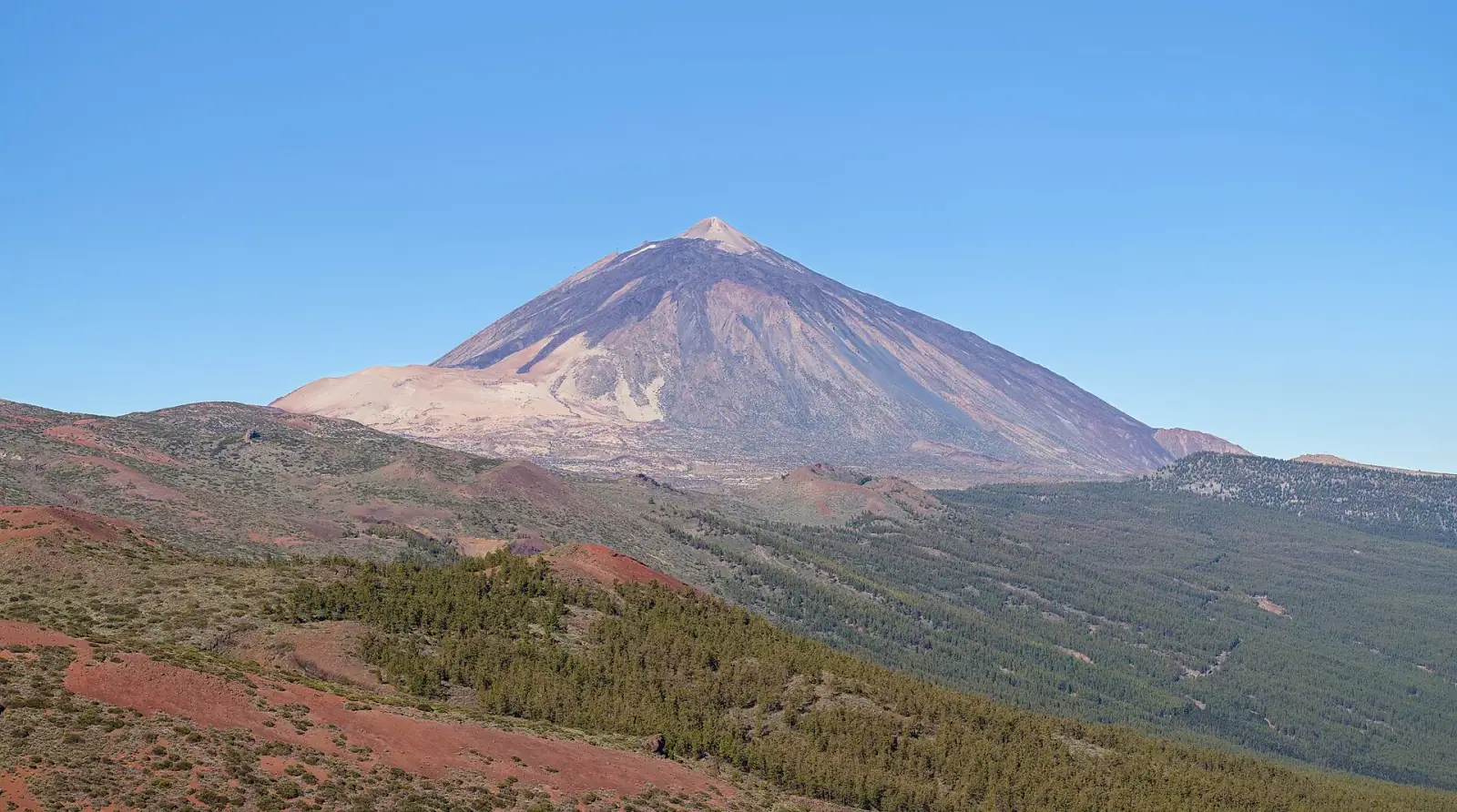
Teide, at 3,715 metres the highest point in Spain, is something you do yourself. You drive up through the clouds, ride the cable car or walk, and if you want the very top you book the free summit permit in advance. You could go back in January when it may be white, and again in May, and walk different trails each time.
Timanfaya is a one-time show, though an extraordinary one. Eruptions from 1730 to 1736 buried about a quarter of Lanzarote, and the park's road is closed to the public, so you tour the black cones by coach. Staff pour water into a hole in the ground and it comes back as a burst of steam. Take a bus tour, since cars can queue for over an hour to get in. Afterwards there is little reason to return.
Taking a boat to the next island
This is where Lanzarote pulls level, and possibly ahead. A foot ferry leaves Órzola, at the northern tip, and takes about half an hour to reach La Graciosa, an island of 734 people, one real village and dirt tracks instead of roads. You can rent a bike at Caleta del Sebo, ride out to Playa Francesca, swim, and eat fish soup by the harbour before the boat home. Your phone may stop working, and that is rather the point. From Playa Blanca in the south, Fuerteventura's Corralejo is about 30 minutes away, which gives you a second island for another Saturday.
Tenerife's answer is the 50-minute ferry from Los Cristianos to La Gomera. That is a bigger trip with a stranger reward: the misty laurel forest of Garajonay, a World Heritage Site since 1986, and silbo, a whistled language that carries across ravines and that the island's children learn at school.
A weekend with no plan
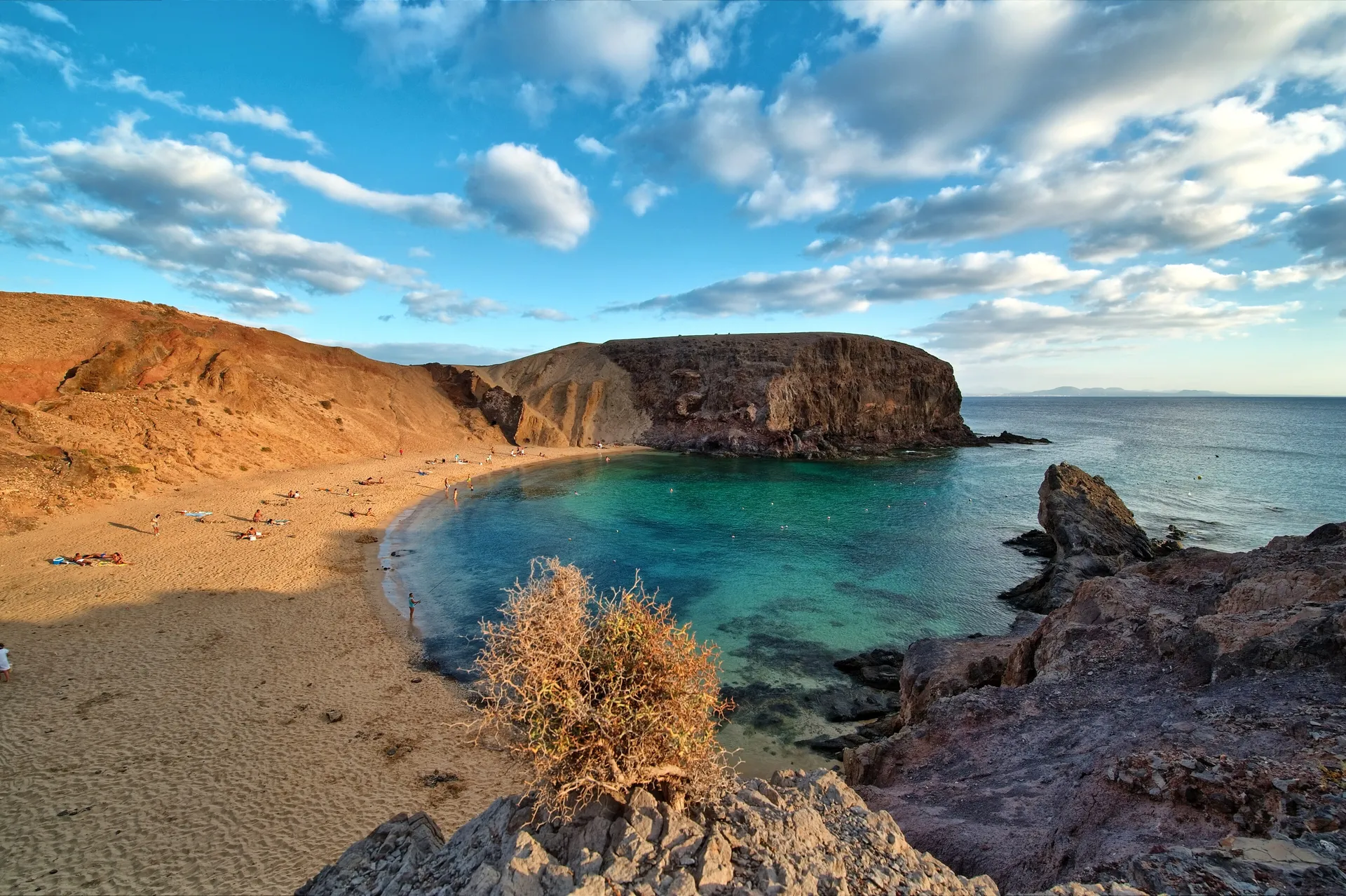
On Lanzarote you might go to the Sunday market at Teguise, the old capital, then on to Famara, where surfers work the break under the long cliffs. You could stop among the vines of La Geria, each one growing in its own pit behind a low stone wall against the wind. César Manrique's work is everywhere you go, from the concert hall inside the Jameos del Agua lava caves to the Mirador del Río café cut into the rock. He also lobbied for the ban on high-rise hotels, which is why the island still looks like his idea of it.
On Tenerife you might take the tram from Santa Cruz up to La Laguna, the World Heritage university town, and spend the day there among students. Or you could drive into the Anaga massif, 140 square kilometres of mist forest and small villages, or hike the Masca ravine on a weekend if you get one of the limited permits.
Now the arithmetic. Lanzarote can be crossed from end to end in about 40 minutes, so everything above is close, and most of it can be finished by the end of your second month. Tenerife will never be finished, but you pay for that on the road: guidebooks put realistic driving speeds at 30 km/h or less, and buses thin out at weekends. Expect to spend Saturday mornings at the wheel.
What a weekend budget buys
Our estimate for a full month is $2,400 on Tenerife and $1,900 on Lanzarote, and you should keep some of that $500 for a car on either island.
So count your weekends before you pay a deposit. Up to about ten, Lanzarote will fill them more beautifully, especially with a surfboard. Beyond that, we would take Tenerife, because on the island that keeps going you still have somewhere new to drive to in March.
 United States
 United Kingdom
 Germany
 Canada
 Australia
 India