 Tbilisi
Find the thin ridge that runs north to south through the middle of Georgia on a map. That is the Likhi Range, a spur joining the Greater and Lesser Caucasus, and it decides most of what follows. The highway from the capital crosses it at the Rikoti Pass, 996 metres up, through a tunnel finished in 1982. Rivers on the far side run to the Black Sea, and rivers on the near side run to the Caspian. Tbilisi and Batumi share a government and a language, but that ridge gives them separate climates, separate neighbours and a different kind of year.
Which side of the mountains gets the rain
Black Sea moisture reaches the western lowlands and stays there. Batumi is the wettest city in the Caucasus, and its September alone brings more than half of what Tbilisi gets in twelve months. The mountains shield the east, so Tbilisi, up at 380 to 770 metres in its valley on the Mtkvari, has a drier and more continental life, with real cold and real heat.
| Tbilisi | Batumi | |
|---|---|---|
| January, high and low | 7°C, 0°C | 11°C, 3°C |
| July, high and low | 32°C, 20°C | 25°C, 20°C |
| Wettest month | June, about 84 mm | September, about 295 mm |
| Rain in a year | about 507 mm | about 2,500 mm |
All that water is also why Batumi looks the way it does. Nine kilometres north of the centre, on the Green Cape, the botanical garden fills 108 hectares of hillside above the sea with plants from the Himalayas, New Zealand and South America. A July in Batumi, with the sea at the end of the street and a high seven degrees below the capital's, is the best thing on this page.
What lies next door
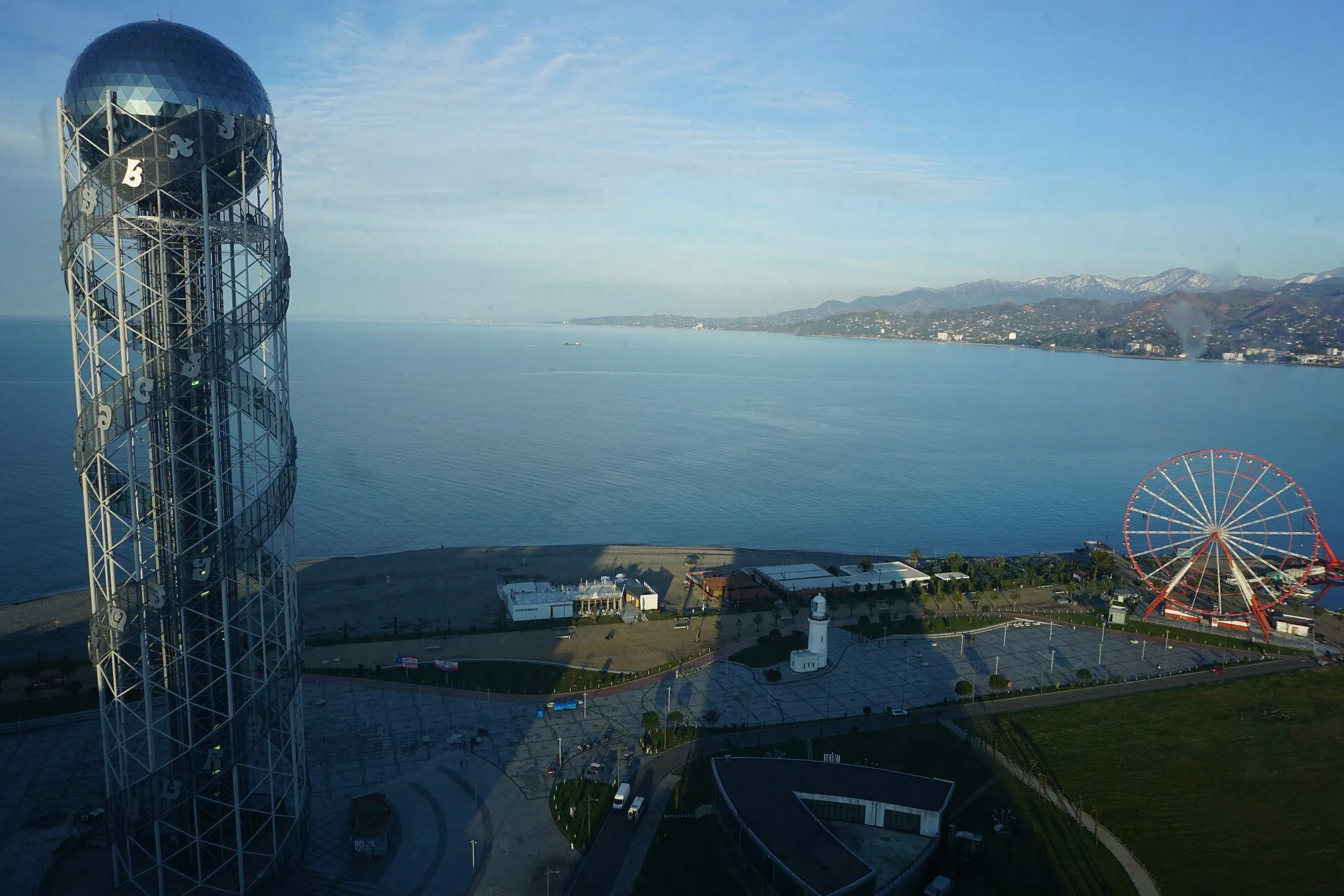
Batumi sits at the far edge of the country, about 20 kilometres from Turkey, and it faces that way. The Sarpi crossing is open all night, and Turks come over for the casinos, since gambling is illegal at home, which explains the nickname "the Las Vegas of the Black Sea". High-rise hotels have gone up around the 145-metre Alphabetic Tower since 2010, and on the seafront you can watch the moving statue of Ali and Nino, two figures who travel towards each other every day and never stay together. It is a small city of about 246,000, and it thins out when the season ends.
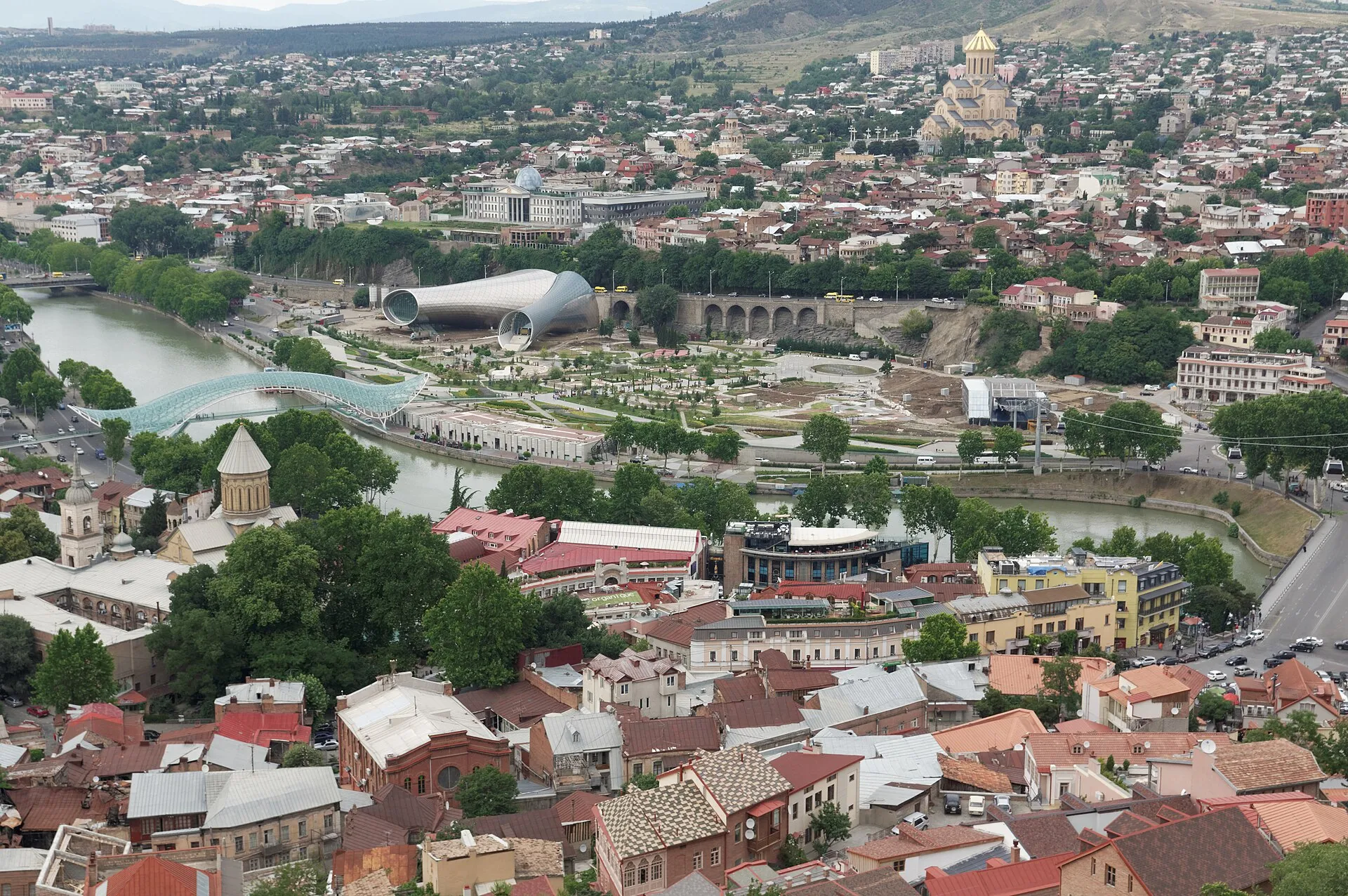
Tbilisi sits in the middle of everything instead, with about 1.37 million people, and it behaves like a capital in February as much as in June. The airports show the gap. Tbilisi handled 5.4 million passengers in 2025 and Batumi 1.2 million, with many of Batumi's routes, to Riyadh, Kuwait City and Tel Aviv, running only in season.
Crossing the ridge
The train takes about five hours, with several fast services a day and one overnight. The bus takes six or seven. That is too far for a weekly commute and easy enough for moving house twice a year, which is what we think you should do.
The same year-long visa-free stay covers EU, American and British passports in both cities, and so does the rule, new in January 2026, that you must carry travel medical insurance worth at least about $11,000 for your whole stay. Our estimates come to $1,600 a month in Tbilisi and $1,400 in Batumi, and that $200 should not move you either way.
The calendar we would use
Rent in Tbilisi and treat it as home from September to June, in Vera or Sololaki if you like old balconies, or Vake if you want parks. When the capital reaches 32°C, go west for the summer and work from a flat near the boulevard or down in Gonio, where the sea is a walk away. Then book your return train for the last days of August, before the mountains start sending all that rain back to Batumi.
 United States
 United Kingdom
 Germany
 Canada
 Australia
 India