 Sydney
 Wellington
Read the opening clauses of Australia's constitution and you will find a small surprise. "The States", it says, means such of the colonies of New South Wales, New Zealand, Queensland, Tasmania, Victoria, Western Australia and South Australia as are parts of the Commonwealth. New Zealand sent delegates to the federation talks in 1890 and 1891, told the room there was little appetite for it at home, and stayed out when the other six joined in 1901. The name was never taken out.
That decision is why you are comparing two countries here, and most of what separates Sydney from Wellington today still follows from it.
Who can cross the border freely
Having chosen separate countries, the two have spent a long time undoing the inconvenience. Since 1973 citizens of each have been able to live and work in the other indefinitely. A New Zealander gets a visa on landing in Australia with no time limit, and since 2023 can apply for citizenship directly after four years. Far more of them have gone west than Australians have come east, which New Zealand worries about as a brain drain.
So start with your passport. With either one, you can try both cities with almost no paperwork, and the rest of this page is purely about taste. Everyone else meets two rule books. New Zealand now states plainly that visitors may work remotely for overseas employers and clients. Australia's Home Affairs department says a visitor visa does not allow you to work in Australia, and we could not find a matching allowance for remote work. For a stay built around a laptop, Wellington is the one with the clear answer in writing.
Size, flights and cost
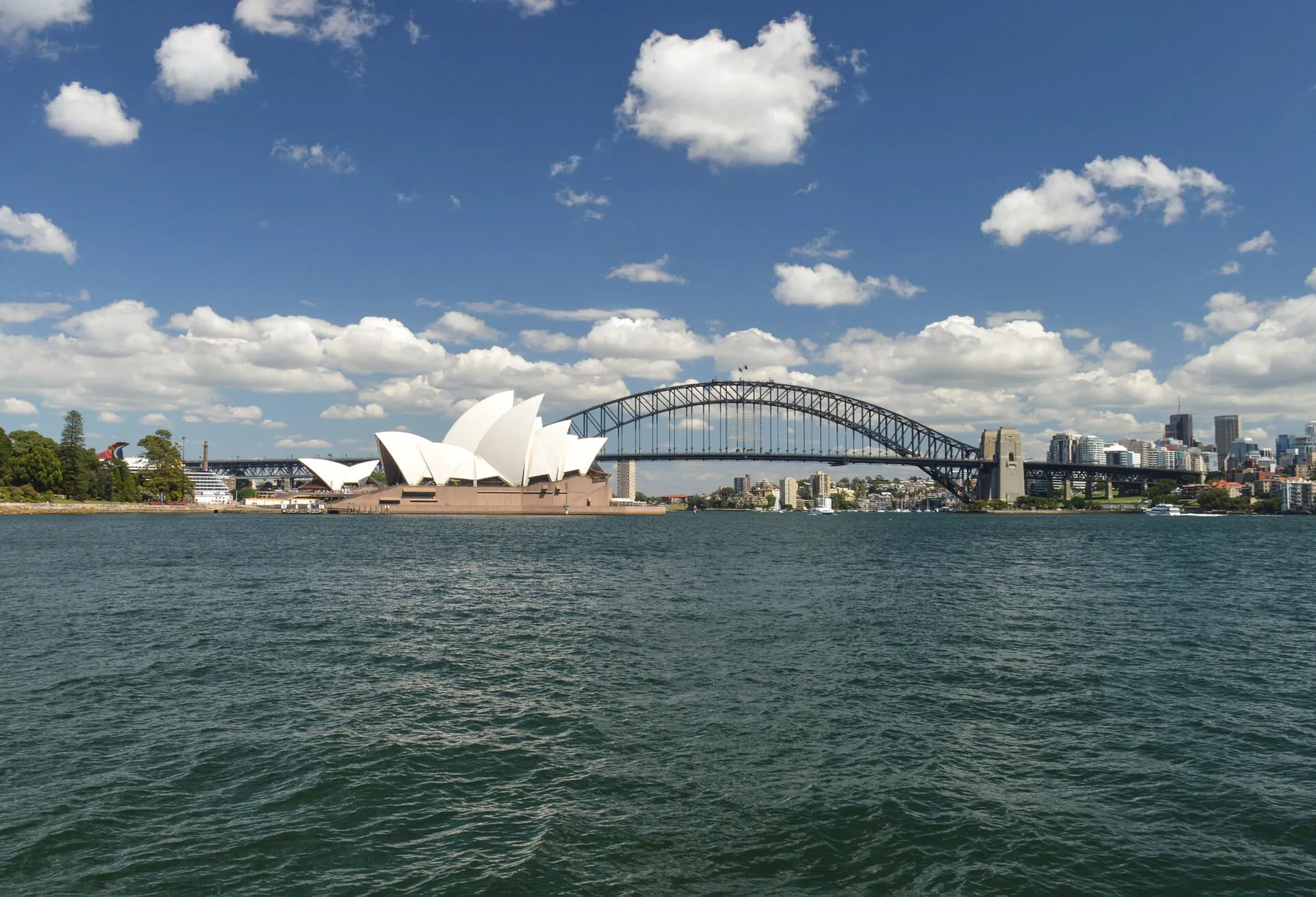
Staying out also meant staying small. Sydney has 5.6 million people, more than 40 percent of them born overseas, and seventy surf beaches. You could live in Manly and take the ferry to Circular Quay for 25 minutes across the harbour, which must be among the better commutes on earth, then come home to a surf beach at the end of The Corso. The Harbour Bridge has been the backdrop since 1932. Its second airport, Western Sydney International, took its first passengers in late October, with Air New Zealand flying to Auckland on day two.
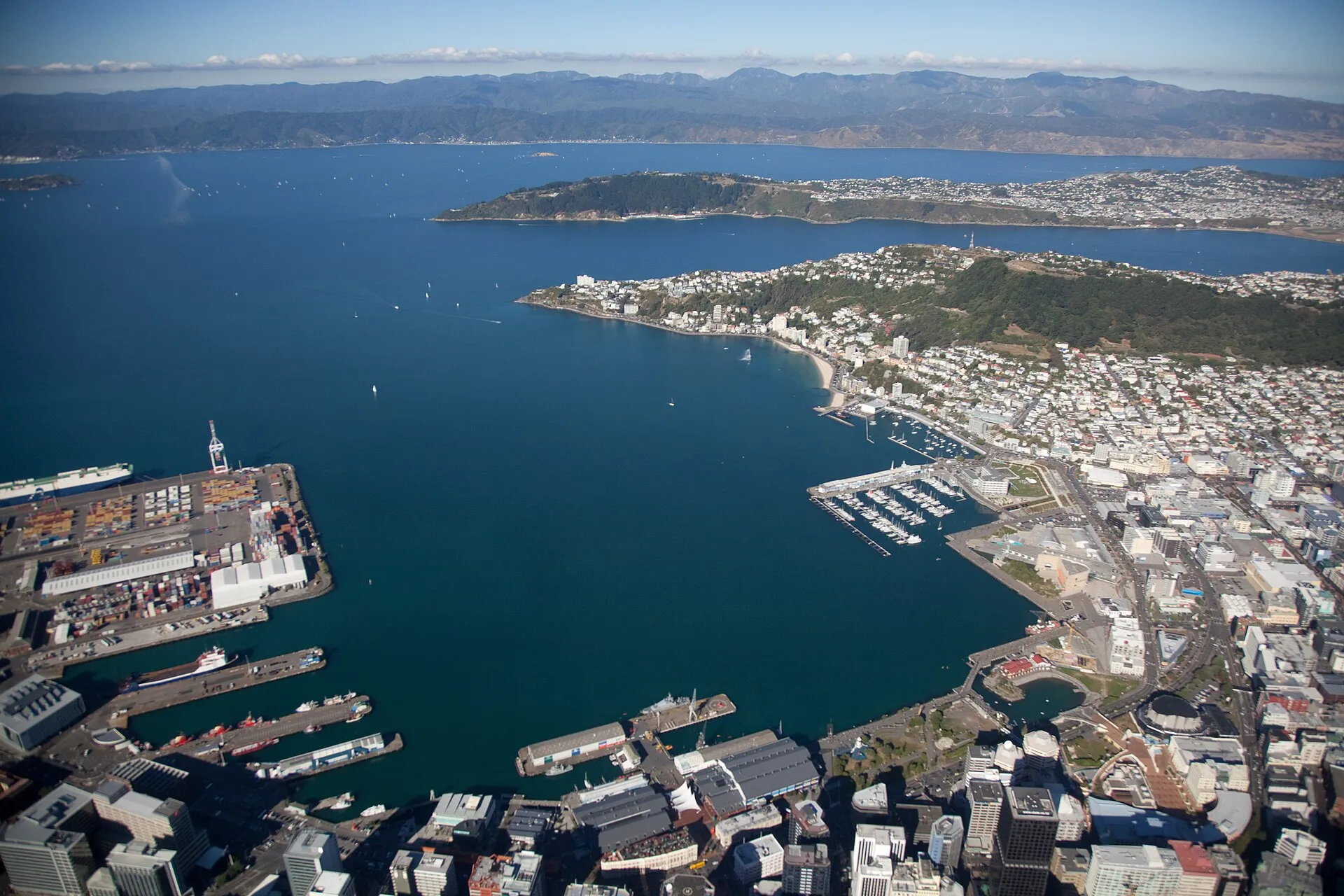
Wellington has 210,000, and it is the capital. Its airport's short runway limits non-stop flights to south-east Australia and the South Pacific, so any trip to Europe or Asia begins with a connection. What you get in exchange is a city you can cross on foot, with Parliament, the national museum and Cuba Street's cafés all in reach of each other.
That smallness comes at a real discount. We estimate a month at around $4,500 in Sydney and around $3,200 in Wellington. You give up warmth along with size, though: Sydney's July days reach 18°C and its January days 27°C, while Wellington manages 13°C and 21°C, with wind on top.
The 1855 earthquake and Lambton Quay
Wellington's own history gave it one more thing to live with. Walk along Lambton Quay, its main shopping street, and you are on the original waterline. Settlers called it "the beach", and small wharves stood on its seaward side. Then in 1855 a great earthquake, of magnitude 8.2 or more, lifted the land, and the water became too shallow for ships. With later reclamation, the street now lies about 250 metres from the harbour.
The ground is still in charge. The Kaikōura earthquake of 2016 shut most of the central city, the university and the rail network for a day. Fidel's, the Cuba Street café, was out of its premises for earthquake strengthening as recently as 2025. Ask how your building has been strengthened before you ask about the heating.
We lean to Sydney for anyone who can pay for it and can sort out the right to be there, because the harbour and the beaches are a daily gift that no amount of Wellington charm matches. But a working stay of a few months, on a tighter budget, with clear rules? Go to Wellington, and enjoy the fact that it could have been an Australian state and politely declined.
 United States
 United Kingdom
 Germany
 Canada
 India