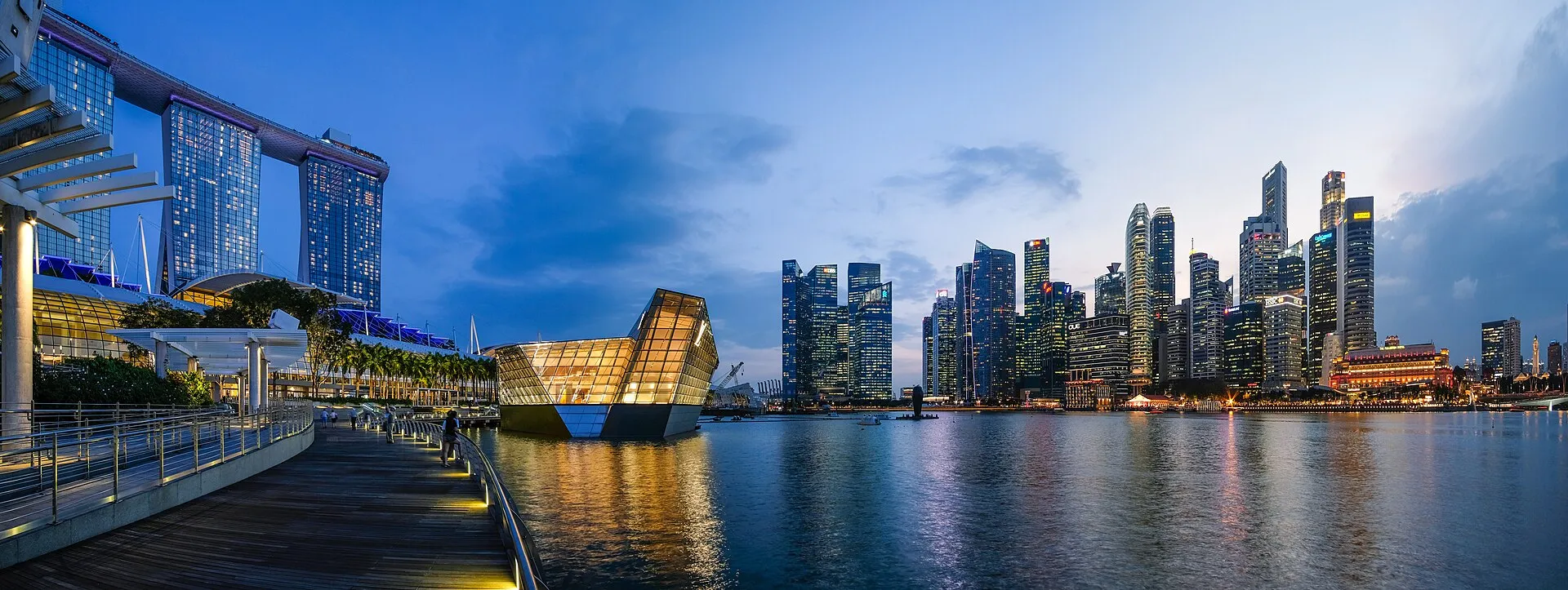
 Singapore
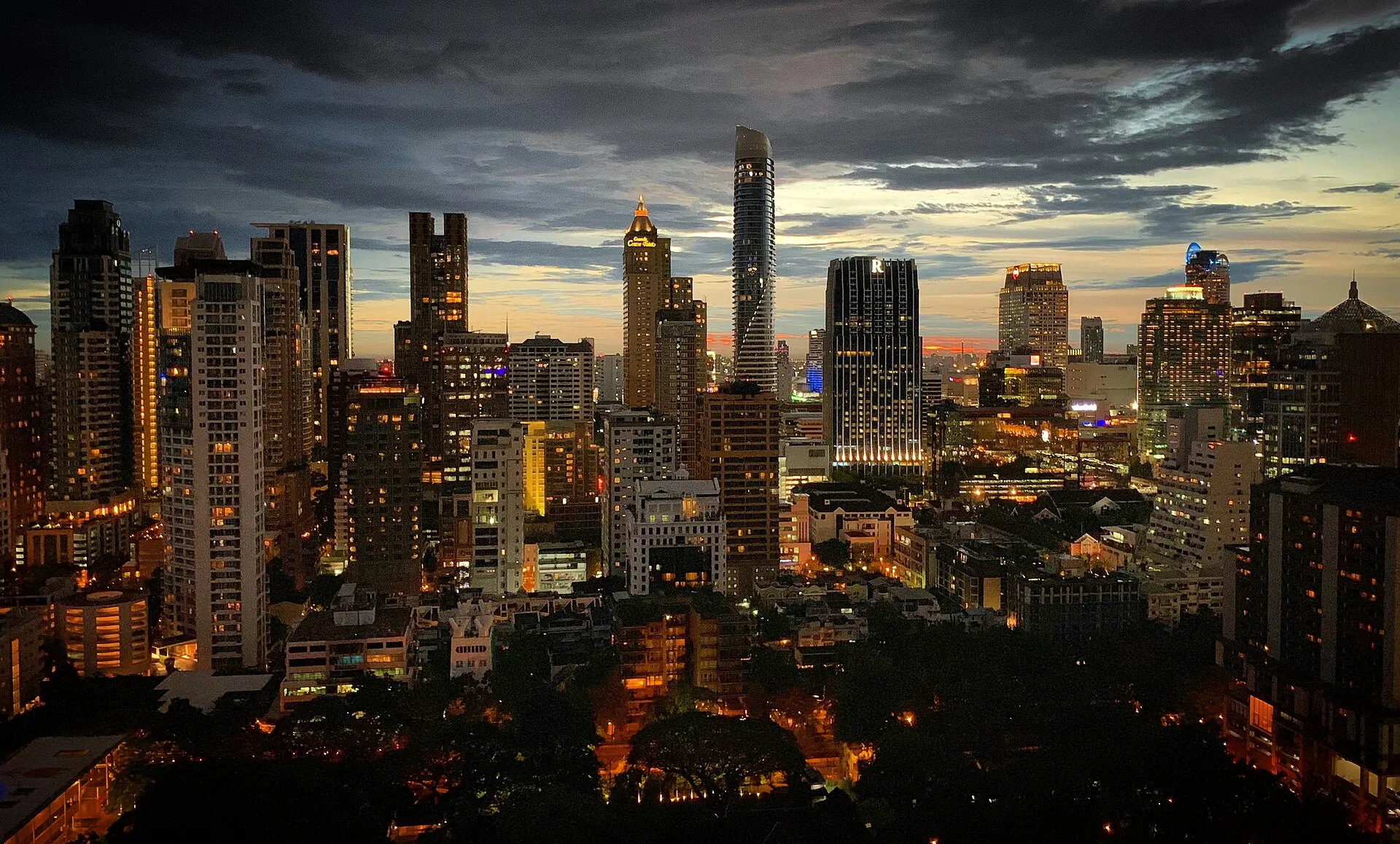
 Bangkok
Set two clocks an hour apart and spend the same working day in both. Bangkok's time comes first below, Singapore's second. The heat is close to identical, so you can ignore that. Watch the other things.
06:30 and 07:30. In Bangkok, Lumphini Park has been open for two hours. Joggers are going round the 2.5 kilometres of path with the skyline of Silom above them, and with luck you will pass some of the park's roughly 400 water monitors, long lizards that move across the grass as if they owned it. In Singapore you could be climbing the stairs of Tiong Bahru Market to the hawker floor for chwee kueh or lor mee, among curved flats from the 1930s that residents once called aeroplane flats. Singapore's version of the morning is prettier. Bangkok's has the lizards.
08:00 and 09:00. Eight o'clock in Bangkok is when the national anthem plays in public spaces, and people stop and stand until it ends. The law no longer requires it, and most still do it. Get to your train after that. The BTS costs about $0.50 to $1.40 a ride and carries over 700,000 people a day. You could also try the Khlong Saen Saep boats along the canal to Pratunam: under $1, cash on board, on a service that carries about 60,000 people a day. In Singapore the workday is by now starting, the MRT is doing what it always does across 146 stations, and nothing about your commute will be worth telling anyone. That is the point of it.
12:30 and 13:30. Lunch is where each city gives itself away. In Bangkok, a plate of kaphrao at a stall costs about $1.50 to $1.80, and you can eat it on a plastic stool at the side of the road. In Singapore, you eat in a hawker centre, the "community dining rooms" that UNESCO listed in 2020, and the food may be just as good. One hawker still held a Michelin star in 2025. But note the small print. Clearing your own tray is enforceable, with a fine of about $235 for a second offence. Stall bids in the most popular centres have passed $7,800 a month. Singapore has taken street food and made it orderly, hygienic and accountable, which is exactly what the place does with everything.
15:00 and 16:00. This is the slump, and in the wrong month it comes with rain: Bangkok's wettest month is September, at about 336 millimetres, and Singapore's is December, at about 332. Bangkok has a second season that Singapore lacks. In early-year haze, readings have reached 94 micrograms of fine particles per cubic metre in parts of the city, and that afternoon walk to the coffee shop becomes something to think about. You will work with the windows shut through those first months of the year.
18:00 and 19:00. The anthem again in Bangkok, and then the evening divides the two cities properly. You could go up to Thonglor or Ekkamai, where a good cocktail and a very good dinner still leave you with change from what the same night costs in Singapore's Tanjong Pagar, between the restored shophouses. Singapore's night is pleasant and ends in a clean train before midnight. Bangkok's can go on for as long as you can.
The part the clock does not show
We put a month at about $4,500 in Singapore and about $2,200 in Bangkok, so one city costs twice the other for a day that is, hour by hour, not twice as good. The more awkward matter is getting permission to have that day at all.
Singapore's main route is the Employment Pass, which runs through an employer and has a minimum salary rising with age. For a new application from January 2027, that minimum starts at about $4,690 a month. A freelancer paid from abroad is not who this pass is built for.
Thailand's door is wider but it has moved recently. Since 15 September 2026, the visa-free stay for most Western passports has been cut from 60 days to 30. The Destination Thailand Visa remains the serious option, valid for five years with 180 days per entry, on about $14,950 in the bank and proof of remote work. Since 31 August 2026, though, you must apply in a country where you hold citizenship or permanent residence, so you can no longer pick it up in a neighbouring capital while travelling. Our Thailand page goes further into living there.
Unless a Singapore employer is sponsoring you and paying accordingly, live in Bangkok. Keep an air purifier for February. Visit Singapore for the meetings, the hospitals, or a few days when you miss pavements that make sense.
 United States
 United Kingdom
 Germany
 Canada
 Australia
 India