 San Miguel de Allende
Picture yourself eight months from now, a little annoyed with the town you picked. These two colonial towns in the same Mexican state, about an hour and a half apart, tend to disappoint in very different ways, and each regret is easier to avoid than to fix. Try on each of them before you pay a deposit.
Money
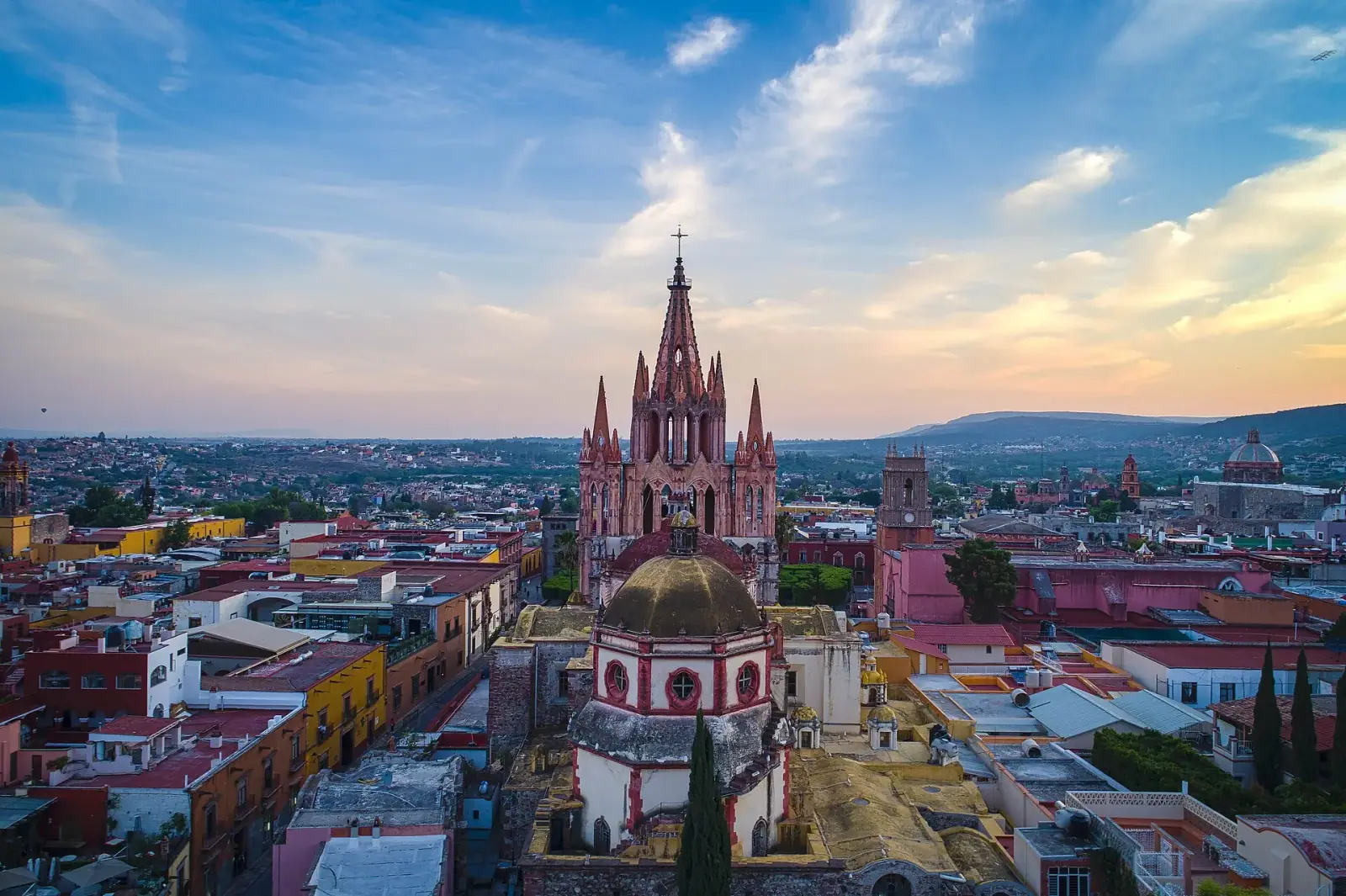
By our reckoning, San Miguel de Allende asks about $2,200 a month and Guanajuato about $1,500. That gap comes to $8,400 a year, and you will notice it on the day you realise what you have been paying for. Foreign money has been arriving since veterans came on the GI Bill to study art, and the Instituto Allende opened in 1951. Today some old colonial houses here have sold for more than houses in Mexico City. You get the pink neo-Gothic façade that a self-taught mason, Zeferino Gutiérrez, put on the Parroquia in 1880, bands in the Jardín at weekends, and the galleries at Fábrica La Aurora. If those things stop being the point of your week, the rent will start to feel like a tax.
Spanish
The classic San Miguel disappointment is arriving to learn the language and finding you do not need it. An estimated 20,000 to 25,000 foreigners live around the town, at least half of them American, and there are plenty of Spanish schools. You will have a lesson in the morning and order lunch in English. Guanajuato has about 30,000 students at its university and far fewer foreigners, so you will be forced into Spanish at the market, and you may feel lonely for the first few months. That loneliness is the regret on this side. San Miguel will find you friends by Friday.
Stairs
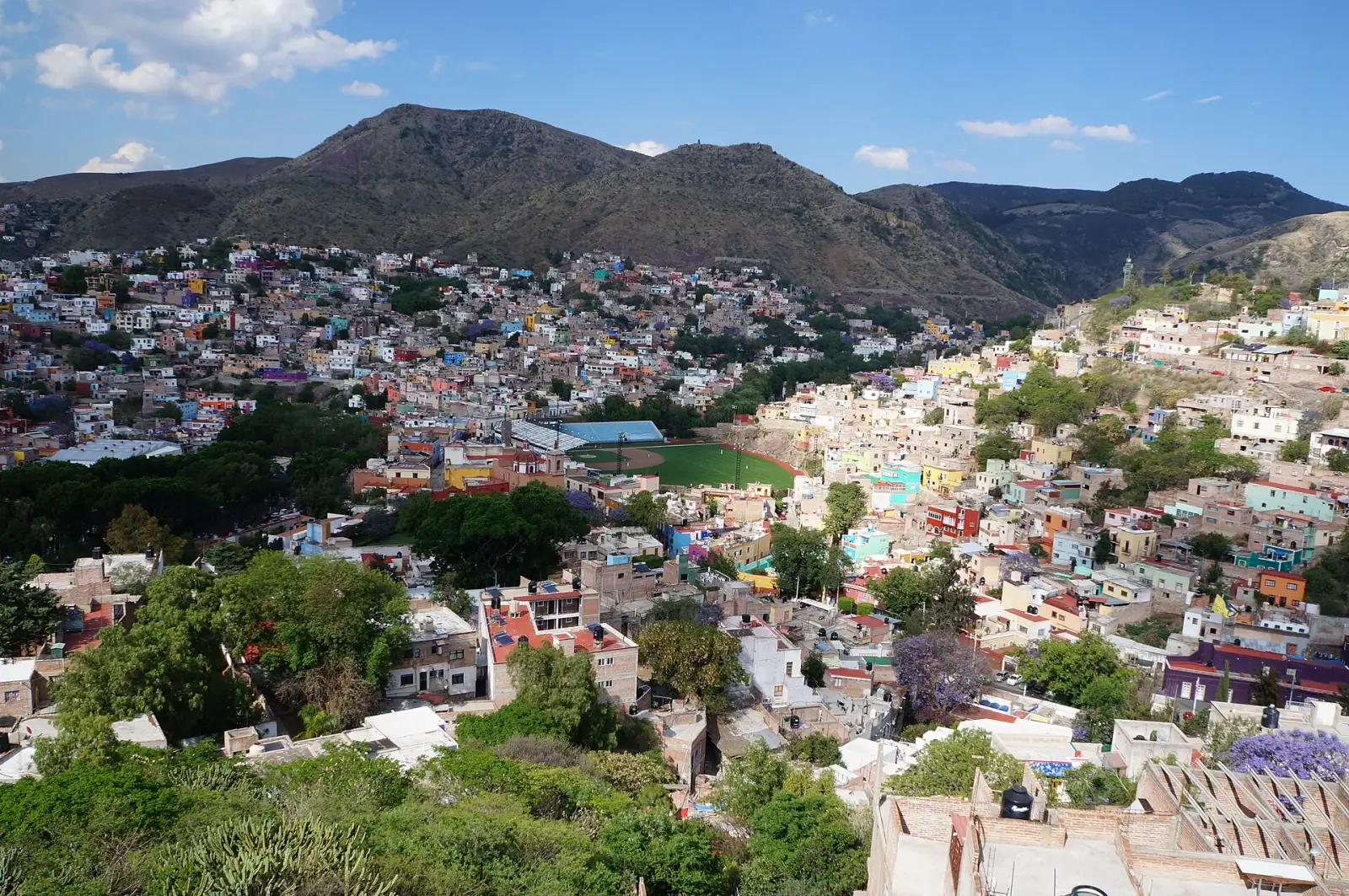
Guanajuato is built up the sides of a ravine at 2,045 metres, and its famous tunnels were dug to carry floodwater after floods in 1760 and 1780 nearly wiped the city out. They carry traffic now. Up above, houses painted every colour climb the slopes, reached by alleys such as the Callejón del Beso, just 168 centimetres wide in places. It is the most striking town in this part of Mexico, and on the day you move in with a suitcase and a monitor, you will count the steps. Look at the route from the nearest road before renting. San Miguel has its cobbles and its hills too, but they rarely ask this much of you.
October
You may love the Cervantino, the arts festival that grew from plays staged in the city's plazas in 1953. Its 2010 edition drew about 179,000 visitors to a city of roughly 70,000 people, with crowds drinking in the streets as well as 463,000 tickets sold. Expect to be irritated by it if you have morning calls in the old centre. Book that month elsewhere, or embrace it fully.
Desks and flights
For a video-call job, Guanajuato is the riskier pick. Dedicated coworking there is limited, with Best Oficinas the main survivor at around $140 to $270 a month, and San Miguel has a small but real scene, including Espacio Coworking near the Jardín. Flights favour Guanajuato, though, with the Bajío airport at Silao about 45 minutes away by taxi. San Miguel has no airport and is about 90 minutes from either Bajío or Querétaro.
Water and safety
Two matters are worth facing wherever you go. Around San Miguel, the local nonprofit Caminos de Agua reports groundwater falling by up to 2 metres a year and dangerous levels of arsenic and fluoride in what remains, so use a proper filter or bottled water for cooking too, and not only for drinking. And the state was Mexico's most violent from January to May 2026, with 668 homicides, down by more than half on the year before and still falling, to a nine-year monthly low of 95 in July. We found no town-level figures we would trust, so read that as a fact about the state as a whole, and ask around before you settle on a neighbourhood.
We would begin in Guanajuato. A month there costs little and tells you quickly whether you can live in Spanish, and San Miguel will still be waiting after that, an easy bus ride away. Going the other way is harder: few people give up an English-speaking circle of friends once they have one.
 United States
 United Kingdom
 Germany
 Canada
 Australia
 India