 Prague
 Krakow
The train between them
A Leo Express train leaves Praha hlavní nádraží a little before half past eight and pulls into Kraków Główny about six hours later. For most of the trip it crosses a Czech landscape of ordinary towns, Pardubice, Olomouc, Přerov, then the old coal and steel country around Ostrava. At Bohumín it passes into Poland. Its last stop before Krakow is Oświęcim, the town whose German name is Auschwitz. It has a station like any other, and it is an unsettling thing to see on a departure board.
That line is the useful fact about this pair. These cities are close enough to try both without a flight, and on the same 90 days in 180 of Schengen time, so you do not have to decide in advance. Daily trains in both directions make it realistic to do a season in each, and that is what we would do. The question is which one, and when, and the answer lies in how each city moves you around.
Getting around Prague
Prague has about 1.3 million people and a system built for them: three metro lines with 61 stations and 26 daytime tram routes, with night trams after that, all on one ticket and a monthly pass of about $26. Rent in Karlín, Vinohrady or Žižkov and you barely have to think about it. A fourth line, Line D, has been under construction since 2022, with its first section due in the second half of 2032, so do not plan your life around it.
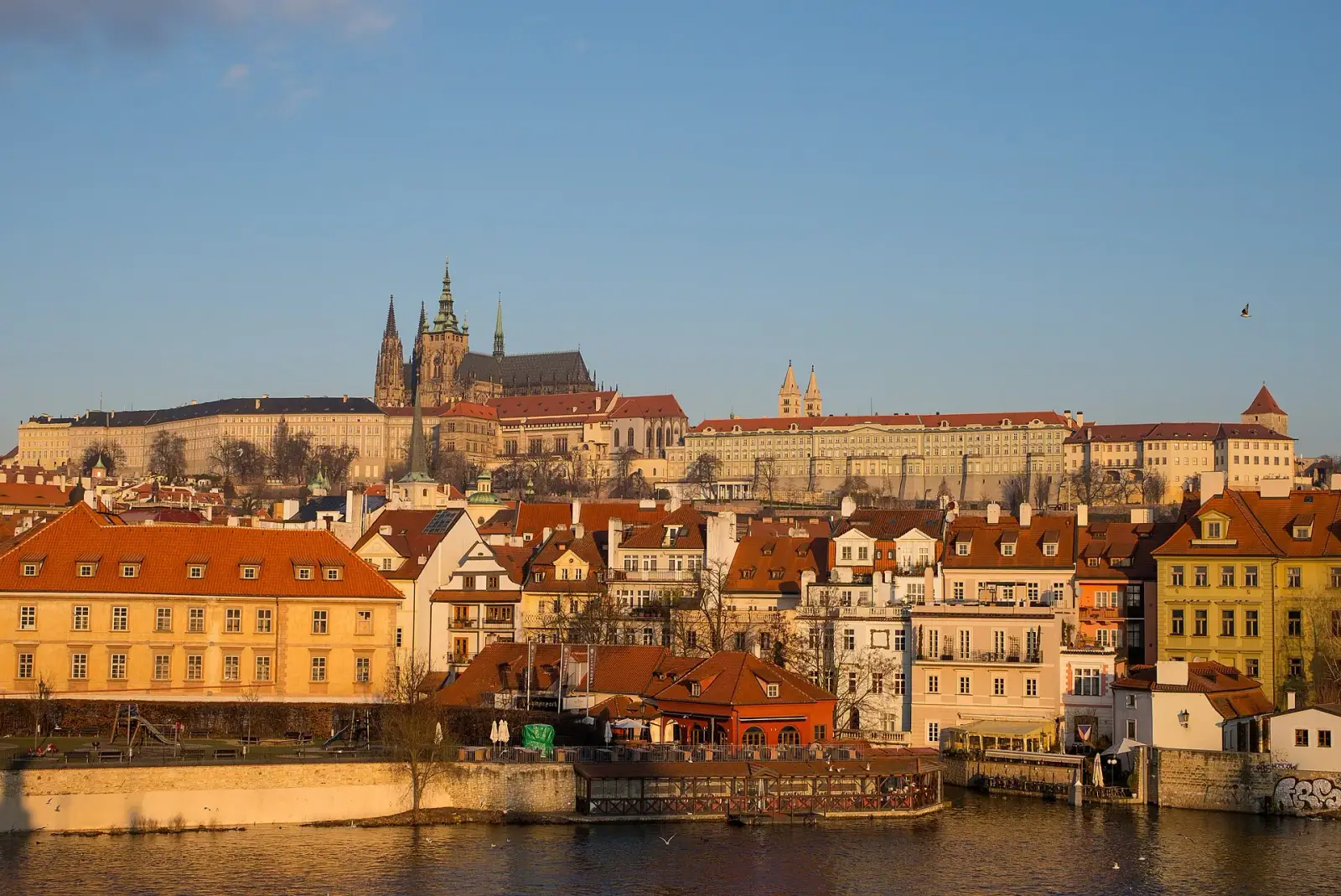
The trams are a pleasure as well as a utility. They rattle over the river with the castle above you, and your commute can look like something tourists pay for. The price of all this appears in the rent, and in the rest of the bill: we estimate $2,600 a month for Prague.
Getting around Krakow
Krakow, with about 816,000 people, runs on trams and buses, and it has been talking about a metro since the 1960s. Work actually started on a tunnel under the main station in 1973. What opened in 2008 was only 1.4 kilometres long, with trams running through it. Residents voted for a metro in a 2014 referendum, and in September 2025 the city chose two lines and 29 stations, with the construction tender due by 2030. Nobody moving there today should expect to ride it.
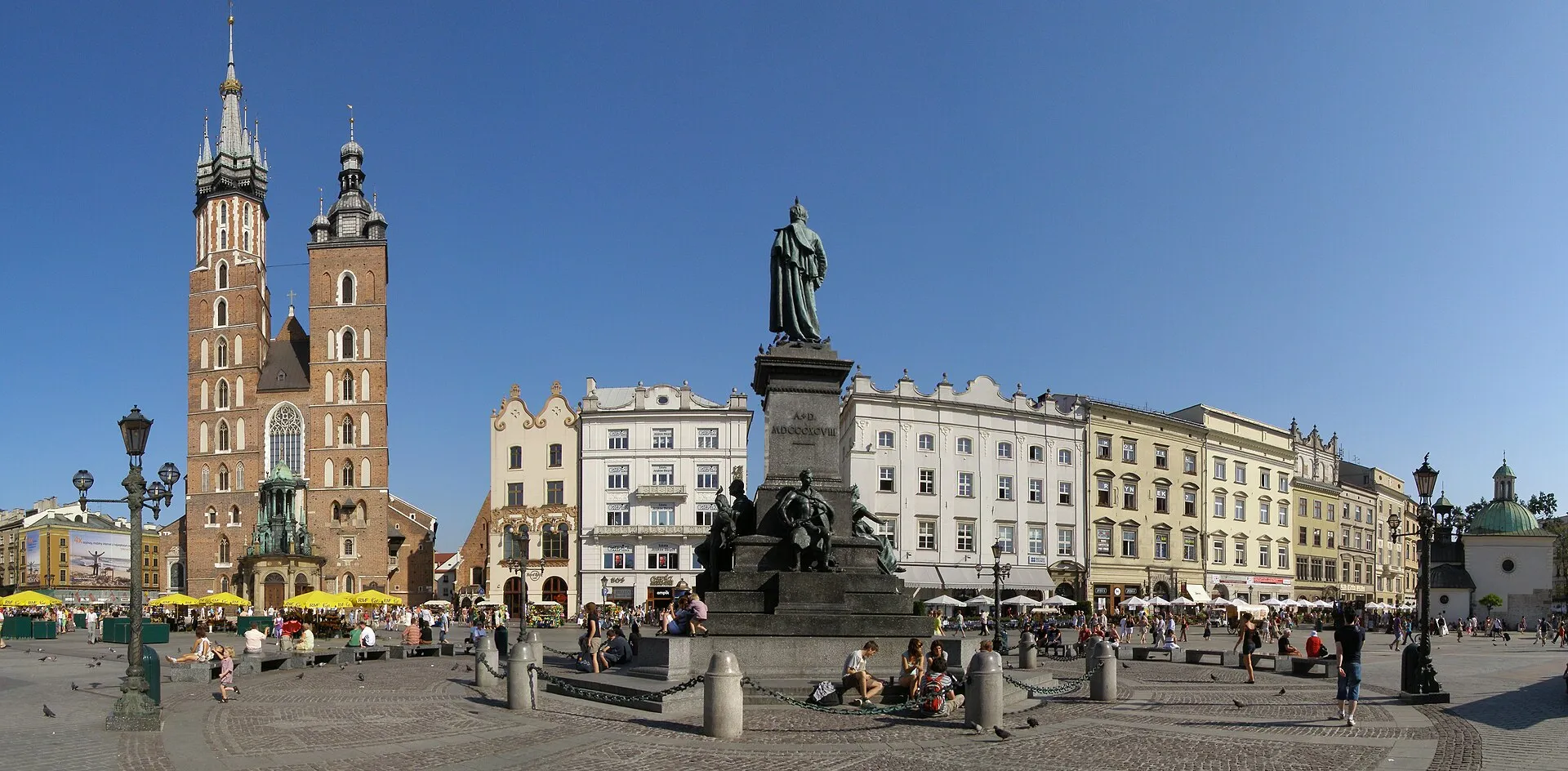
Nor will you really need it. The old town is a pedestrian zone, with tram lines within three blocks of it, and the Old Town, Kazimierz and Podgórze are all within walking or cycling distance of each other. A flat in Kazimierz costs about $800 to $1,120, and on our reckoning the whole month comes to about $1,800. The $800 you save each month is real money, and you do not give up much to get it.
Airports
Here the smaller city quietly wins. Krakow's airport, the second busiest in Poland with over 11 million passengers in 2024, has its own train to the main station in about 17 minutes. Prague's airport still has no rail link at all. You take the 59 trolleybus to Nádraží Veleslavín and change to the metro, and the railway line that would fix this is still in planning.
Winter air
Good transport will not help you in Krakow in winter. The city sits in a basin, solid fuel burned for heating has given it some of the worst winter air in Europe, and from November to March the smog is a health question, especially for anyone with asthma. Prague is cold and grey in those months too, but its air is much less of a problem.
So spend April to October in Krakow, with your savings piling up and evenings on the Vistula boulevards. In the first cold week of November, get on that train in the other direction and rent somewhere near a Prague tram stop for the winter.
 United States
 United Kingdom
 Germany
 Canada
 Australia
 India