 Medellín
Early August is the best week of the year for comparing these two, because each city spends it showing what it thinks it is.
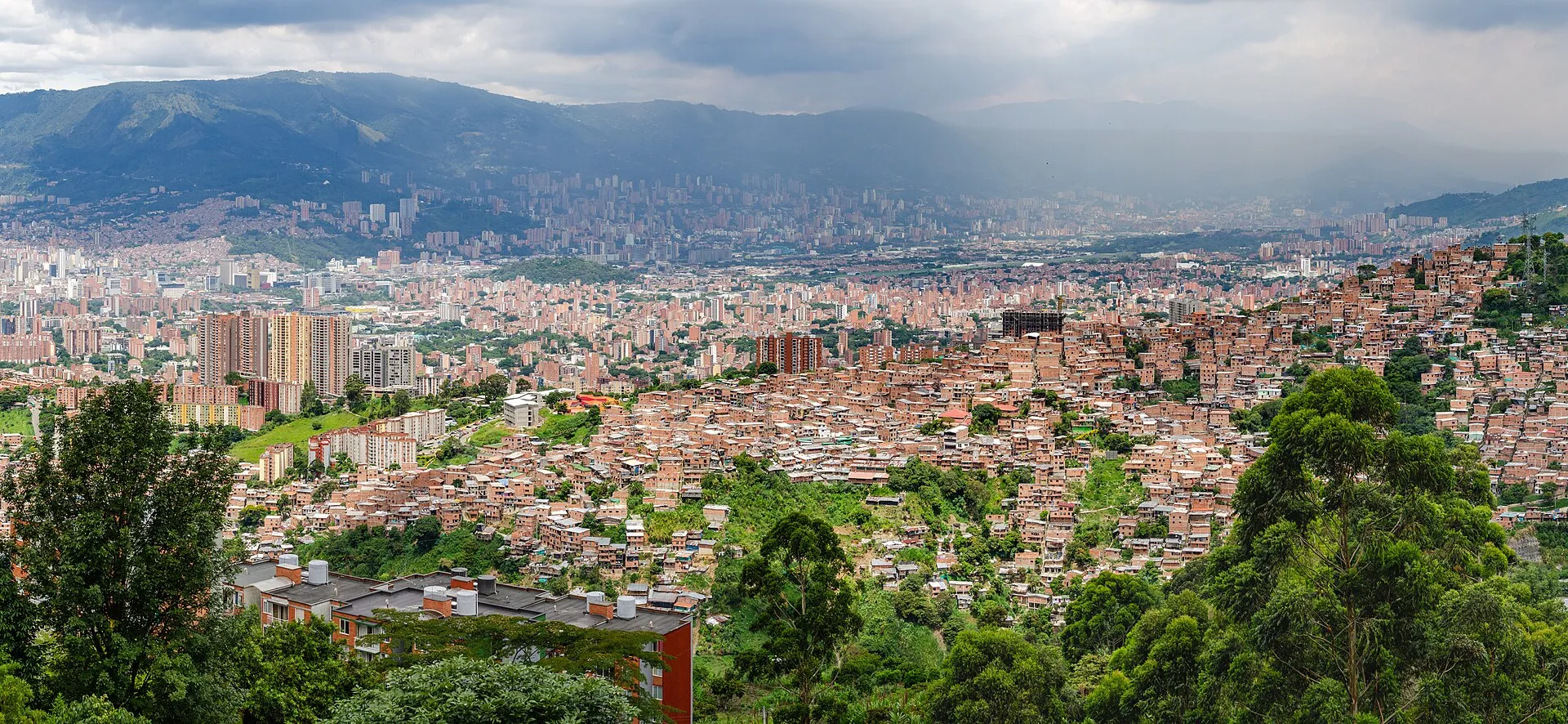
In Medellín, this is the Feria de las Flores. In 2026 it ran from 31 July to 9 August with more than 120 free events, and its centrepiece is the silleteros walking Guayabal Avenue with flowers on their backs, in frames that can carry up to 50 kilos. The first of them, in 1957, were some 40 men from Santa Elena, up the mountain from the city. The whole fair is a valley of about 4 million people celebrating itself at 29°C, in shirtsleeves.
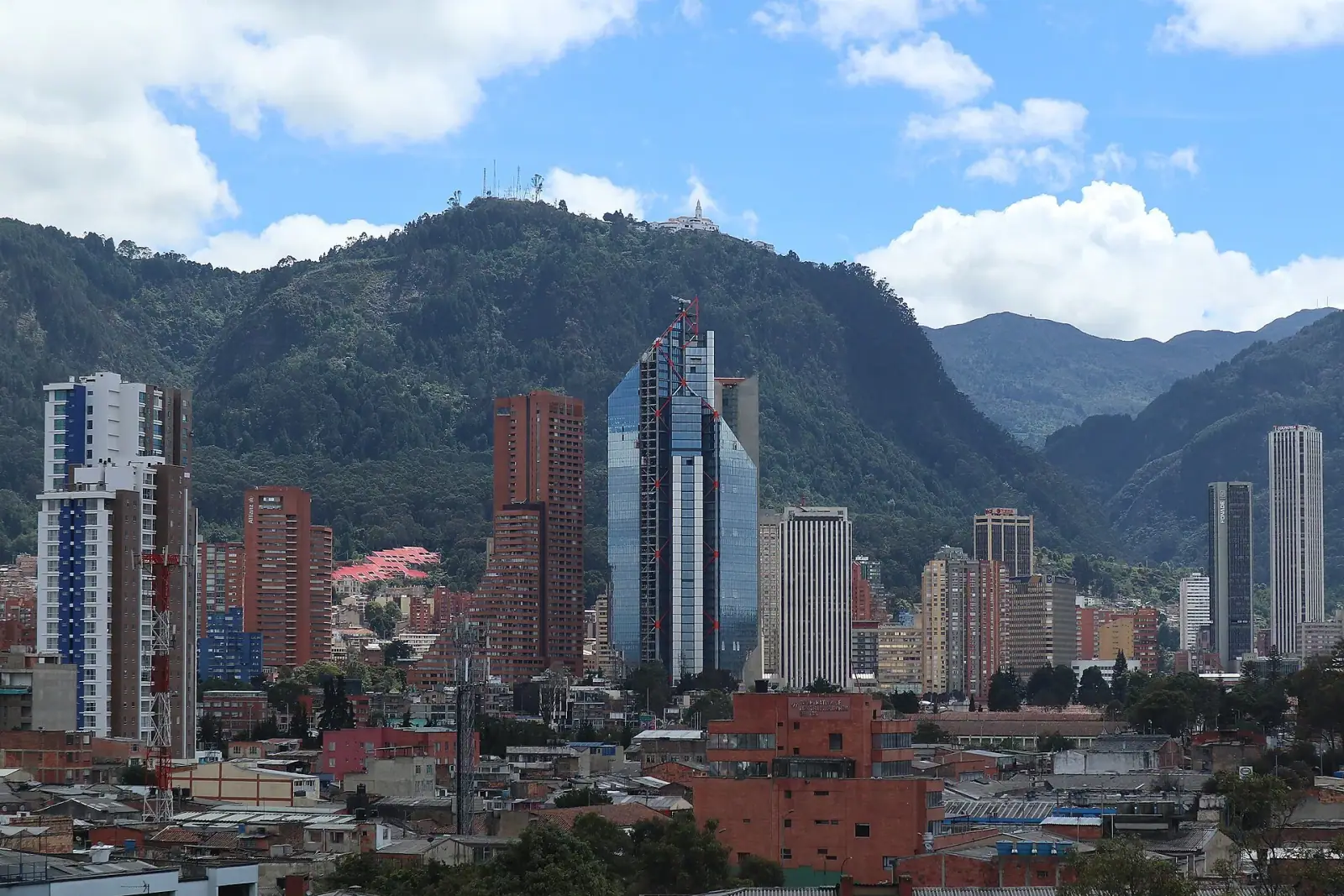
In Bogotá, 6 August is the traditional anniversary of the city's founding in 1538, and all month the free Festival de Verano spills across the parks, with Simón Bolívar, nearly 400 hectares, at its centre. The festival has built an artificial beach there, with hundreds of cubic metres of sand, at 2,640 metres above the sea, on a day that may reach 19°C. It takes a certain confidence to do that, and it tells you something. Around 40 percent of Bogotá's people were born somewhere else. Nobody has to be from there to join in.
The August weather says something odd
August also corrects the most common mistake about this pair, which is that Bogotá is the rainy one. It is the cold and grey one, with nights at 8°C and frequent morning fog, but on the normals we publish it gets about 880 millimetres a year, half of Medellín's roughly 1,760. Medellín's reputation for eternal spring comes with a lot of water, around 219 millimetres in May and 211 in October. In August, Bogotá's 44 millimetres is close to its driest of the year, against 126 in Medellín.
So pack for what you will really be doing. In Bogotá that means layers every day, all year, plus a heater question for your landlord. In Medellín it means an umbrella and no coat, which most people will happily accept.
Moving around the rest of the year
Medellín has had a metro since 1995, still the only one in Colombia, with cable cars feeding it from the hillsides, and it carried about 202 million passengers in 2025. Bogotá has 8 million people and buses: TransMilenio is what you get until Line 1 of the metro opens, and the elevated line was about 79 percent complete in May 2026, with service due in 2028. Its compensation comes on Sundays and public holidays, when the Ciclovía closes about 120 kilometres of roads to cars from 7 a.m. to 2 p.m.
Flying works the other way. El Dorado is among the busiest airports in Latin America, and it sits within the city. Medellín's main international airport is 29 kilometres away in Rionegro, over the ridge.
What you give up either way
Cost will not help you, since our figures come to $1,800 in Medellín and $1,700 in Bogotá. The digital nomad visa threshold of $1,640 a month is the same in both. The cities are also closer on safety than their reputations suggest: for the first nine months of 2024, homicides ran at 11.3 per 100,000 in Medellín and 14.7 in Bogotá. Be careful with dating apps in both, since the US State Department warns that criminals posing as dates have drugged, robbed and killed American visitors in Colombia.
For a first long stay, we would take Medellín, Laureles rather than Poblado, for the weather and the ease of the metro. Bogotá is the better second stay, once you speak some Spanish and want a capital with work, ministries and universities in it. So book a flat in Medellín for next July, stay through the parade, and fly to Bogotá for the last two weeks of August with a jacket.
 United States
 United Kingdom
 Germany
 Canada
 Australia
 India