 Ljubljana
 Zagreb
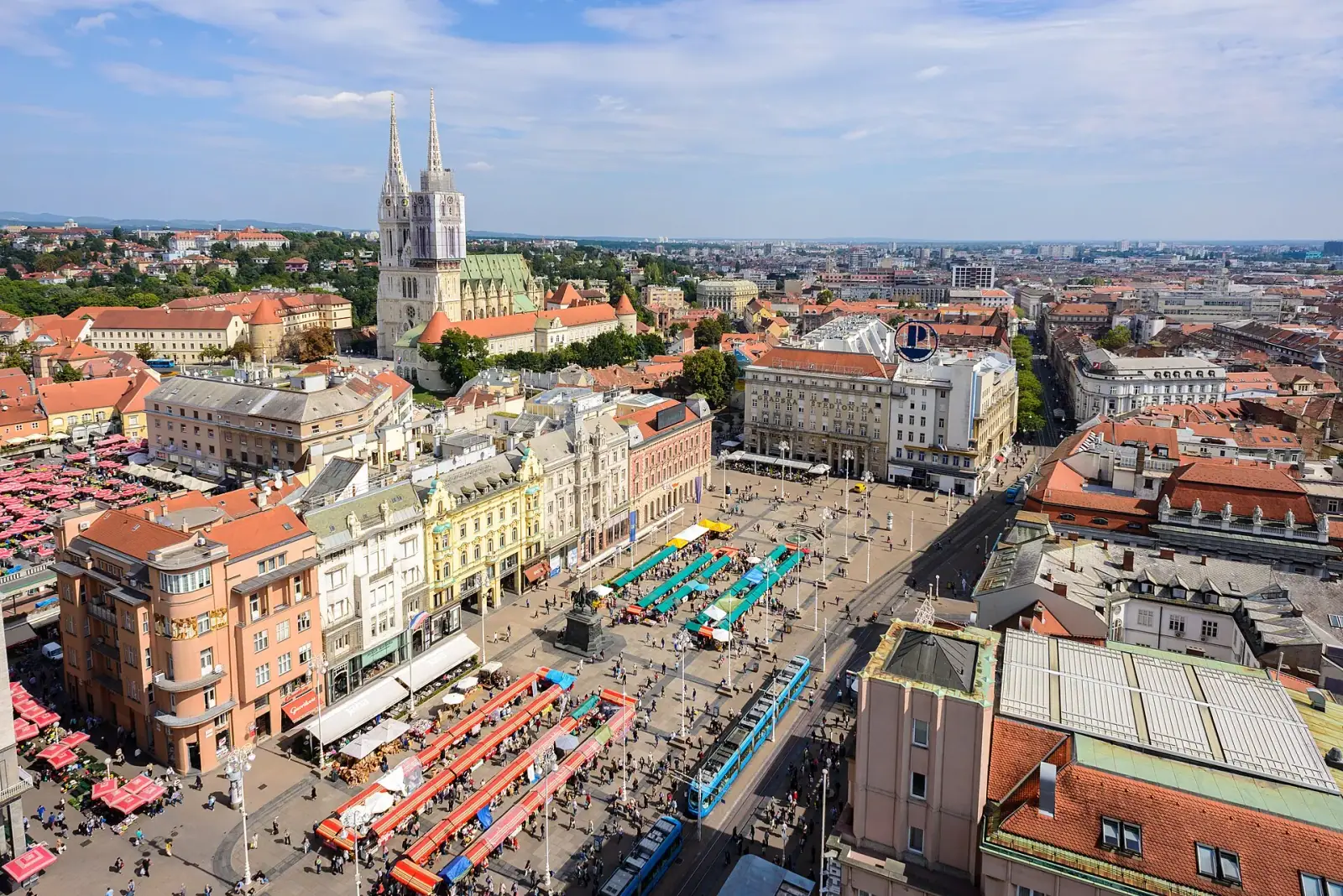
For a long time, you could recognise Zagreb from a distance by the two spires of its cathedral on Kaptol, each about 108 metres tall. At 6:24 on the morning of 22 March 2020, during the first pandemic lockdown, a magnitude 5.3 earthquake snapped the tip off the southern one and dropped it onto the Archbishop's Palace next door. The northern spire had started to lean, and it was taken down within a month. By 2024, about 30 metres were gone from both. Workers have been replacing the damaged stone block by block with 3D-printed travertine copies, and the building was still under reconstruction in 2026, with no firm date for reopening.
Spend a while looking at that scaffolding, because it is the most useful single thing to see before choosing between these two capitals.
A cathedral damaged twice
Those spires were themselves a repair. A quake in 1880 brought down the nave, and the architect Hermann Bollé rebuilt the whole thing in neo-Gothic. Much of what you admire in Zagreb dates from the same rebuilding: the Lenuci Horseshoe of squares and parks through the Lower Town, and the confident Austro-Hungarian apartment blocks around it. Those older buildings took the worst in 2020, when 26,197 were reported damaged and more than 1,900 were judged uninhabitable. The total bill came to about $13 billion.
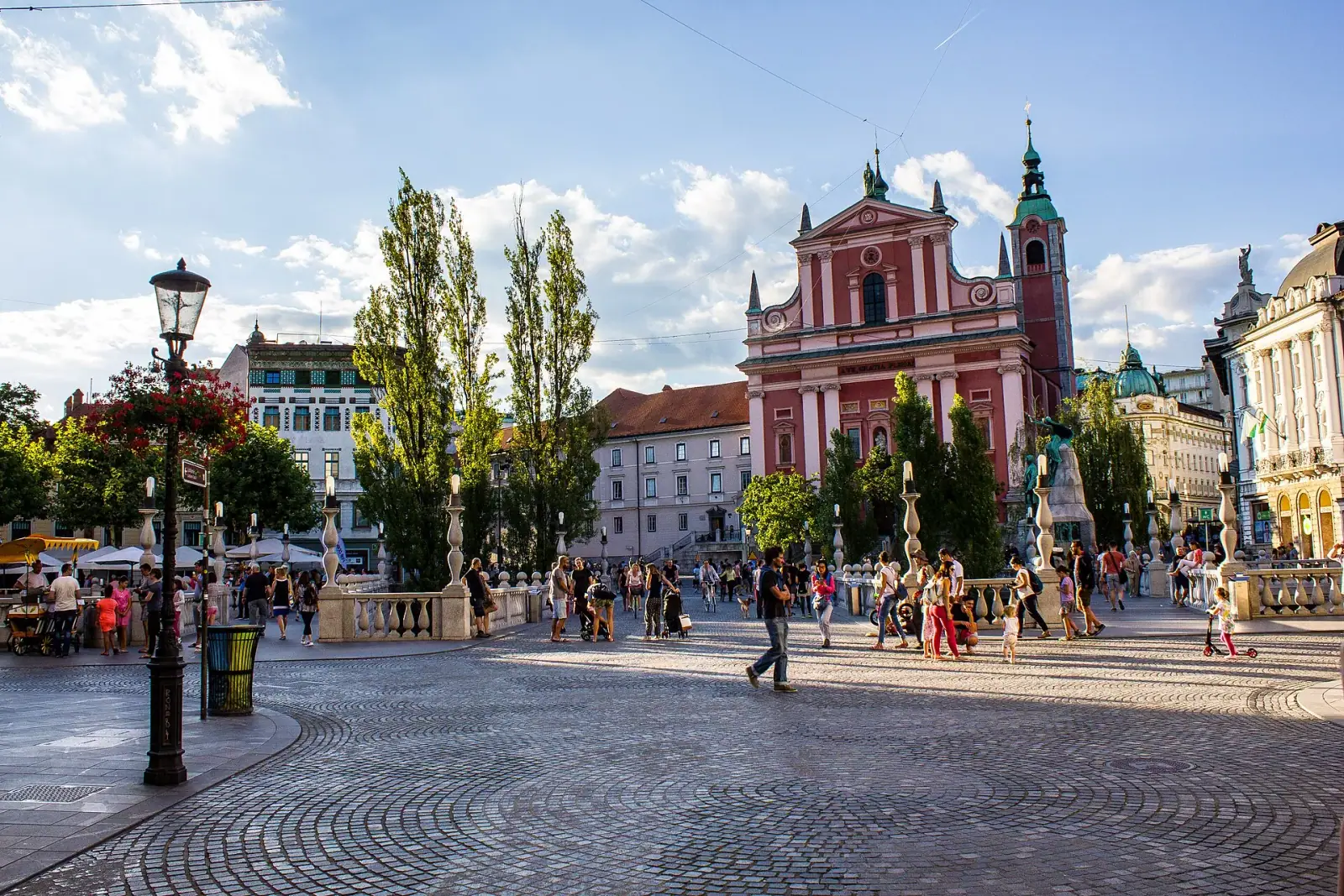
Ljubljana has a similar story, and it finished long ago. An earthquake in 1895 destroyed about a tenth of its buildings, and it was rebuilt in the Vienna Secession style under Mayor Ivan Hribar. Then Jože Plečnik spent the next decades treating the city like a single piece of furniture. His two extra footbridges on the Triple Bridge went up in 1931 and 1932, UNESCO listed his work in 2021, and since 2007 those bridges have been in a pedestrian zone. So Ljubljana looks complete: cafés along the Ljubljanica, a funicular up to the castle, nothing out of place.
That completeness is what you pay for, at about $2,400 a month on our estimate, and it has limits. With around 300,000 people, it can feel as if you have met everything after one season. Fog settles in the basin on about 64 days a year, mostly through autumn and winter, and you will see it from your window for days at a time.
Living in a city under repair
Zagreb costs around $2,000 by the same estimate, and it has more than twice the people, at about 767,000. It is a capital that is busy with its own affairs. You can work near Jelačić Square and walk everywhere that matters in twenty minutes. At noon the cannon fires from Lotrščak Tower, as it has done since 1877. Beside it is a funicular of just 66 metres, a 64-second ride that has run since 1890 and is mostly a matter of pride. Medvednica rises to the north, with ski runs at Sljeme for the winter, when both cities drop to around freezing at night.
For anyone without an EU passport, the rules favour Zagreb as well. Croatia's nomad permit runs for up to 18 months, on about $4,170 a month. Slovenia's, which only started in late 2025, asks for less, about $3,680, but it lasts a year at most and cannot be extended. You then wait six months before you can reapply. The drive between the two is about an hour and a half, and the train a little over two hours, so you can easily try one from the other before you commit.
We would pick Ljubljana for a single summer, and Zagreb for anything longer. It has more going on, it costs less, and a place that is still mending itself has more to show you in your second year.
Before you sign a lease in the Lower Town or the Upper Town, though, look at the ceilings and ask directly whether the building has been structurally repaired since 2020. A fresh coat of paint on a handsome old façade will not tell you, and the scaffolding on Kaptol should remind you why it matters.
 United States
 United Kingdom
 Germany
 Canada
 Australia
 India