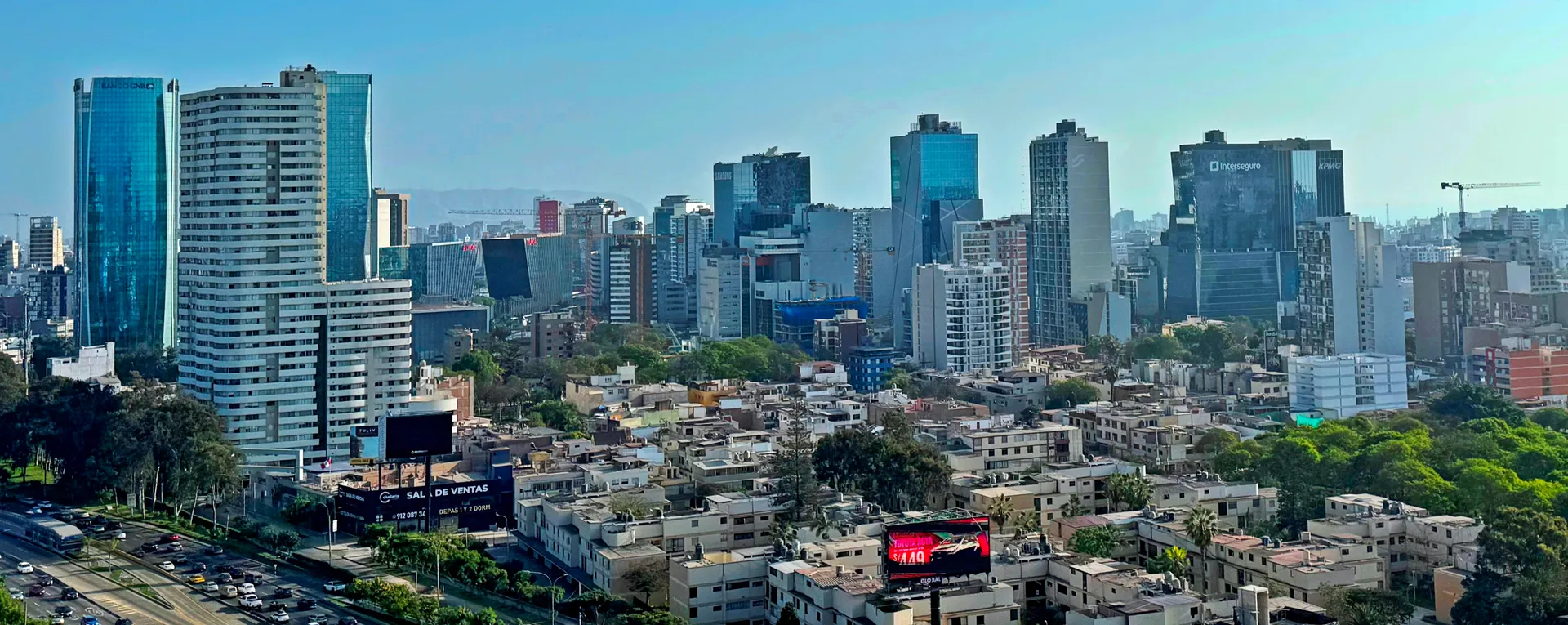
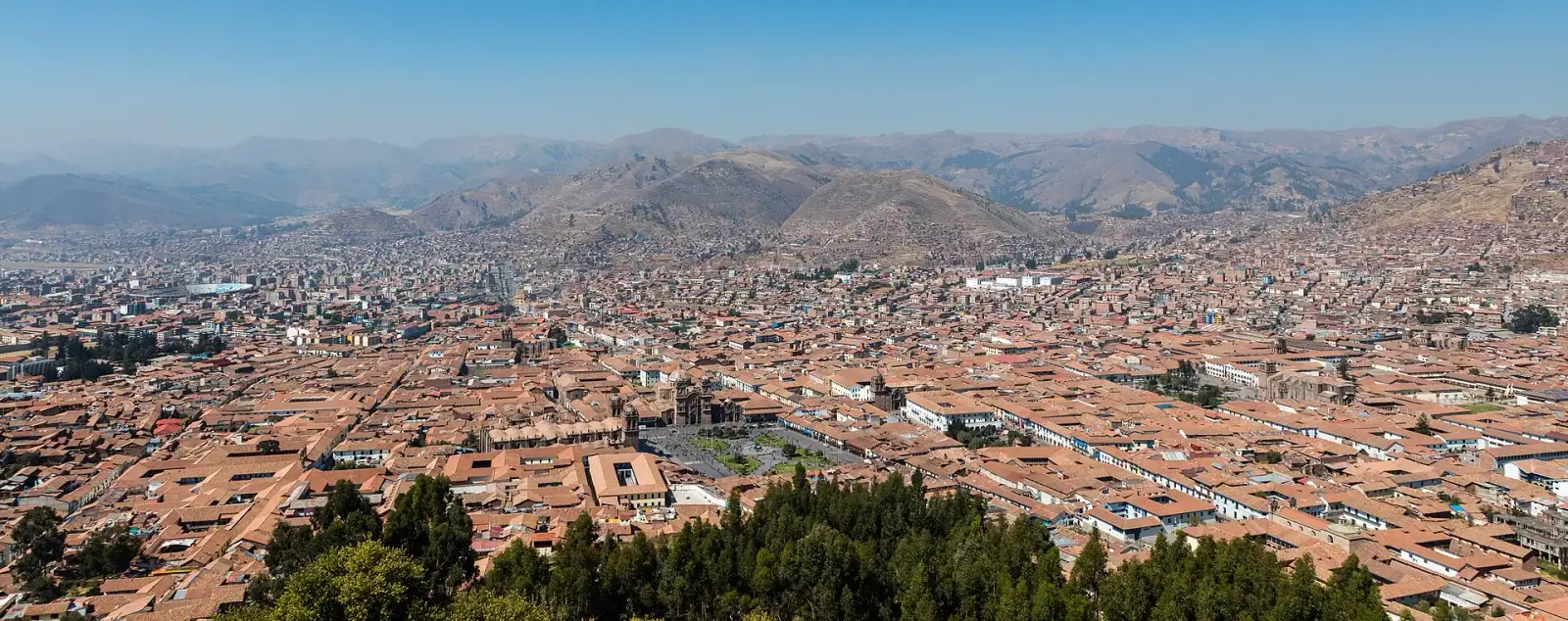

Lima Cusco
Head to head
Lima vs Cusco

Lima vs Cusco: Which Is Better for Digital Nomads?

Overall: Cusco edges ahead, 7.1 to 6.1

Pack an umbrella for Lima and it can stay at the bottom of your bag for the whole year. The coastal districts get 10 to 30 millimetres of rain annually, about what Cusco might get in a wet January week. Cusco's January total is 153 millimetres and its year adds up to about 728. Two cities in one country, a short flight apart, and the same object is useless in one and essential in the other.

The umbrella also points to something more useful, which is that their good months barely overlap.

MonthsLimaCusco
June to SeptemberGrey for weeks at a time, with a morning drizzle called garúa and highs of 16 to 19°C.Dry, with almost no rain from May to August, and frost possible at night.
October to MarchSky clears from about November, and summer is the city at its best.Rain builds from October and peaks in January.

Lima's problem has never been rain. It is cloud, in stretches of 10 to 15 dark days in a row over a city of nearly ten million. Cusco's dry season is the opposite: by day you can walk up to the walls of Sacsayhuamán, two kilometres north of the centre, and in June you could watch Inti Raymi on the esplanade there. After dark it is another story, with a July average of under 10°C across day and night, and a recorded low of minus 7. Before you rent, ask to see how the flat is heated, and believe the answer only if you can see the heater.

The first three days in Cusco

Lima sits at sea level and Cusco at about 3,400 metres, and the flight gives your body no time to adjust. Sickness at that height is common: a headache, nausea and fatigue that feel much like a hangover, usually starting within 2 to 12 hours and often during the first night. Your body does most of its adjusting over three to five days. So do not schedule client calls for your first morning, and consider what medical guidance suggests for Cusco arrivals: go straight down to sleep a night or two somewhere lower than the airport, such as the Sacred Valley. The new airport at Chinchero, higher still at 3,720 metres, has slipped to around 2028, so for now the arrival stays as it is.

Once you adjust, Cusco repays the trouble in a way few cities can. At Qorikancha a Spanish convent stands on an Inca temple, and the granite walls beneath it only came into full view when the 1950 earthquake knocked the later building about. San Blas, up the hill, is where you could picture yourself renting for a season. Something like 430,000 people live in the city, and for a few months that feels right.

Getting around Lima, and staying safe there

Lima has what Cusco lacks: the sea, more flights, and restaurants enough for years. Barranco has its old casonas, the Bridge of Sighs and the Bajada de los Baños walkway heading down towards the beaches, and a new bridge has linked it to Miraflores since August 2025. Below them, 22.5 kilometres of the Costa Verde gives you surf breaks and paragliders off the cliffs.

The trouble is what surrounds that strip. Extortion rose about 1,000 percent between 2023 and 2025, it dominated the election Keiko Fujimori narrowly won in June 2026, and emergency rules in Lima and Callao were renewed repeatedly this year. The people striking and protesting have been bus drivers and shopkeepers, which tells you who is paying. For you, it means staying in the districts you know, and allowing for days when the buses stop. The metro will not rescue you: Line 1 misses the coastal districts, and nothing on rails yet reaches the new airport terminal, opened in June 2025.

Dividing the year

We put the monthly cost at about $1,800 in Lima and about $1,500 in Cusco, too close to decide anything. Since the rules are the same in both and the flight is short, we see no reason to choose only one. Spend May to September in Cusco, and come down to Lima for its summer. Stay into October and you will have to buy that umbrella after all. Leave it behind when you fly to the coast.

Lima vs Cusco: side by side

All 13 categories we rate, each out of 10. Green is strong, amber is middling, red is weak.

LimaCusco
6 Climate 5
7 Cost of living 8
7 WiFi 5
7 Nightlife 6
5 Nature 9
4 Safety 6
9 Food 7
6 Community 6
5 English 5
6 Visa 6
8 Culture 10
5 Cleanliness 5
5 Air quality 7

Lima and Cusco at a glance

575 kmapart in a straight line
Same timein January
$300a month less in Cusco
Population, urban areaLima8,012,000Cusco361,000
ElevationLima139 mCusco3338 m
Time zoneUTC-5in both
Nearest airportLimaJorge Chávez International Airport (LIM), 8 kmCuscoAlejandro Velasco Astete International Airport (CUZ), 3 km
Main languageSpanishin both
CurrencySol (S/, PEN)in both
PlugsType A/B/C, 220V / 60Hzin both
Tap waterBottled or filteredin both
Emergency number105 / 911in both
Tipping10% often addedin both
Ride-hailingUber, DiDi, Cabifyin both
In the Schengen areaNoin both

Population is the Natural Earth figure for the urban area around each city, elevation from the Copernicus height model, airports from OurAirports.

Where they differ most

The three biggest gaps between the two, in the words of each city guide.

Nature

Lima

Lima itself is an urban desert on the Pacific coast, so nature within the city is limited to cliff-top parks along the Malecon and a few green spaces. The real draw is what surrounds Peru: Andean treks, Amazon jungle, and desert dunes are all reachable by short flights.

Cusco

Cusco sits at the gateway to extraordinary natural and archaeological landscapes. Machu Picchu is four hours away by train. The Sacred Valley, Rainbow Mountain, and Humantay Lake are day-trip or overnight options. Hiking, mountain biking, and white-water rafting are all within reach.

Internet

Lima

Internet infrastructure in Lima is genuinely good. Coworking spaces and most cafes run fiber connections that handle video calls without trouble. Home fiber plans are widely available and affordable. Mobile data on Claro or Entel provides a reliable backup.

Cusco

Dedicated coworking spaces offer fiber with reasonable reliability. Speedtest's Global Index puts the median fixed broadband download in Peru at 260 Mbps and mobile at 62 Mbps (August 2026). Cafe WiFi ranges from excellent at spots like Maki Cafe Lounge to barely functional.

Safety

Lima

Miraflores, Barranco, and San Isidro are considered safe for daily life, with active street life and a visible presence of both locals and tourists. Petty theft is the main risk, particularly on public transport and in crowded markets. Districts further north and east have significantly higher crime rates.

Cusco

Cusco is generally safe for tourists and nomads who take standard precautions. Petty theft and bag-snatching occur near the Plaza de Armas and San Pedro Market. Use Uber or InDriver instead of unlicensed taxis. Avoid isolated streets after dark, especially in areas outside the Historic Center.

From the score notes in the Lima and Cusco guides, where each one is explained in full.

Month by month: the weather

Each bar runs from the average daily low to the average daily high. Rain is below.

LimaCuscoScale runs from 1C to 27C, rain up to 159 mm
See the numbers
LimaCusco
Jan26C / 20C, 1 mm20C / 8C, 159 mm
Feb27C / 21C, 1 mm19C / 8C, 133 mm
Mar27C / 20C, 0 mm20C / 8C, 106 mm
Apr25C / 18C, 0 mm20C / 6C, 36 mm
May22C / 17C, 1 mm21C / 4C, 7 mm
Jun20C / 16C, 1 mm21C / 2C, 3 mm
Jul19C / 16C, 1 mm20C / 1C, 5 mm
Aug19C / 15C, 1 mm21C / 3C, 6 mm
Sep19C / 15C, 1 mm21C / 5C, 17 mm
Oct20C / 16C, 1 mm21C / 7C, 50 mm
Nov22C / 17C, 0 mm22C / 8C, 78 mm
Dec24C / 19C, 1 mm20C / 8C, 127 mm

Lima: weather-station averages for 1991-2020. Cusco: weather-station averages for 1991-2020.

What a month costs

Lima$1,800
Cusco$1,500

Our own estimate for a comfortable month for one remote worker, the same figure the city guides use.

Entry rules for common passports

Tourist entry on arrival. Every passport is in the visa finder, and remote-work visas are on the nomad visa page.

United States
Visa-free, 180 daysin both
United Kingdom
Visa-free, 180 daysin both
Germany
Visa-free, 90 daysin both
Canada
Visa-free, 180 daysin both
Australia
Visa-free, 180 daysin both
India
Visa requiredin both

Where you would live and work

The areas people choose in each city, and some of the places they work from.

Lima

Neighbourhoods

  • MirafloresLima's polished Pacific playground
  • BarrancoLima's bohemian artistic heart
  • San IsidroLima's green business district
  • Centro HistóricoLima's colonial UNESCO treasure
  • SurquilloLima's emerging foodie frontier

Places to work

Comunal Coworking BarrancoThe Workshop CoworkingLiberal CoworkingWORX CoworkingPuku Puku Narciso
More on the Lima guide →
Cusco

Neighbourhoods

  • Plaza de Armas/CentroCusco's historic Incan-Spanish heart
  • San BlasCusco's artsy bohemian hillside
  • San CristóbalCusco's local hilltop neighborhood
  • Santa AnaCusco's authentic market neighborhood
  • Lucrepata/MagisterioCusco's quiet residential retreat

Places to work

Selina Plaza de Armas CuscoGenba Coworking CuscoAyni CenterLa Oficina Cusco CoworkingMaki Cafe Lounge
More on the Cusco guide →

Services in a language you speak

Providers in our directory who work in a language other than the local one, from official registers, consular lists and the providers’ own websites.

Translators
55Lima
0Cusco
Lawyers
20Lima
0Cusco
Schools
4Lima
0Cusco
Dentists
3Lima
0Cusco
Physiotherapists
2Lima
0Cusco
Vets
1Lima
0Cusco

Where each city wins

Lima is stronger on

WiFiFoodClimateNightlife
Lima guide →

Cusco is stronger on

NatureSafetyCultureAir QualityCost of Living
Cusco guide →

Add a third city in the comparison tool →

Frequently asked questions

Is Lima or Cusco cheaper for digital nomads?

Cusco is the cheaper base, around $1,500 a month versus $1,800 in Lima, a difference of about $300.

Which has better WiFi, Lima or Cusco?

Lima scores higher for WiFi (7/10 versus 5/10).

Which is safer, Lima or Cusco?

Cusco rates higher on safety (6/10 versus 4/10).

Lima or Cusco: which is better overall for remote work?

Cusco takes the overall Nomad Score (7.1/10 versus 6.1/10), though the right pick depends on what you value most.




