 Lima
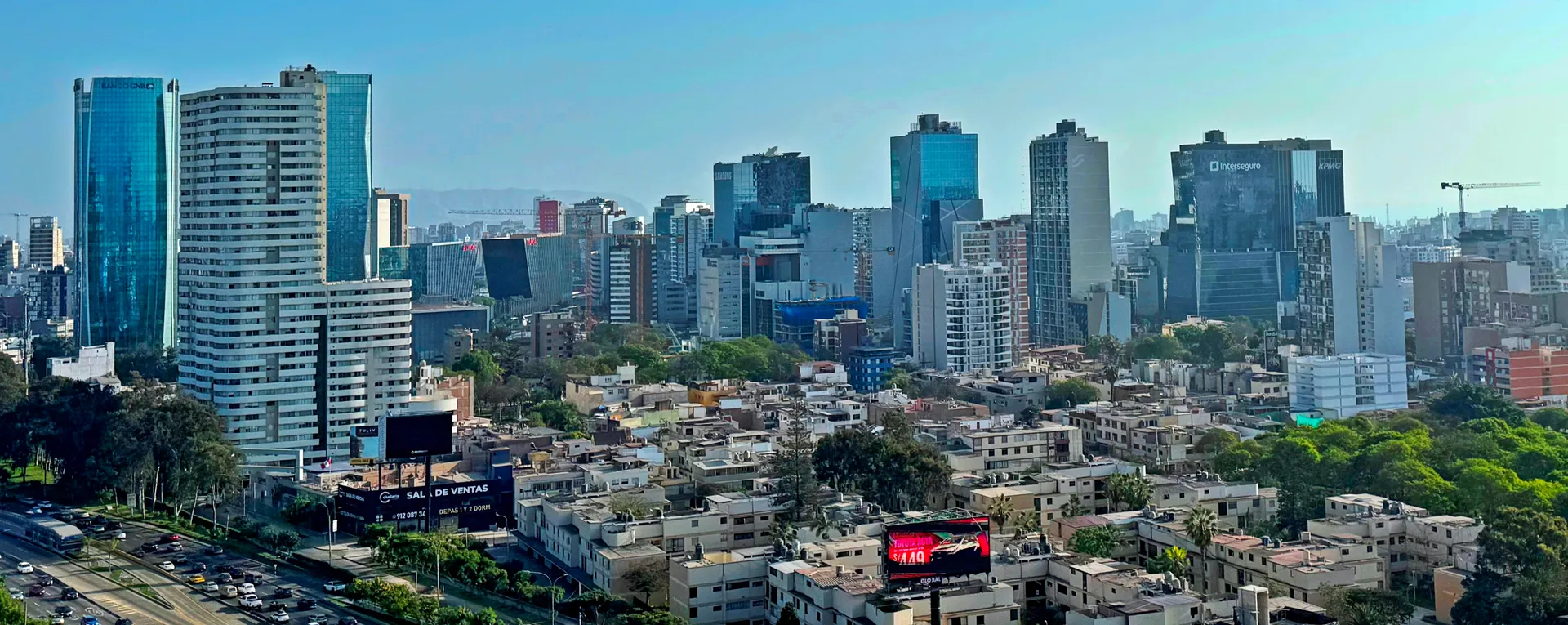
Peruvians on the coast have a name for the winter sky over their capital: panza de burro, the belly of a donkey. It is exact. From about June to October a low, pale grey lid sits over Lima for weeks at a time, and out of it falls garúa, a drizzle so fine it barely counts as rain and still leaves the pavements in Miraflores wet. Herman Melville called Lima the strangest, saddest city you could see.
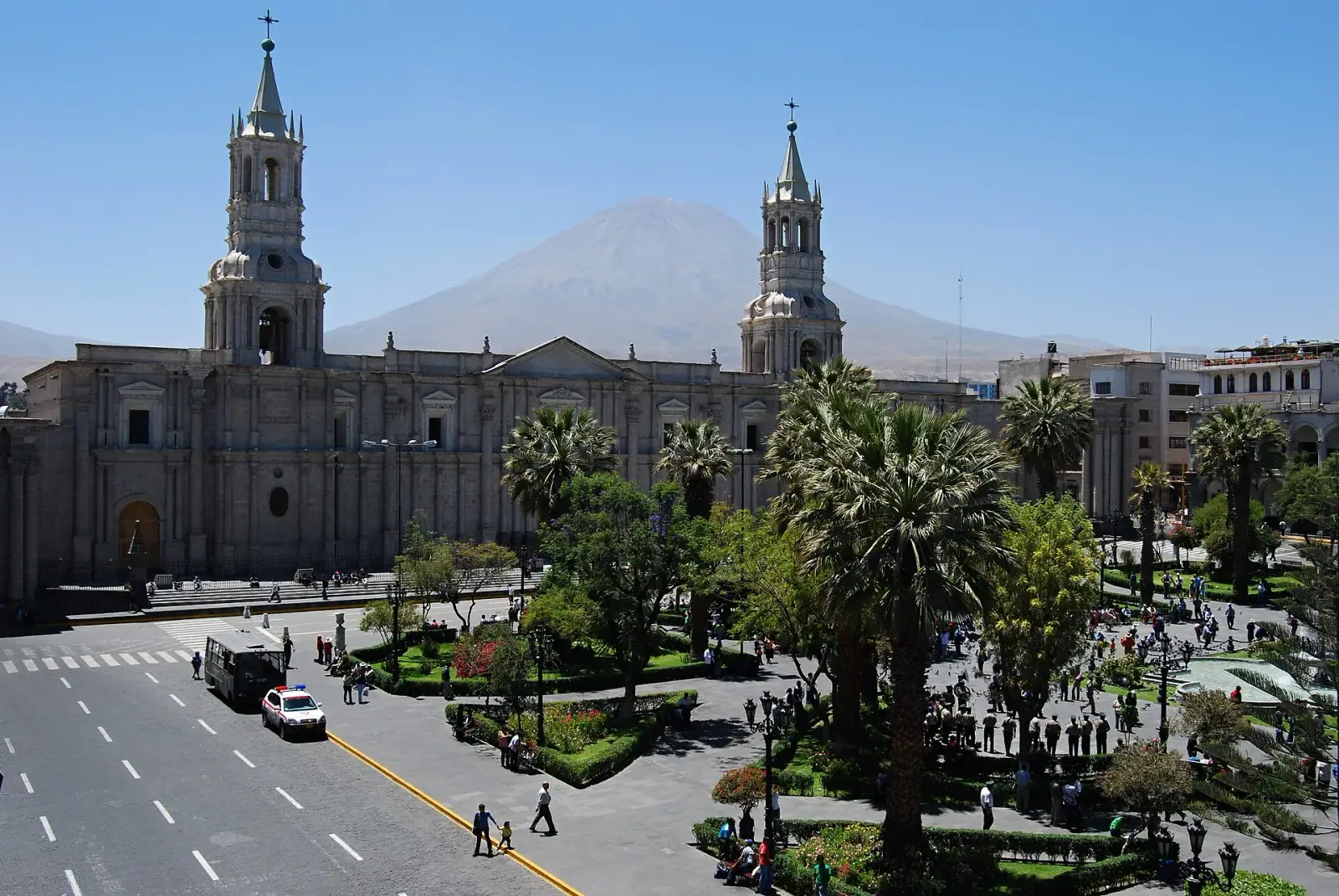
Fly south for an hour and a half to Arequipa, and that same month looks like this: hard blue sky, thin dry air, and a volcano at the end of the street.
| Lima | Arequipa | |
|---|---|---|
| Sunshine a year | about 1,284 hours | about 3,333 hours |
| Average humidity | 83% | 46% |
| Rain a year | about 6 mm at the airport | 75 to 100 mm, December to March |
| Altitude | near sea level | 2,328 metres |
What the numbers mean for your mood
London gets more sunshine than Lima. In August the capital averages under an hour a day, which is an extraordinary thing for a tropical city of 9.6 million, and the air stays damp even though it almost never properly rains. Then comes the turnaround. From January to March, Lima is hot and bright at 26 or 27°C, and the clifftop walk from Miraflores to Barranco, with paragliders over the Costa Verde, is as good as any urban stroll on the continent. So you get about four good months and a long stretch of donkey.
Arequipa barely has seasons. Most days reach 21 or 22°C, all year, with about nine hours of sun, and the UV at this height is among the strongest in South America. Nights can fall to 7°C in July. Give yourself a few days for the altitude, and buy a jumper.
What Lima gives back
Lima has Central and Maido, each named best restaurant in the world within the last few years, and much humbler ceviche at lunchtime around the market in Surquillo. It has Comunal and The Workshop for your desk, a new airport terminal since June 2025, and a pool of people that a city of 1.2 million cannot match. Nearly all of Arequipa's air traffic is domestic, so any trip abroad means Lima anyway. What Arequipa offers in return is a kitchen of its own: picanterías, recognised as national cultural heritage in 2014, serving rocoto relleno and adobo. Its people have long regarded the capital with suspicion, and the old nickname, Lion of the South, was earned in that quarrel. You will need working Spanish, because the foreign community is small.
Risks that come with each
Lima's is human. Extortion cases rose by about 30 percent in 2025 to an estimated 18,000, a state of emergency was declared that October, and sending troops onto the streets did not visibly bend the numbers. Keiko Fujimori won the presidency in June by about 50,000 votes on a promise of order and took office on 28 July, so it is too soon to know what will change. Foreigners mostly stay in Miraflores and San Isidro, which are calmer, and use apps instead of street taxis.
Arequipa's is geological. El Misti, 5,822 metres high and only 12 kilometres away, is that beautiful view from Yanahuara, and it is also counted among the world's most dangerous volcanoes, with at least 220,000 people in the path of mudflows through the ravines. An 8.4 earthquake in 2001 seriously damaged many of the historic buildings in the white sillar centre. Lima has its own earthquake history, so this should affect which building you choose, not which city.
Our recommendation
On our estimate a month runs $1,800 in Lima and $1,400 in Arequipa, and that $400 is the smallest part of the decision. The tidy answer is to split the year, with Lima from January to April and Arequipa from June to October. For one address, the light decides it, because sunshine is the thing you cannot buy back and a dinner is only a short flight away. We would live in Arequipa and fly to Lima to eat.
 United States
 United Kingdom
 Germany
 Canada
 Australia
 India