 Florence
Try to visit both in the second week of August, because no other week shows you so plainly what each city is for. On paper the weather is nearly identical, 32°C by day in one and 30°C in the other. Everything else has gone in opposite directions.
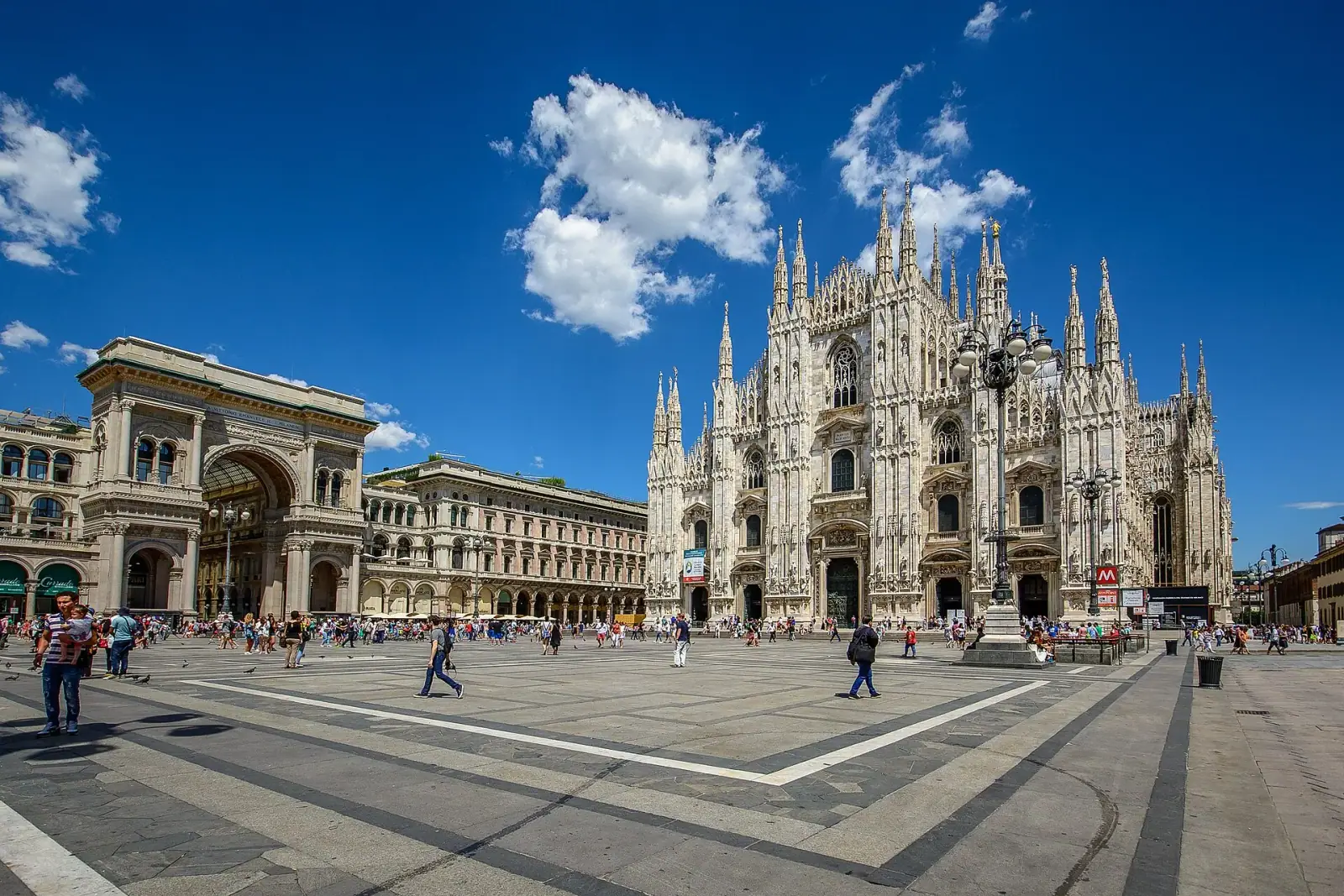
Milan has closed. Ferragosto falls on the 15th, and although the old national shutdown has shrunk, most Italian companies and shops still shut for around two weeks. A city built on finance, fashion and design simply stops. Then you notice the good part: the metro is quiet, the streets of Isola and Navigli belong to whoever stayed, and you can get a table anywhere that is open. For a swim there is the Idroscalo beside Linate, a lake dug for seaplanes in 1930, which some people call the Sea of Milan.
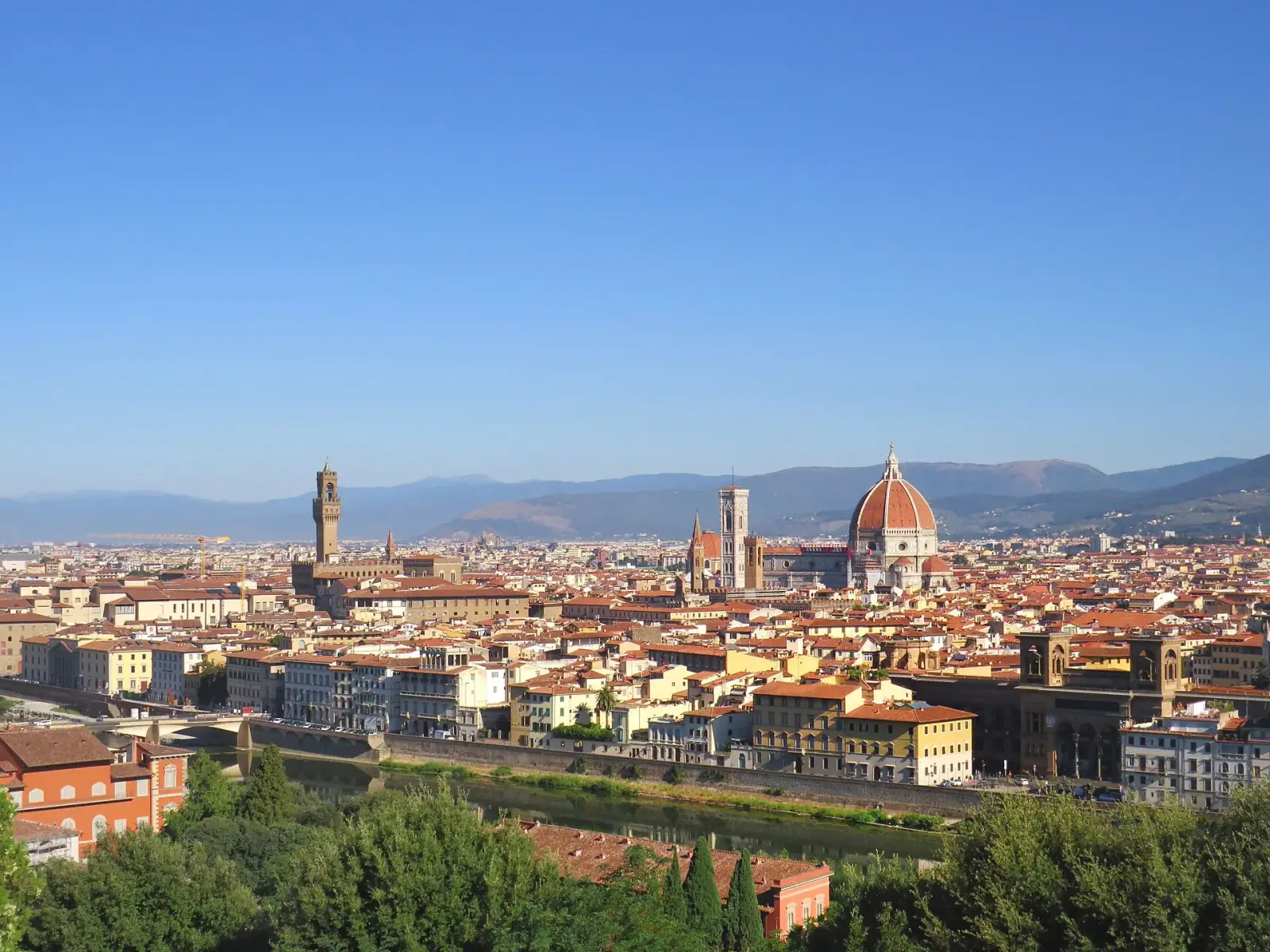
Florence has done the reverse. A city of about 360,000 residents is carrying millions of visitors a year, packed into a historic centre of 505 hectares, and the second week of August is one of the times you feel every one of them. You could try working from a flat near the Duomo with the shutters closed, then find the walk to lunch is a slow shuffle behind tour groups. Over in the Oltrarno, around Piazza Santo Spirito, it is somewhat calmer, and that is where we would look for a place at any time of year.
What that means for rent
August only makes Florence's real problem visible. So many flats have gone to visitors that the city banned new tourist lets across its historic centre in 2025, then voted in 2026 to extend the freeze to nine more residential areas, including Campo di Marte, Rifredi and Statuto, adding about 67,780 properties. Existing lets can carry on until 2028, so do not expect a wave of cheap long-term flats soon. The rule does tell you that a small city has decided it has a housing shortage, and you would be competing in it.
Even so, Florence is the cheaper of the two. We estimate about $2,800 a month against about $3,500 in Milan, though Milan's extra $700 at least buys you a far deeper market to search, in a city of 1.36 million.
The other eleven months
Come back in November and Milan is back at work, which is the whole case for it. Five metro lines cover the city, and the newest, M4, runs straight from Linate to the centre and out to San Cristoforo. Compare that with getting out of Florence, whose small airport has a runway of 1,560 metres, no jet bridges and about 3.8 million passengers a year. For anyone who flies for work or who wants colleagues, clients and strangers in their field, Milan is the only one of these two with enough people. It has a cost, as the same November also brings a grey sky, and the winter inversions that trap air over the Po plain make Milan one of Europe's most polluted cities.
Florence in November is wet, at about 156 millimetres, the same month the Arno rose in 1966 and left marks you can still find on the walls. But the crowds have thinned, you can cross the Ponte Vecchio at your own pace, and it starts to feel like a small city where you could know your barista. For someone writing or studying, or running a business that needs nothing from the outside world, this is what the extra beauty buys.
A high-speed train links the two in under two hours, and the same visa covers both, so the choice is easy to reverse. We would take Milan for a working year and leave it for those two weeks in August, as so many people there do. Florence we would keep for the months from October to April. Book a short stay in each, and be sure one of them falls in August: you will know by the 15th which city you could stand.
 United States
 United Kingdom
 Germany
 Canada
 Australia
 India