Cape Town Stellenbosch
Head to head
Cape Town vs Stellenbosch

Cape Town vs Stellenbosch: Which Is Better for Digital Nomads?

Overall: Cape Town edges ahead, 8.3 to 7.8

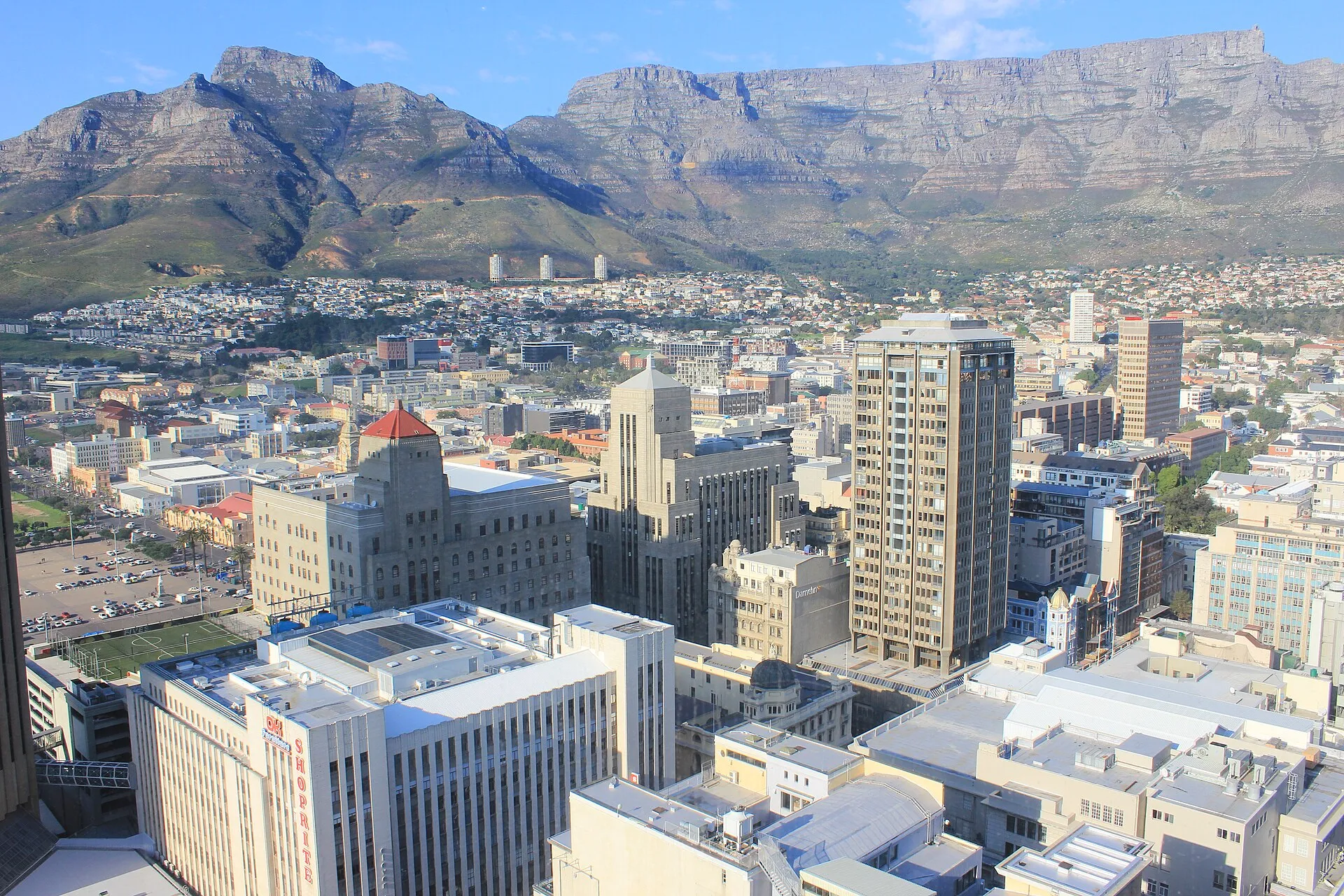
Table Mountain rises about a thousand metres straight out of Cape Town, and living there means living by it. It tells you the weather: when the southeaster pushes damp air up the slopes, the tablecloth of cloud pours over the flat top, three kilometres from side to side, and you know the afternoon will be windy. It decides how wet your street is, since the suburbs behind it get close to 1,000 mm of rain a year against an average of about 515 for the city. You can go up it on a whim by a rotating cable car, unless the wind has stopped the cable car, or the fortnight of winter maintenance has, which in 2026 ran from 27 July to 9 August. You can walk up it on a day off, among more than 2,000 plant species, most of them fynbos.

The strange part is that fifty kilometres east, Stellenbosch has a taller one. Simonsberg reaches 1,390 metres, some 300 more than Table Mountain, and stands alone above the vineyards with a hiking route that begins on a wine farm. Hardly anyone abroad has heard of it. There is no cable car, no tablecloth legend, no queue. That difference, a famous mountain you share with the world against a bigger one you share with some farmers, is a good description of the choice in general.

Life at the foot of each

Under Table Mountain you get everything that fame brings: restaurants on Bree Street, coworking in the City Bowl and Woodstock, a beach on the other side of the hill, and flights to 31 destinations abroad. You also get the competition, and the crime. The CBD, Sea Point and Woodstock, just the places you would want to rent, are among the worst for theft and other non-violent crime.

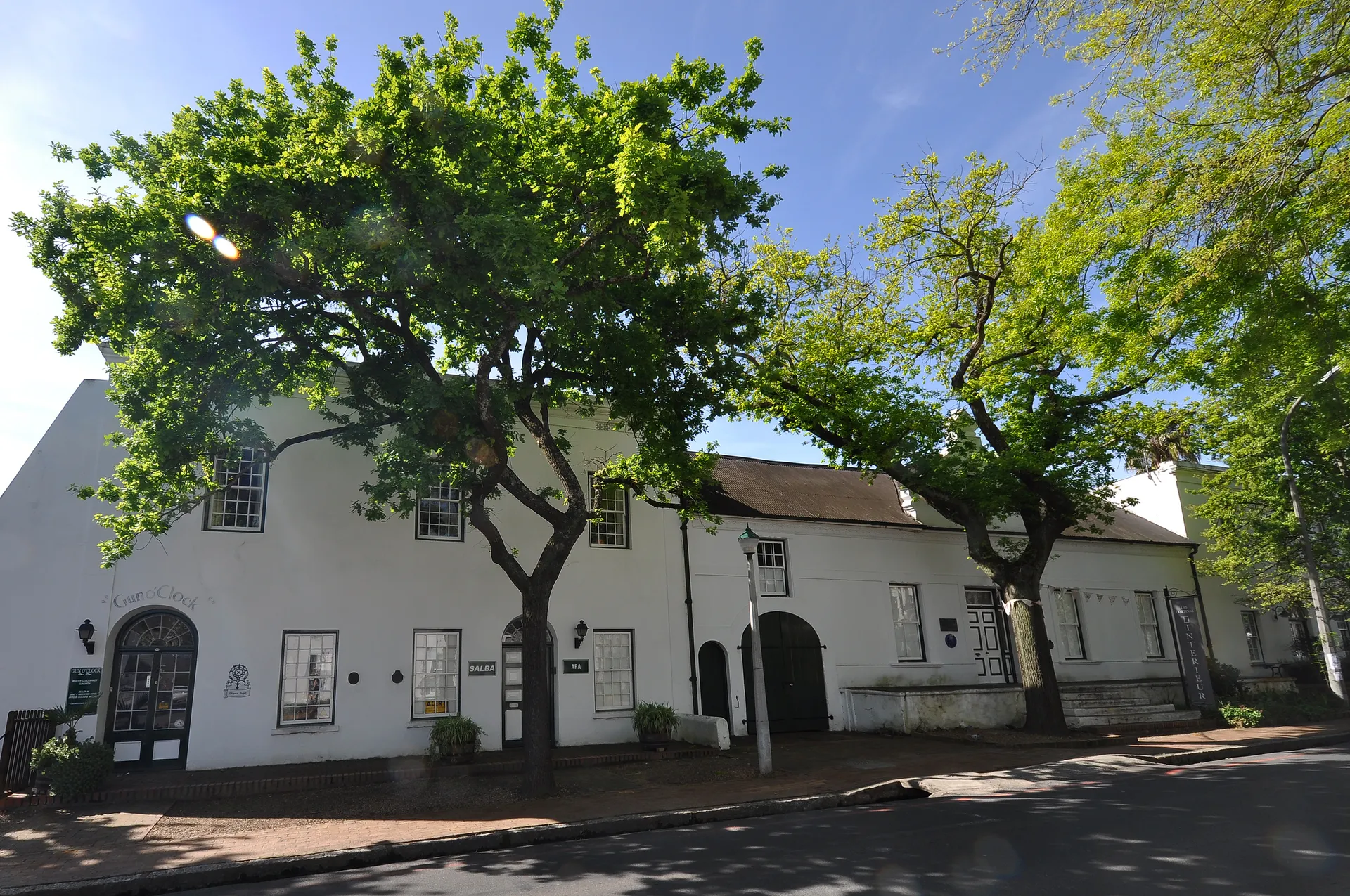
Under Simonsberg you get a town of about 77,000 that you can cross on foot or by bicycle, and some February and March days above 40°C. The oaks Simon van der Stel planted earned it the name City of Oaks, and on Dorp Street you walk past white Cape Dutch gables and the old shop at Oom Samie se Winkel, with the Jonkershoek reserve nine kilometres away for a Saturday. The university brings 36,000 students, which keeps the coffee good, the bars loud and the shared houses full. Afrikaans is the first language of most residents, though nearly half the students now grow up speaking English at home. You will need a car for almost everything beyond the centre, and the train line that came back in 2024 is not something to build a week around. The beauty also has a history behind it: Kayamandi, on the edge of town, exists because Black residents were moved there under apartheid, and the gap between the two has not closed.

What the mountain costs

We put a month at about $2,000 in Cape Town and about $1,100 in Stellenbosch. The saving is large, and a car will take a share of it, but you still come out well ahead. A small remote-work scene is the true price: you will mostly be making friends through wine, trails or the university, because few people here do your kind of job.

Start with a month in Cape Town, and drive out one Saturday to hike at Jonkershoek or on the slopes of Simonsberg. Coming down, ask yourself this: do you want Table Mountain outside your window every day, or are you happy to visit it?

Cape Town vs Stellenbosch: side by side

All 13 categories we rate, each out of 10. Green is strong, amber is middling, red is weak.

Cape TownStellenbosch
8 Climate 8
6 Cost of living 6
5 WiFi 6
7 Nightlife 5
10 Nature 8
3 Safety 6
8 Food 8
6 Community 3
10 English 8
8 Visa 8
8 Culture 7
6 Cleanliness 8
7 Air quality 8

Cape Town and Stellenbosch at a glance

40 kmapart in a straight line
Same timein January
$900a month less in Stellenbosch
Population, urban areaCape Town3,215,000StellenboschNot listed
ElevationCape Town17 mStellenbosch109 m
Time zoneUTC+2in both
Nearest airportCape TownCape Town International Airport (CPT), 17 kmStellenboschCape Town International Airport (CPT), 24 km
Main languageEnglishin both
CurrencyRand (R, ZAR)in both
PlugsType C/D/M/N, 230V / 50Hzin both
Tap waterSafe in cities; bottled rurallyin both
Emergency number112 / 10111in both
Tipping10-15%in both
Ride-hailingUber, Boltin both
In the Schengen areaNoin both

Population is the Natural Earth figure for the urban area around each city, elevation from the Copernicus height model, airports from OurAirports.

Where they differ most

The three biggest gaps between the two, in the words of each city guide.

Safety

Cape Town

Safety requires mindfulness. Tourist and business districts like the City Bowl, Sea Point, Green Point, and the V&A Waterfront are generally safe during daylight. Walking alone after dark, especially on quiet streets, carries real risk. Uber is strongly recommended over walking at night. Pickpocketing occurs in busy areas.

Stellenbosch

Stellenbosch is generally relaxed and walkable, but South Africa has real crime concerns, so normal precautions matter. Stay aware at night, stick to busier, well-lit streets, keep valuables out of sight in parked cars and avoid flashing phones or cash.

Remote-work community

Cape Town

Cape Town has a growing but relatively intimate nomad community. Coworking spaces like CTO on Roeland Street host regular events including AI meetups, lunch clubs, and happy hours. Workshop17 organizes networking evenings. Nomad Facebook groups and Meetup.com events connect remote workers.

Stellenbosch

The dedicated digital-nomad community in Stellenbosch is modest compared with hubs like Cape Town or Lisbon, so you will not find a large ready-made scene.

Nightlife

Cape Town

Cape Town has a lively, diverse nightlife scene. Bree Street is the densest cluster of hip bars and casual eateries, drawing a sophisticated local crowd. Long Street remains popular with international visitors and a younger contingent. Camps Bay on Victoria Road offers beachfront sunset bars.

Stellenbosch

As a university town, Stellenbosch has a lively but fairly compact nightlife centred on student bars, pubs and casual spots around Church and Dorp Streets and Die Braak. Expect craft beer, affordable wine and an easy, friendly atmosphere rather than large clubs or late megavenues.

From the score notes in the Cape Town and Stellenbosch guides, where each one is explained in full.

Month by month: the weather

Each bar runs from the average daily low to the average daily high. Rain is below.

Cape TownStellenboschScale runs from 7C to 27C, rain up to 92 mm
See the numbers
Cape TownStellenbosch
Jan27C / 17C, 9 mm27C / 17C, 9 mm
Feb27C / 17C, 10 mm27C / 17C, 10 mm
Mar26C / 15C, 13 mm26C / 15C, 13 mm
Apr24C / 12C, 40 mm24C / 12C, 40 mm
May21C / 10C, 61 mm21C / 10C, 61 mm
Jun18C / 8C, 92 mm18C / 8C, 92 mm
Jul18C / 7C, 85 mm18C / 7C, 85 mm
Aug18C / 8C, 72 mm18C / 8C, 72 mm
Sep20C / 9C, 44 mm20C / 9C, 44 mm
Oct22C / 12C, 28 mm22C / 12C, 28 mm
Nov24C / 13C, 25 mm24C / 13C, 25 mm
Dec26C / 16C, 13 mm26C / 16C, 13 mm

Cape Town: weather-station averages for 1991-2020. Stellenbosch: weather-station averages for 1991-2020.

What a month costs

Cape Town$2,000
Stellenbosch$1,100

Our own estimate for a comfortable month for one remote worker, the same figure the city guides use.

Entry rules for common passports

Tourist entry on arrival. Every passport is in the visa finder, and remote-work visas are on the nomad visa page.

United States
Visa-free, 90 daysin both
United Kingdom
Visa-free, 90 daysin both
Germany
Visa-free, 90 daysin both
Canada
Visa-free, 90 daysin both
Australia
Visa-free, 90 daysin both
India
eVisain both

Where you would live and work

The areas people choose in each city, and some of the places they work from.

Cape Town

Neighbourhoods

  • City Bowl / GardensTable Mountain views and Cape Town's beating heart
  • Sea PointOceanside promenade living with sunset views
  • Camps BayPostcard-perfect beaches with celebrity appeal
  • WoodstockCape Town's creative hub with craft beer and street art
  • ObservatoryStudent village with bohemian energy

Places to work

Workshop17 V&A WaterfrontRoamworkCape Town OfficeWorkshop17 Kloof StreetTruth Coffee Roasting
More on the Cape Town guide →
Stellenbosch

Neighbourhoods

  • Historic Town Centre (Dorp Street and Die Braak)Oak-lined heart of Cape Dutch charm
  • University QuarterBuzzing student area near campus
  • Die Boord and BrandwachtQuiet leafy residential family suburbs
  • Wine-Estate Outskirts (Jonkershoek and Devon Valley)Vineyard-and-mountain escapes near town

Places to work

Hazz Coffee RoasteryCoffeeberryWorkspace Stellenbosch
More on the Stellenbosch guide →

Services in a language you speak

Providers in our directory who work in a language other than the local one, from official registers, consular lists and the providers’ own websites.

Doctors
19Cape Town
0Stellenbosch
Translators
9Cape Town
0Stellenbosch
Lawyers
8Cape Town
0Stellenbosch
Dentists
5Cape Town
0Stellenbosch
Physiotherapists
4Cape Town
0Stellenbosch
Schools
2Cape Town
0Stellenbosch
Therapists
1Cape Town
0Stellenbosch

Where each city wins

Cape Town is stronger on

CommunityNightlifeNatureEnglishCulture
Cape Town guide →

Stellenbosch is stronger on

SafetyCleanlinessWiFiAir Quality
Stellenbosch guide →

Add a third city in the comparison tool →

Frequently asked questions

Is Cape Town or Stellenbosch cheaper for digital nomads?

Stellenbosch is the cheaper base, around $1,100 a month versus $2,000 in Cape Town, a difference of about $900.

Which has better WiFi, Cape Town or Stellenbosch?

Stellenbosch scores higher for WiFi (6/10 versus 5/10).

Which is safer, Cape Town or Stellenbosch?

Stellenbosch rates higher on safety (6/10 versus 3/10).

Cape Town or Stellenbosch: which is better overall for remote work?

Cape Town takes the overall Nomad Score (8.3/10 versus 7.8/10), though the right pick depends on what you value most.