 Cancún
Immigration and tax law do not care which of these towns you pick. They are an hour apart in the same state. But what those rules do to one person's plans can decide it, so let us run them on someone. She is a Canadian freelance designer who bills $5,000 a month from a laptop, likes the Caribbean, and is thinking of staying for a while.
The first six months
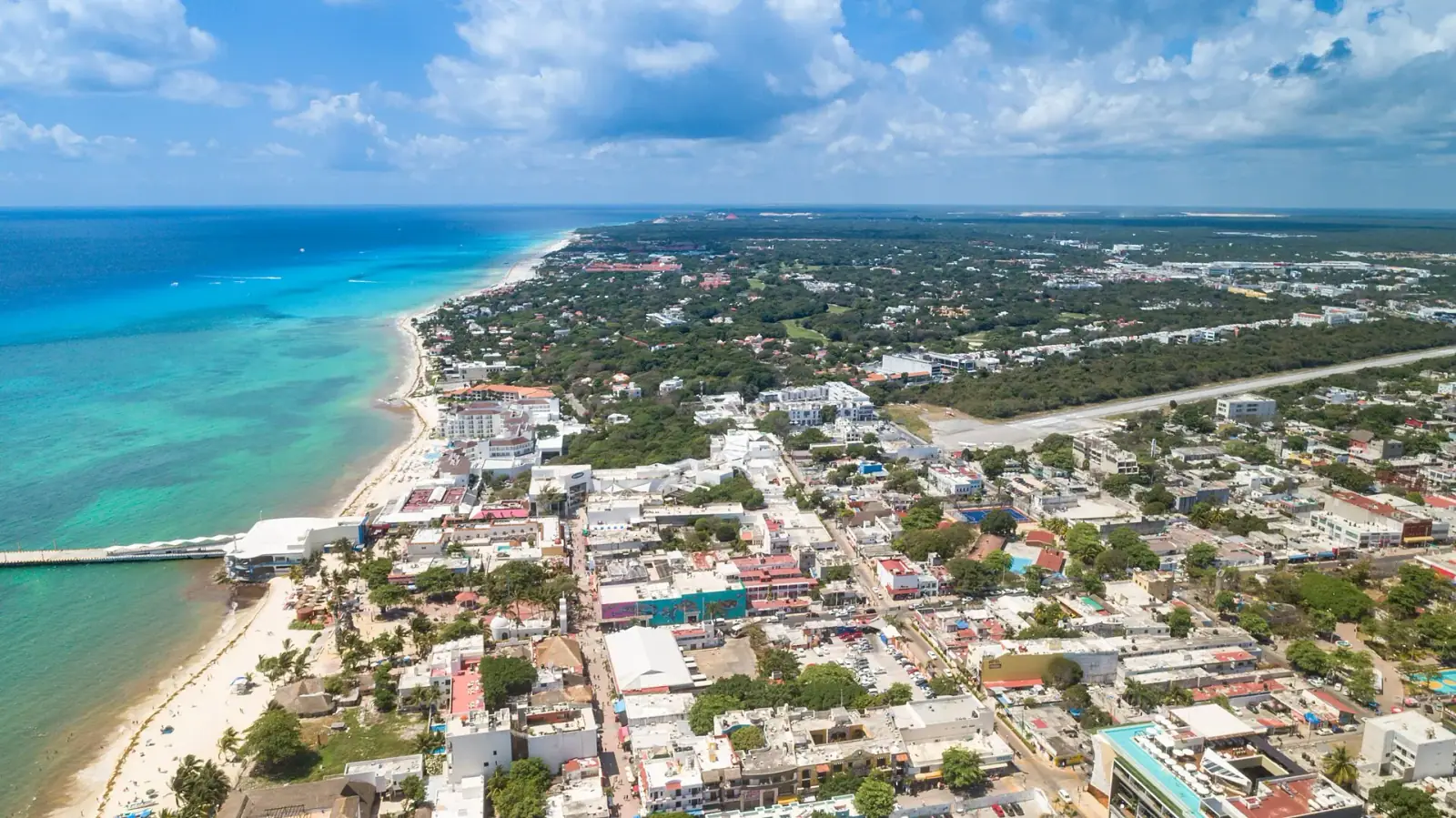
She needs nothing in advance. A Canadian passport gets her into Mexico for up to 180 days as a visitor, and for a stay like that the choice is about daily life. Playa del Carmen wins easily. It went from 17,621 people in 1995 to about 305,000 in 2020, on the back of tourism, and its centre is built around the pedestrians on Quinta Avenida. From a furnished place in centro, she can walk to the sea, to a desk at Nest on Avenida 10, and to the ferry that crosses to Cozumel every hour. On our estimate it comes to about $2,400 a month.
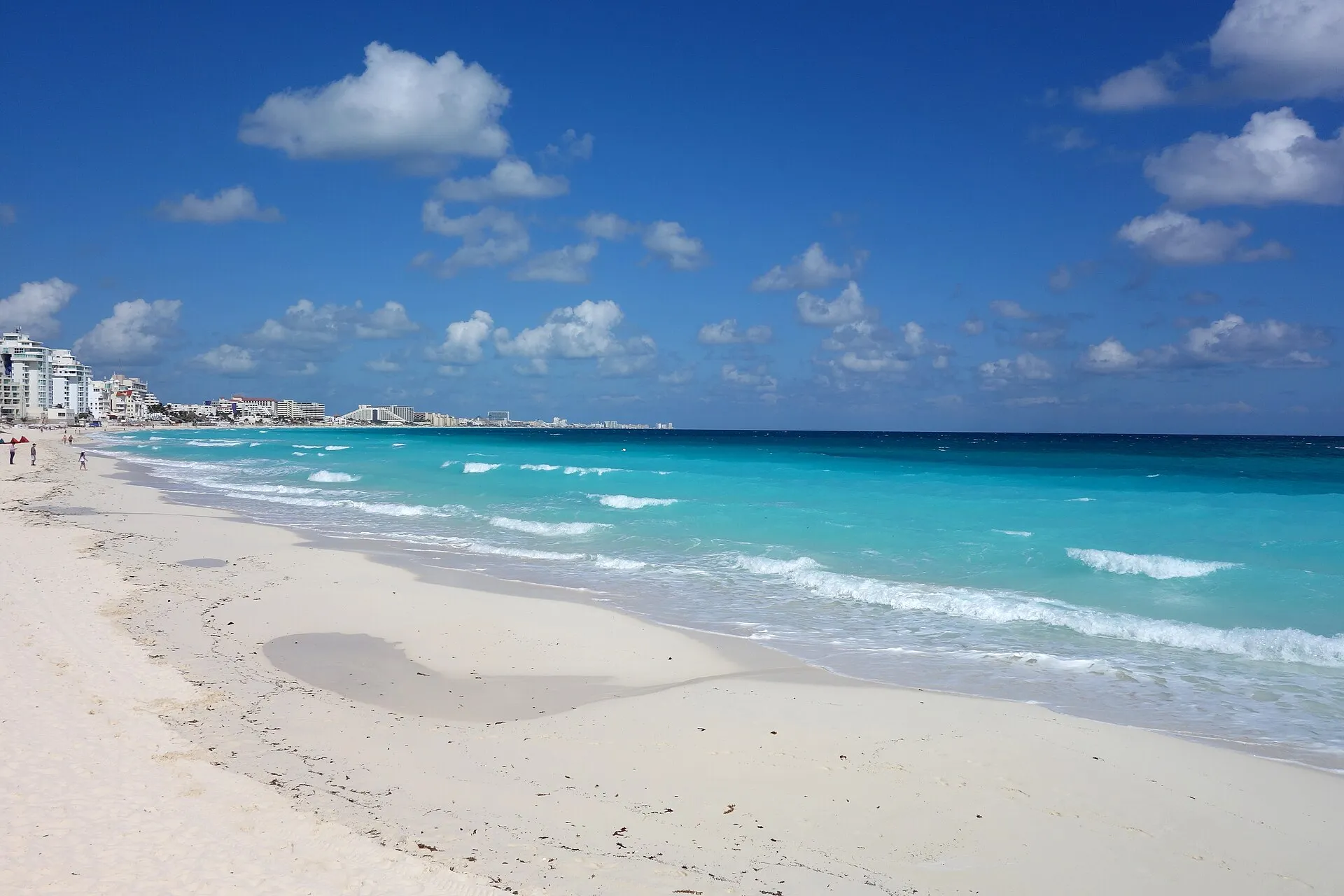
Cancún is what the Bank of Mexico planned in 1970: giant superblocks on the mainland, where nearly 900,000 people now live, and a hotel strip that you ride to on the R-1 or R-2. It costs a little less, around $2,200 a month by our reckoning, but for a six-month stay that saving would not buy back a beach at the end of the street.
Staying longer
To stay past that, she needs the temporary resident visa. Our nomad visa page sets the bar at about $4,600 a month in income, so her $5,000 clears it by $400, with very little room if a consulate reads her freelance invoices strictly. A savings balance of about $77,500 is the alternative. She applies at a consulate outside Mexico, usually at home, then enters and has 30 days to exchange the visa for a card at an immigration office. That card has lately cost about $600 for the first year, after a sharp fee rise, and she can renew for up to four years in all. Neither town changes any of this.
The lease
This is the part people miss, because the card is not what makes her a Mexican taxpayer. The test looks at whether she has set up a home in Mexico, and nothing in it counts days or mentions her visa. So a twelve-month lease in her name on Calle 38 is a very different document from a run of monthly lets, even on the same income.
Keeping a flat in Toronto does not settle it either. With homes in both countries, residence follows her centre of vital interests, and that sits in Mexico if more than half her income comes from there or if Mexico is the main place of her professional activity. Her clients are in Canada. Her desk, however, is on the Riviera Maya, and that second limb is uncomfortably close to a description of remote work.
What would it cost? Mexican residents pay on worldwide income. At about 18 pesos to the dollar, $60,000 a year falls in the 30 percent band of the 2026 table, which works out at roughly $14,000 before deductions. What Canada does next is a separate sum, and our tax guide for remote workers is the place to start on it. Either way, it dwarfs the $200 a month between these two towns.
Which town, then
Now the choice is clearer, and it runs in an unexpected direction. Six months with no lease, no card and no change in tax position belongs in Playa del Carmen. You are there for the sea and the street, and that is what it does best.
Anyone taking on a year's lease and a Mexican tax bill has stopped being a visitor, and we would look harder at Cancún. A resident needs a working city more than a holiday street, and the airport matters more once you have a family and clients to fly back to: it carries around 15 million passengers a year, and in Cancún it is close. From Playa, that same airport is about 56 kilometres away, a bus of 50 minutes to an hour, and the Tren Maya will not help much, as the line was rerouted to avoid the town and its station is out on the highway. Living in El Centro or the Colosio area means giving up the walk to the beach, and on a resident's budget, in a resident's year, that is a trade we would make.
So read the lease first and choose the town last.
 United States
 United Kingdom
 Germany
 Canada
 Australia
 India