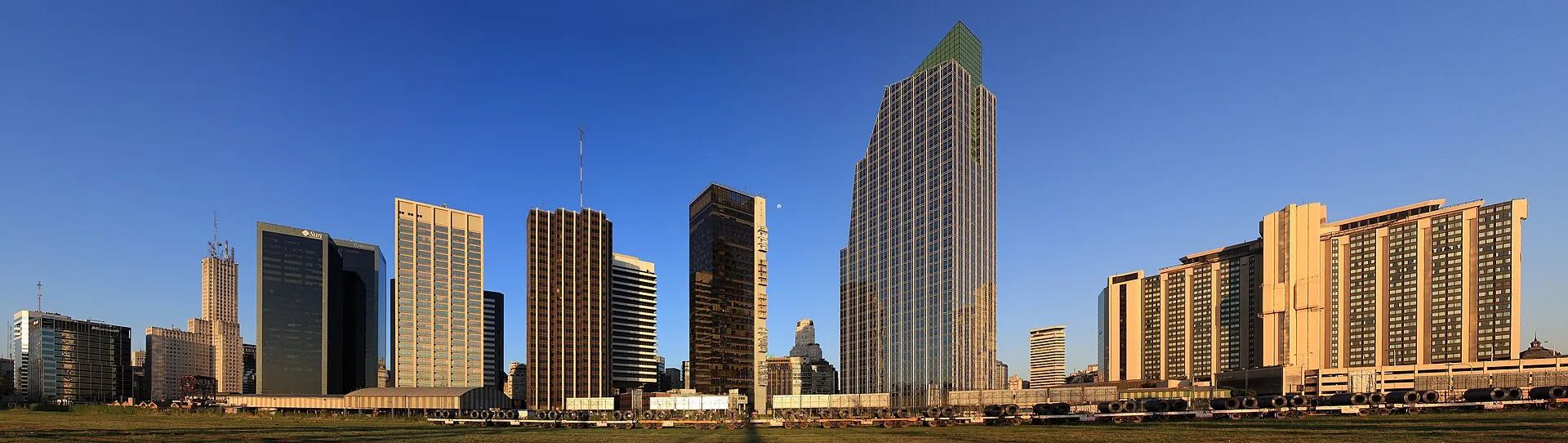
 Buenos Aires
You have had six months in Palermo. You love it and you are tired. You keep your phone in your pocket on the street, your neighbour's air conditioner drips on your balcony, and someone has told you about a town at the foot of the Andes where the water runs along the gutters and the shops close for a nap. Should you go? Yes, for a season, as long as you are going for the right reasons. Here is how the likely reasons hold up.
Will it save you money?
Barely. Our estimate for a month in Mendoza is $1,400, and for Buenos Aires it is $1,600. Peso prices move quickly in both, and $200 can vanish into wine tours and the car hire you will want for the mountains. Do not move across the country for this.
Will it be calmer?
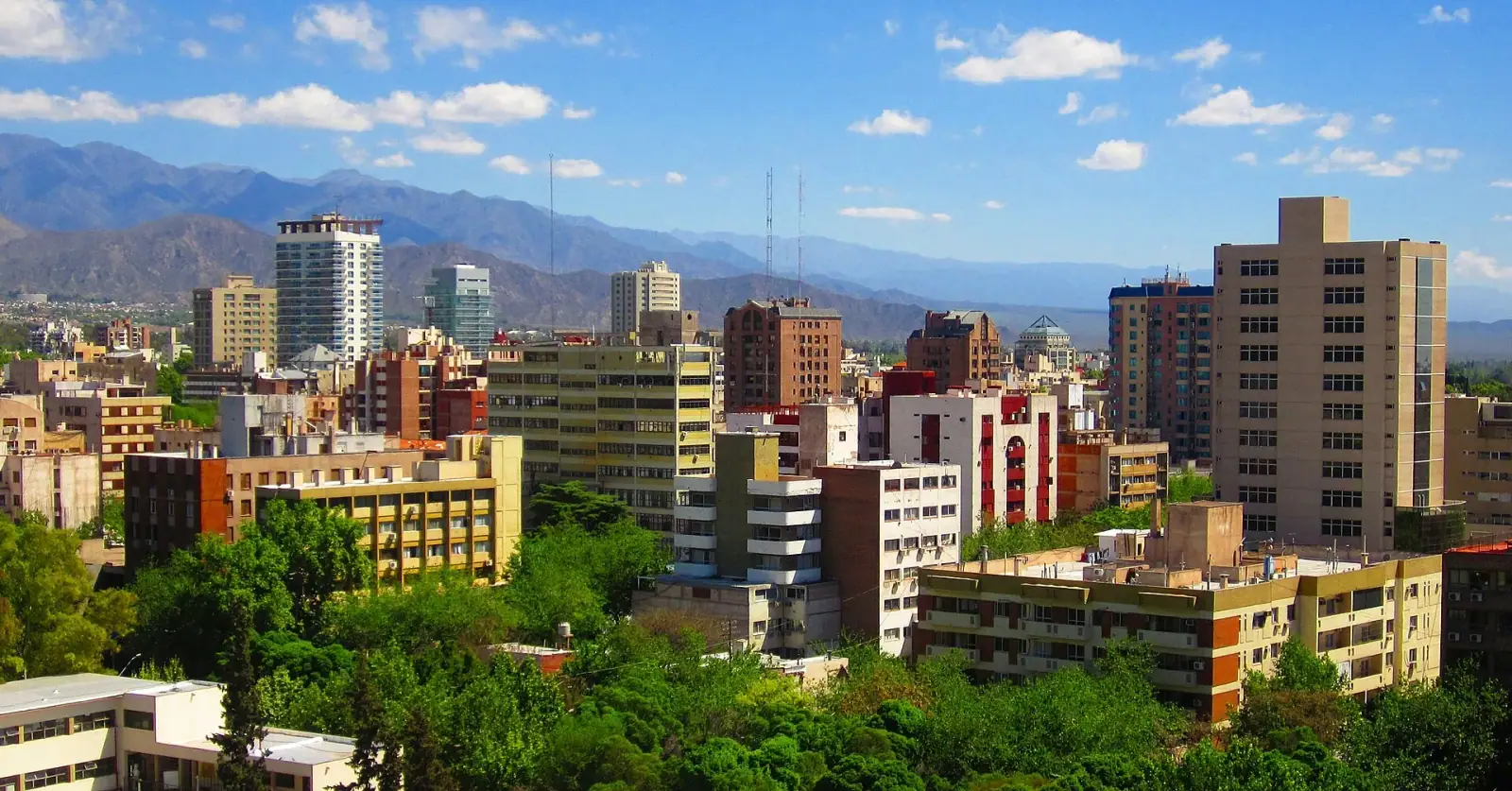
Yes, and this is the good reason to go. The city proper had just 115,000 people at the 2010 census, inside a metro area of about a million, and it was built to be spacious. After an earthquake killed at least 5,000 people in 1861, Mendoza was rebuilt with wider streets, wider pavements and bigger squares than any other Argentine city, with Plaza Independencia at the centre and four smaller plazas set two blocks off its corners. Open irrigation channels, the acequias, run beside the kerbs and water about 100,000 trees. You could work at Tent Cowork on Aristides Villanueva, walk home under the shade, and be up Cerro de la Gloria in Parque San Martín to watch the sun go behind the Andes before dinner.
The nap is real as well. Most businesses shut from about 13:00 to 17:00 and reopen until nine or so, and banks are only open in the mornings. You get used to it quickly, and it does help break the feeling that the city is chasing you.
It will not cure everything, however. British travel advice singles out downtown Mendoza for theft, just as it does Palermo, so keep the phone habit. Earthquakes here are a live risk as well as a piece of history. Ask about the age of the building when you rent.
What gets harder?
Most of what you would give up is people and connections. There is far less English, and the foreign community is small enough that you will soon know it. You leave behind the cafés, theatres and sheer choice of a metro area of 16 million. Flights to the capital are expensive, and the bus takes 13 to 17 hours, so popping back for the weekend is not on.
The weather has its own surprises. Only about 223 millimetres of rain falls in a year, and January's 40°C afternoons are dry, which many people prefer to the wet heat of Buenos Aires, where a heatwave in January 2022 knocked out power to more than 700,000 households. But between May and October the zonda can come down off the mountains, a hot, dry, dusty wind that can push the temperature up towards 40°C in the middle of winter, usually starting in the afternoon. And all of this greenery depends on melting snow. Mendoza's rivers have run below their average for more than a decade. This summer should be a good one, with about 1,800 cubic hectometres forecast, double last season, but officials are clear that one good year does not end the shortage.
What about the visa?
It covers you in both, and our nomad visa page has the details: no income figure, 180 days, renewable once. One clause matters more from Mendoza than from anywhere else. To renew, you must have spent half of the first 180 days in Argentina, and Mendoza is the place where that gets tempting to forget, with Santiago just 380 kilometres away over the pass, about seven hours by bus. Count your Chilean weekends. Allow for the pass as well, since snow can shut it for days from about late May.
Our view
Do not give up Buenos Aires yet. Sublet the flat and go to Mendoza at the end of February. You will get the harvest and the Vendimia festival in early March, cooler nights, the vineyards of Maipú within cycling distance and Aconcagua a day trip up the road. By May you will know if you miss the noise. We suspect most people who are merely tired will be ready to go back. Those who are not should give notice on Palermo.
 United States
 United Kingdom
 Germany
 Canada
 Australia
 India