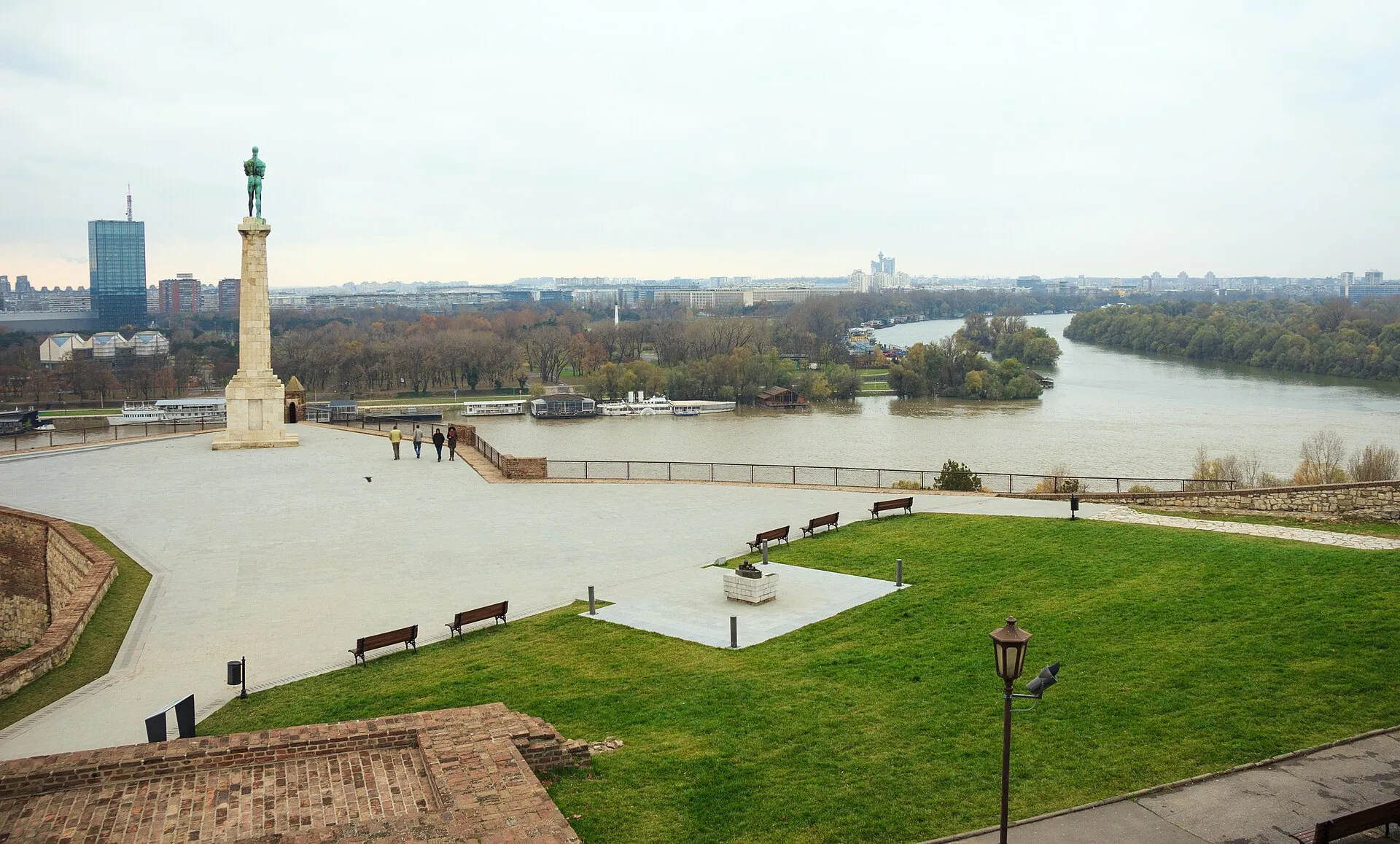
 Belgrade
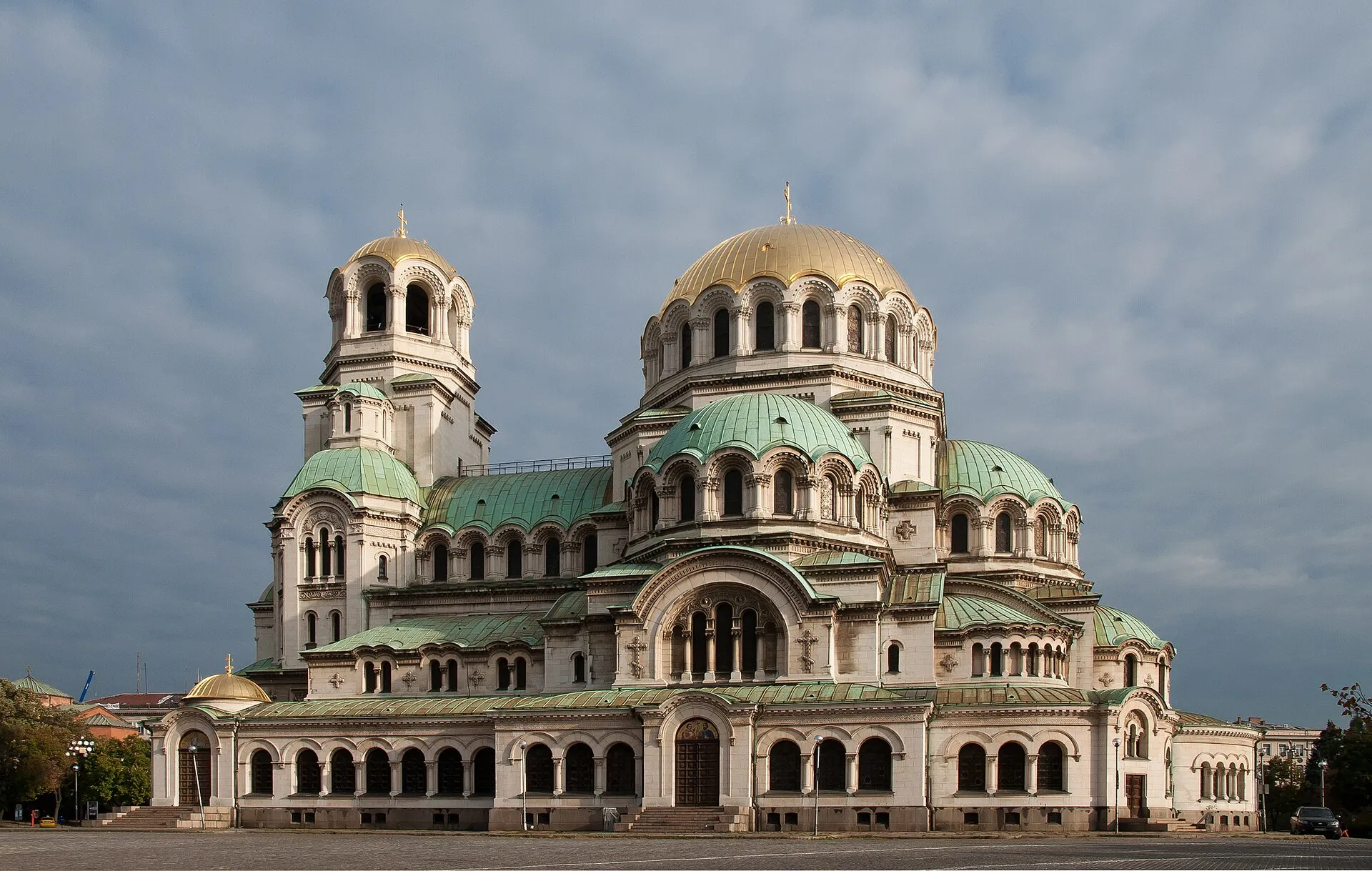
 Sofia
On 28 June 1948, a Prague newspaper printed a resolution throwing Yugoslavia's Communist Party out of the Soviet bloc's club, the Cominform. Stalin and Tito had fallen out, and the country lost the markets that took about two-thirds of its exports. Next door, Bulgaria went the opposite way. Its leader Todor Zhivkov asked for his country to be absorbed into the Soviet Union, in 1963 and again in 1973, though how seriously he meant it is still debated.
Two neighbouring Slavic capitals, both written in Cyrillic, took different turnings that year. Almost eighty years later, you still run into the result at the passport desk.
What 1948 built
That same year, work began on New Belgrade, a planned modernist city across the Sava from the old fortress. Cut off from Moscow, Tito took American aid, and in 1961 he hosted the first summit of the Non-Aligned Movement. Yugoslavs carried one of the few passports that opened doors on both sides of the Iron Curtain. Some of that confidence never left Belgrade, a city that sits on terraces and in cafés as though nobody has an office to go to, with clubs on boats on the two rivers, and a stubborn habit of going its own way, which cost it dearly in 1999, when NATO bombs damaged the old General Staff building in the middle of town.
Sofia took the other path to its logical end. For decades the Soviet Army monument, 37 metres of heroic bronze soldier and grateful peasants, stood in the park near Sofia University. Its figures were lifted down in December 2023 and the site has been fenced off since. It fits a line that runs through everything Bulgaria has done since: into the EU in 2007, the Schengen area in 2025, the euro on 1 January 2026.
What this means for your stay
Here is the practical part, and for many readers it settles things. A Schengen visitor can stay 90 days in any 180, and those days are now shared between Sofia and Lisbon and everywhere in between. Serbia keeps a separate 90-day count of its own, so time in Belgrade does not eat your Schengen allowance. If your passport is American, Australian or British and you are building a year in Europe, this city is the place where the clock stops, and it has a large foreign community to prove it, swollen by arrivals from Russia after 2022 who pushed up rents around Vračar and Dorćol.
With an EU passport, on the other hand, all of that means nothing, and Sofia gives you what you actually want: the same bank, the same currency, flights across the bloc, and Vitosha just behind the last houses. That is how we would split it: Belgrade for the passport that needs the days, Sofia for the one that does not.
Your budget barely enters into it. We reckon on $1,700 for a comfortable month in Serbia and $1,600 in Bulgaria. Belgrade does give some of that back, because its buses, trams and trolleybuses have been free for everyone since January 2025. Sofia has what Belgrade lacks, a working metro, and it runs right to the airport.
Where each is headed now
This is where the old story stops being quite so neat. On 25 October 2026, after two years of student-led protest that began with the deadly collapse of a station canopy in Novi Sad, Serbian voters gave a new Student List an absolute majority and ended a long period of rule by Aleksandar Vučić's party. As this was written, the next government had not yet been formed. What it does about the EU, about Russia and about the visa rules will matter a great deal to people who have based their year on Serbia's position outside the bloc.
Bulgaria, for its part, spent the winter of 2025 on the streets, lost a government to it, and in April 2026 gave a majority to Rumen Radev, a former president who had opposed the euro and who now says the country will stay on its European path.
Whichever you pick, keep one date in mind. Belgrade hosts Expo 2027 from 15 May to 15 August, out in Surčin near the airport, and short lets will feel it that summer. If you are drawn to the city at its most interesting moment since 1948, go this winter, before the crowds and the prices, while nobody yet knows how the new chapter ends.
 United States
 United Kingdom
 Germany
 Canada
 Australia
 India