 Athens
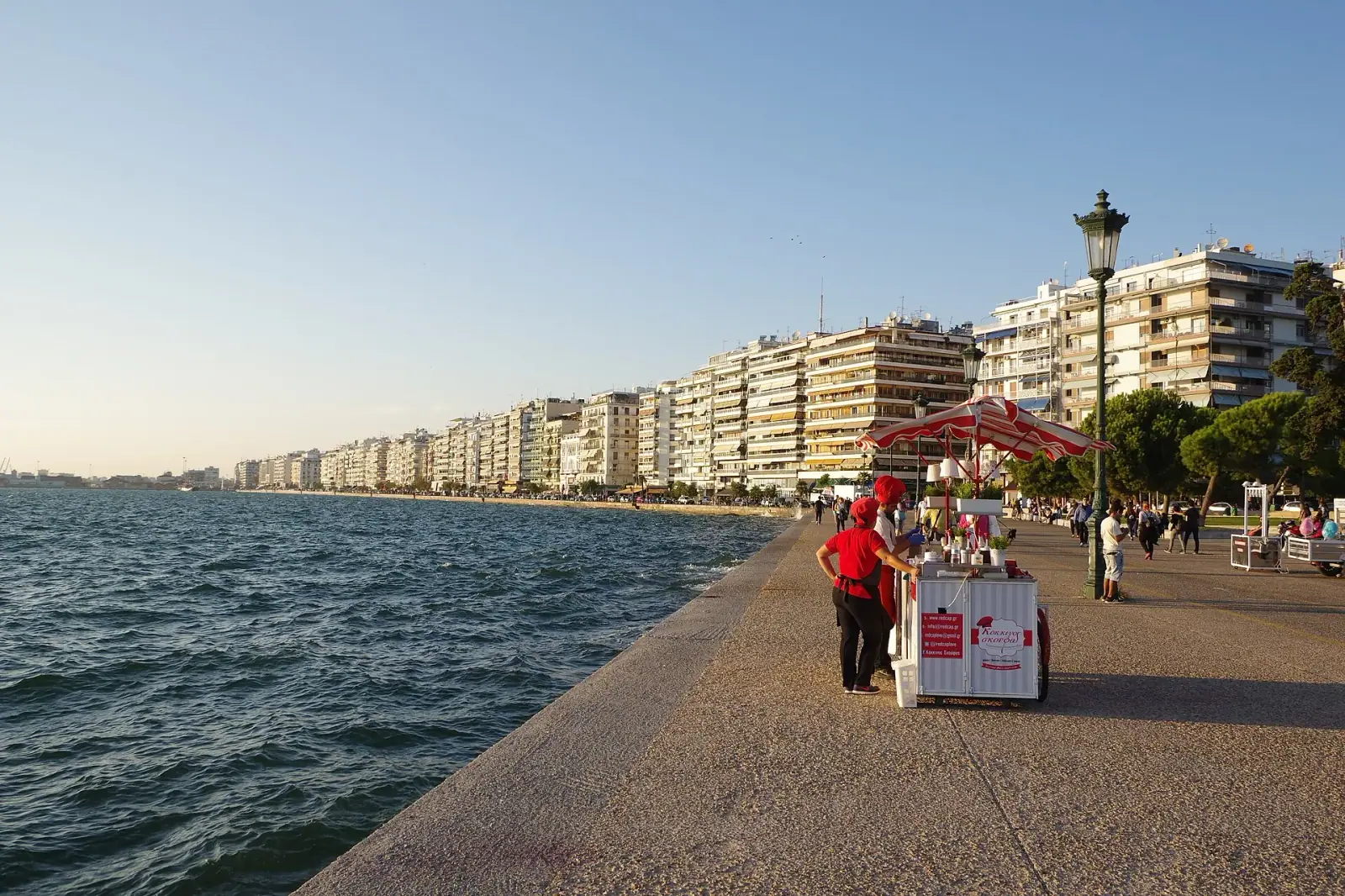
Open a map of Greece and look at the shape of each city before you read anything about its food. Athens is a bowl: three million people on a plain closed in by Parnitha, Pentelicus, Hymettus and Aigaleo, with one side open to the Saronic Gulf. Thessaloniki is a strip, a city running about 30 kilometres along the head of the Thermaic Gulf with its hills at its back. Nearly every difference you will feel in daily life comes out of those two drawings.
What the mountains do
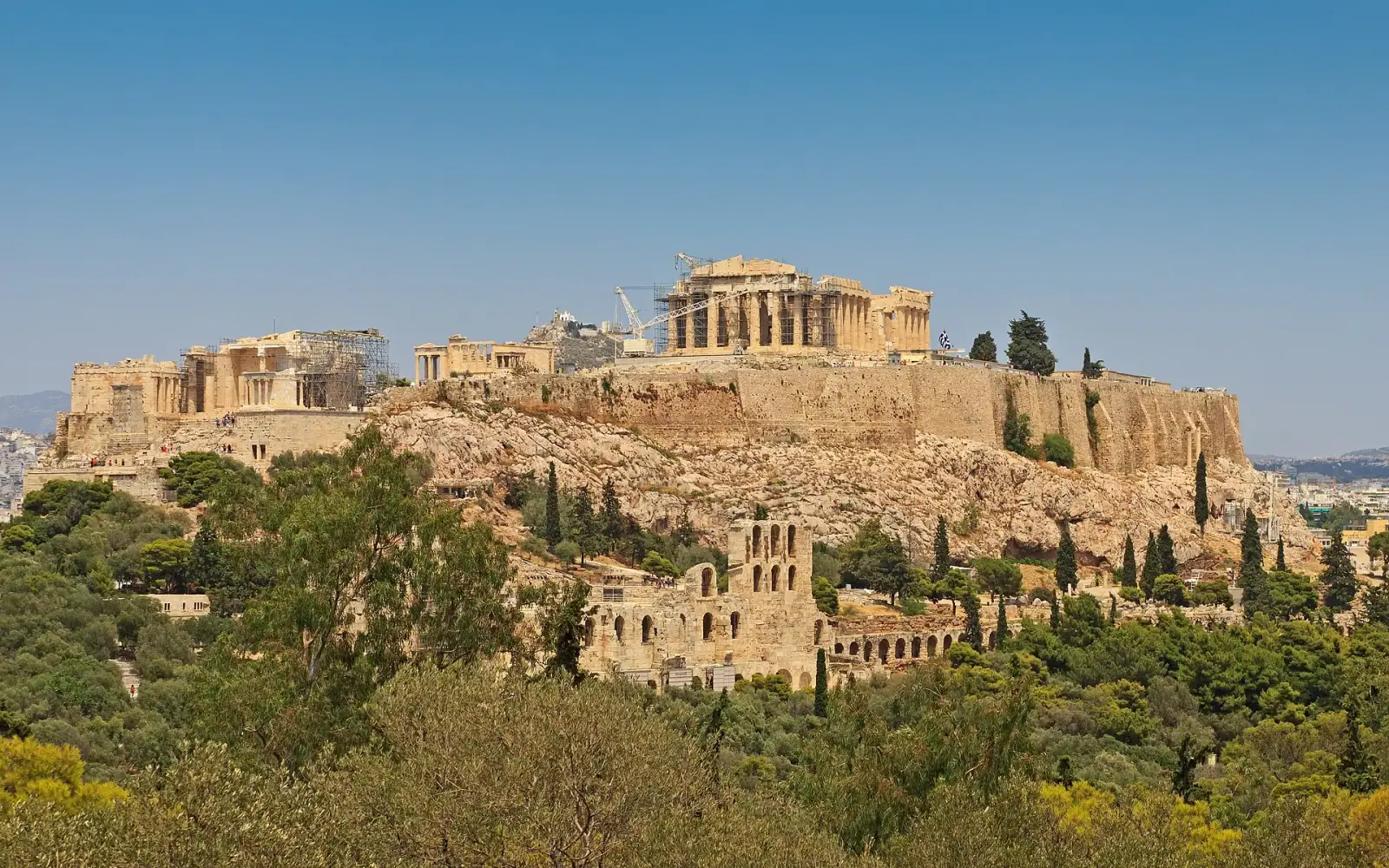
A bowl holds heat. Athens has been called the hottest city in mainland Europe, it appointed the continent's first chief heat officer, and the mountains that frame it so handsomely also trap air under a temperature inversion on the worst summer days. August averages 35°C by day and about 24°C at night. Your escape is up: Kifissia on the northern slopes runs a little cooler, or you climb the pine hills of Lycabettus and Filopappos, with the Acropolis as your view from Koukaki.
Thessaloniki sits further north and faces open water, and it is about three degrees cooler in August. The bill comes in winter. January gets to 10°C and drops to 2°C against the 13°C and 7°C of Athens, mornings bring frost, and snow falls most years. You will want a properly heated flat, which is not a thing to assume in Greece.
Which way each city faces
The gap in the side of the Athens bowl is its great asset. Through it lies Piraeus, the largest port in Greece, with ferries to almost every island in the eastern half of the country, and the metro now runs right from the airport to the port. A tram follows the shore down to Voula, past beaches, though most of the good ones charge at the gate. The airport handled 34 million passengers in 2025, and it flies to New York, Toronto, Singapore and Seoul. Very little in the Mediterranean is hard to reach from here.
Thessaloniki looks across its gulf at something else: on clear days from the old upper town of Ano Poli you can see Mount Olympus, about 100 kilometres away. Ano Poli survived the great fire of 1917, which destroyed the centre below it, and the city was rebuilt under Ernest Hébrard with the diagonal avenues and monumental squares you will walk today. Above the upper town begins the Seich Sou forest. The Ladadika taverns are down by the port, and for centuries this was the only Jewish-majority city in Europe. The airport is much smaller at 8 million passengers, with lots of German routes and a Ryanair base, and no metro: allow around 40 minutes by bus.
The strip has finally got the transport it needed. After years of digging through Byzantine remains, a driverless metro opened in November 2024 and reached Kalamaria in August 2026, 18 stations on 14 kilometres, at about 50 cents a ticket. A long thin city suits a single line. You could now live out at Kalamaria by the water and ride straight in to the centre.
The land between them
The railway between them is a sore subject. The Tempi collision of 2023 killed 57 people on this line. Its trial is still running, upgrade works bring bus replacements, and the trip takes around five hours. We would fly, and treat the two cities as separate decisions rather than expect to have both.
On our estimate you will spend about $2,400 a month in Athens and about $2,000 in Thessaloniki. The digital nomad visa needs about $4,030 a month after tax wherever you live, so if you clear it, that $400 is your own to keep. Thessaloniki also has Greece's largest student population, so that lower bill does not come with a quiet town.
We lean towards Thessaloniki for anyone staying a full year, for the summers, the seafront walk and a metro that matches the map. Athens is the better base for a person who wants islands every month or flies long-haul. So go back to the map: draw your next ten trips on it, and see which city the lines start from.
 United States
 United Kingdom
 Germany
 Canada
 Australia
 India