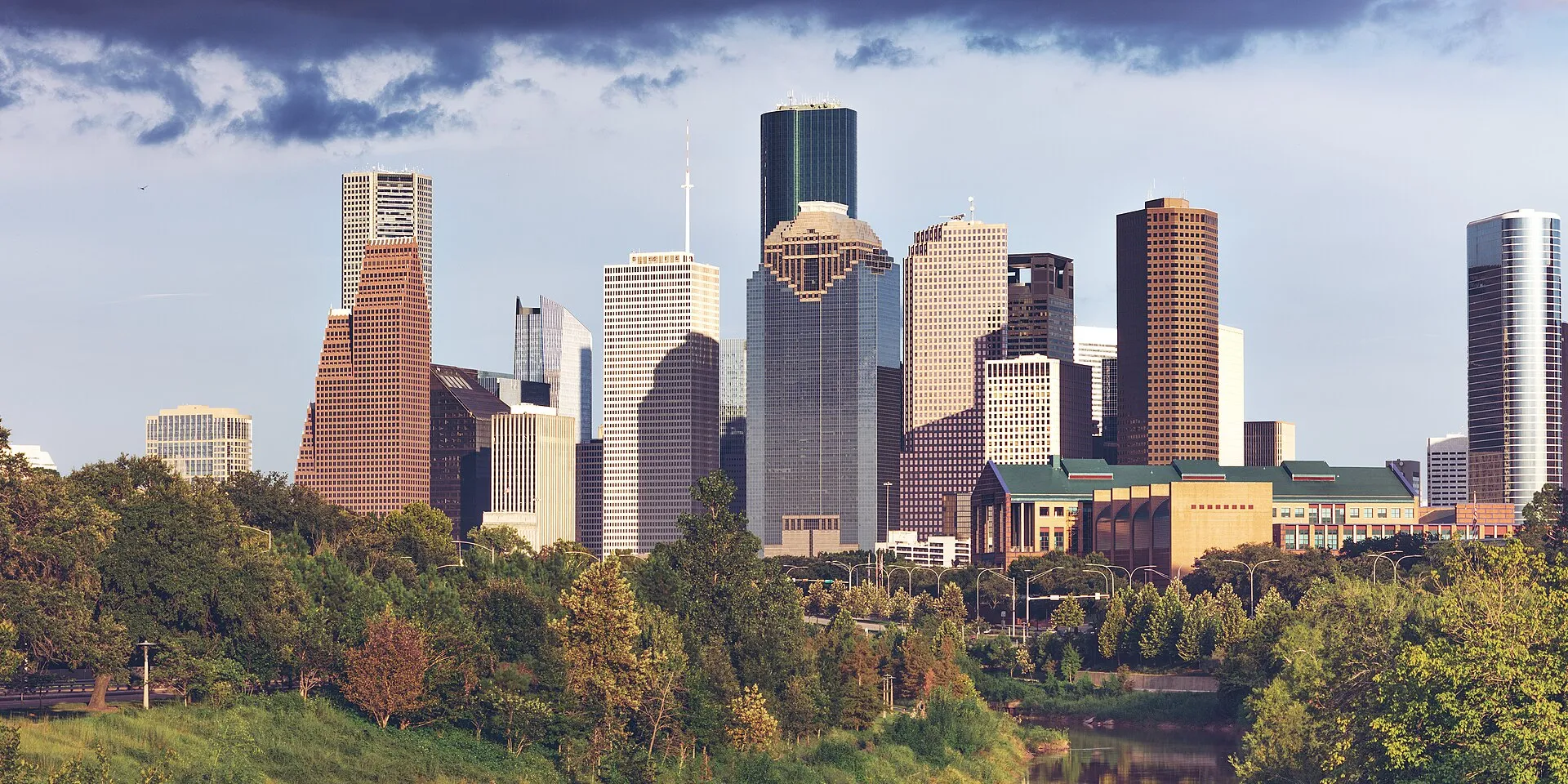
Look at Houston on a map and it barely looks like a city you could live in on foot. It spreads over 640 square miles of land, ringed by freeways, with offices, shops and flats scattered across all of it. Now look closer and find the one thin line running north to south through the middle: the METRORail Red Line, which follows Main Street through downtown and Midtown, then Fannin Street past the oaks of Hermann Park and into the hospital towers of the Texas Medical Center.
That line is the whole answer. You can live in Houston without a car, comfortably, if you rent within a short walk of it or in the walkable core of Montrose, and if you accept that the rest of the metro area becomes a place you visit rather than a place you use. Pick the wrong address and the same city that works so well along Main Street will strand you in a parking lot in August.
So the decision that matters is not whether to buy a car. It is where to sign the lease.
| Red Line trains, weekdays | every 6 minutes |
|---|---|
| Red Line trains, weekends | every 12 minutes |
| Bus or rail fare, with free transfers for 3 hours | $1.25 |
| Day pass, valid until 2 a.m. the next day | $3 |
| Airport bus to downtown, from Bush or Hobby | $4.50 |
| Average cost of owning and running a new car in the US | about $1,070 a month |
| What a local tenant pays for a one-bedroom, utilities included | about $1,300 a month |
| Average high in July and August | about 95°F (35°C) |
| Our monthly budget for one person | about $2,400 |
Fares and frequencies: METRO. Car costs: AAA, 2026 national average for a new vehicle. Rent: US Department of Housing and Urban Development fair market rent, as shown on our Houston city page. Temperatures: 1991-2020 climate normals. Budget: our own estimate.
The Red Line is the spine of car-free Houston
The Red Line is about 13 miles long with 25 stations, from the Northline Transit Center down to Fannin South, beyond the old Astrodome. Between those ends it threads together most of what a remote worker needs in a week: offices and theatres downtown, bars and gyms in Midtown, the museums, the park, Rice University and the Texas Medical Center.
What makes it usable is frequency. Trains run every six minutes on weekdays and every twelve at weekends, from before five in the morning until after midnight. At that rhythm you never check a timetable. Two shorter lines, the Green and the Purple, branch east from downtown towards EaDo, the University of Houston and Texas Southern University.
The rule that follows is simple. Measure every flat you consider by its walk to a Red Line platform, in minutes, in July. Five is good. Ten is fine from October to May and a real cost from June to September. Anything further and you are back to calling a car.
Midtown and the Museum District: the easiest car-free addresses
Midtown sits between downtown and the museums, a district of mid-rise apartment complexes with a gym on the ground floor and a strip of bars along Bagby Street. It has two Red Line stations, McGowen and Ensemble/HCC, with Downtown Transit Center just to the north, so most flats are a short walk from one. Its weakness is shade: whole blocks are surface parking, and that matters more here than anywhere else in this article.
Ride two or three stops south and the city changes character. Past the Museum District station, the next stop is Hermann Park/Rice University, at the western edge of a 445-acre park that has been public land since 1914. It holds the zoo, a Japanese garden, the pedal boats on McGovern Lake and a miniature railway that has run since the 1950s.
It also holds the best free evening in Houston. Miller Outdoor Theatre, on the park's hillside, runs an eight-month season of performances that are all free, and a seat on the grassy hill in front of the stage needs no ticket. On a spring night you could finish work, ride a few stops, and be sitting on that hill with a picnic by the time the music starts.
The museums keep their own free days. The Museum of Fine Arts, Houston opens its permanent collections free of charge on Thursdays, which turns a Thursday afternoon break into an hour with the paintings, and the Contemporary Arts Museum across the street is free every day. For a remote worker who wants a car-free life with some culture in it, this stretch of the line is the strongest choice in the city.
Montrose: walkable streets and the city's busiest bus
Montrose has no rail station, and it is still the other place where living without a car works. It is a low-rise grid of early twentieth-century bungalows and small apartment courts west of Midtown, with vintage shops, tattoo studios, coffee houses and cocktail bars along Westheimer Road. Daily life fits inside it: coffee, dinner and a bar are usually a few blocks from the door.
Its quiet centre is the Menil Collection, the Renzo Piano museum that opened in 1987 and where admission is free, set among bungalows, many of them owned by the museum and painted the same "Menil grey", so the whole neighbourhood reads as one quiet campus. Groceries are covered too: the H-E-B Montrose Market at 1701 West Alabama opens from six in the morning until eleven at night and offers delivery, which matters on the days you would rather not carry a week of shopping home in the heat.
For anywhere further, you take the bus. The 82 Westheimer runs a 19-mile route from near downtown through Montrose to the Galleria and beyond, and it carries more riders than any other bus route in Texas: your way to the Galleria's shops without a parking garage.
At the northern edge of Montrose, Buffalo Bayou Park runs along the water west of downtown, a long green strip of trails and lawns. Walk down to the Waugh Drive bridge around sunset on a warm evening and you can watch an estimated 250,000 Mexican free-tailed bats pour out from under it and stream east along the bayou. They are there all year, in the biggest numbers in summer and early autumn. It is the kind of thing you only see if you live within walking distance.
Need a doctor or a lawyer who speaks your language in Houston?
Our directory lists Houston providers by the language they work in, with the source for each language, so you can find one on a rail line rather than across town.
Browse providers in Houston →Downtown Houston underground and after six
Downtown is the third option, and the strangest. Beneath its towers runs a tunnel network more than six miles long, 20 feet below the streets, linking 95 city blocks with coffee shops, lunch counters, barbers, dry cleaners and doctors' offices. In August you can cross half of downtown in air conditioning.
The catch is the timetable. The tunnels close by six in the evening and stay shut at weekends, and the streets above go quiet with them once the office crowd leaves. Discovery Green, the 12-acre park on the east side of downtown, is the place with life after hours, and the Green Line runs from downtown into EaDo's breweries and murals. Downtown suits a short stay. For a few months, live in Midtown or Montrose and ride in.
Where Houston without a car stops working
Know what you give up. The Heights is lovely, all porches, oaks and a hike-and-bike trail laid on an old railway bed, but most errands there still mean driving. The same goes for the suburbs, where much of the cheaper housing sits, and for day trips to the Gulf coast or the Hill Country.
Rent a car for those days rather than own one for all of them, and let a rideshare cover the late night and the heavy rainstorm. If you are calling one most days, the address is wrong, not the plan.
Flooding is the other limit. The heaviest rain falls in early summer and in hurricane season, June to November, and low streets and underpasses fill first. On those days the car-free answer is everyone's answer: work from home and go out when the water has drained.
Walking in the Houston heat
Every walk here gets longer in summer. In July and August the average high is about 95°F (35°C), and the humidity off the Gulf makes it feel hotter than the number. A ten-minute walk to the platform at two in the afternoon is not a pleasant ten minutes.
So shape the day around it. Walk to the café or the coworking space before nine, ride rather than walk in the middle of the day, and save the park, the bayou trails and the walk home from dinner for the evening. Choose a flat on a street with trees over one facing a parking lot, and carry water as a habit.
Or time the stay. March, April and November are the comfortable months, when the same walks are a pleasure and an evening in Hermann Park needs no planning at all. A remote worker who can choose when to come should choose one of them.
What a month without a car costs in Houston
Transit is almost a rounding error. A single ride on any local bus or train is $1.25, with free transfers for three hours, and a day pass is $3, so even a month of daily rides comes to under $100. You can tap a contactless bank card or phone on the reader, or use the RideMETRO app, with no local card needed on day one.
Set that against a car. Owning and running a new vehicle in the US costs about $1,070 a month on average, before you pay for parking. A used car bought for a few months still brings insurance, registration and a sale at the end. Going without is the largest single saving available to you in Houston.
Spend part of that saving on rent. A local tenant pays about $1,300 a month for a one-bedroom, utilities included, and a furnished flat on a short lease costs more. Paying extra for the right address is the right trade here, because the address is what replaces the car. Our own estimate for one person living in Houston is about $2,400 a month.
How to set up a car-free month in Houston
You do not need a car on day one. METRO's 500 Downtown Direct bus links Bush Intercontinental's Terminal E and Hobby Airport with downtown, every 30 minutes from early morning until the evening, for $4.50. From its downtown stops you are a short walk or one Red Line ride from Midtown and the Museum District.
Book your first week in Midtown or near the Museum District station, where you can test the Red Line from the first morning. Spend those days walking the streets around three or four stations and one afternoon on Westheimer in Montrose, at the hour you would normally go for lunch. Then sign where that walk felt easiest.
Keep the stay inside your visa. Citizens of Visa Waiver Program countries can stay up to 90 days with an ESTA, and our nomad visa finder shows what other routes exist. Our Houston city guide covers the neighbourhoods in more depth, along with coworking spaces, cafés and the weather month by month.
Deciding between Houston addresses?
Neighbourhood by neighbourhood, with the cafés and coworking spaces in each, the weather in every month and our cost estimate.
Open the Houston city guide →Frequently Asked Questions
Can you live in Houston without a car?
Yes, if you live near the METRORail Red Line or in the walkable core of Montrose. Midtown and the Museum District have stations within a short walk of most flats, and trains run every six minutes on weekdays. Elsewhere in the metro area, daily life without a car is hard.
Which Houston neighbourhood is best without a car?
Midtown and the Museum District, both on the Red Line, are the easiest. Montrose has no rail station but is walkable for daily needs and served by the 82 Westheimer bus. Downtown works on weekdays, when its tunnel network is open, and is quiet in the evenings.
How much does public transport cost in Houston?
A local bus or METRORail ride costs $1.25, with free transfers for three hours, and a day pass costs $3. You can pay with a contactless bank card, a phone or the RideMETRO app. The 500 airport bus to downtown costs $4.50.
How do you get from Houston airport to downtown without a car?
Take METRO's 500 Downtown Direct bus, which runs from Bush Intercontinental's Terminal E and from Hobby Airport to downtown every 30 minutes from early morning to the evening, for $4.50. From downtown, the Red Line reaches Midtown and the Museum District.
Is Houston too hot to walk in summer?
In July and August the average high is about 95°F (35°C) with heavy humidity, so long walks at midday are hard. Car-free residents walk early and late, ride in the afternoon, and use downtown's air-conditioned tunnels on weekdays. March, April and November are the comfortable months.