 São Paulo
Forget the postcards and compare two ten-minute walks. Each starts at a metro exit, in the neighbourhood where a remote worker in that city would most plausibly rent: Pinheiros in São Paulo and Botafogo in Rio de Janeiro. Neither is the famous part. Both will tell you more than Paulista or Copacabana would, and by the end of them we lean Botafogo, for reasons that have little to do with the beach.
Coming up from the metro
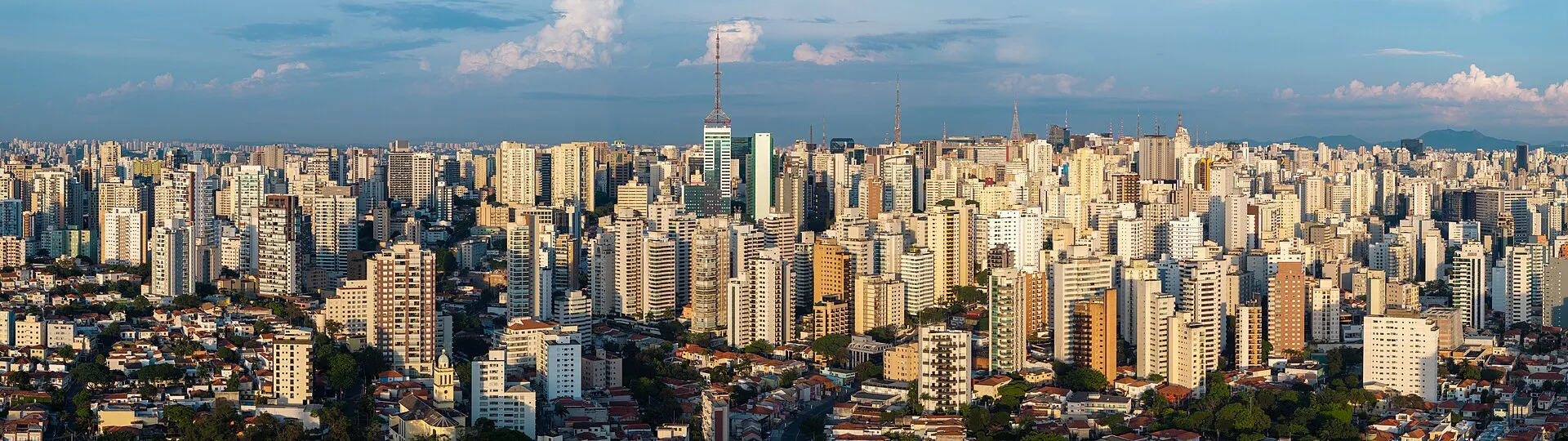
Take the yellow line to Faria Lima and you surface in Largo da Batata, Potato Square, named in the 1920s for the sellers around the Cotia farm cooperative. Today it is a wide, hard, slightly unfinished plaza, ringed by new apartment blocks, with bank and tech money rising along Avenida Faria Lima behind it. In December 2024 the city sold the square's naming rights to Ruffles, the crisp brand, then retreated when residents objected. That story is pure São Paulo: commerce first, and an argument about it afterwards.
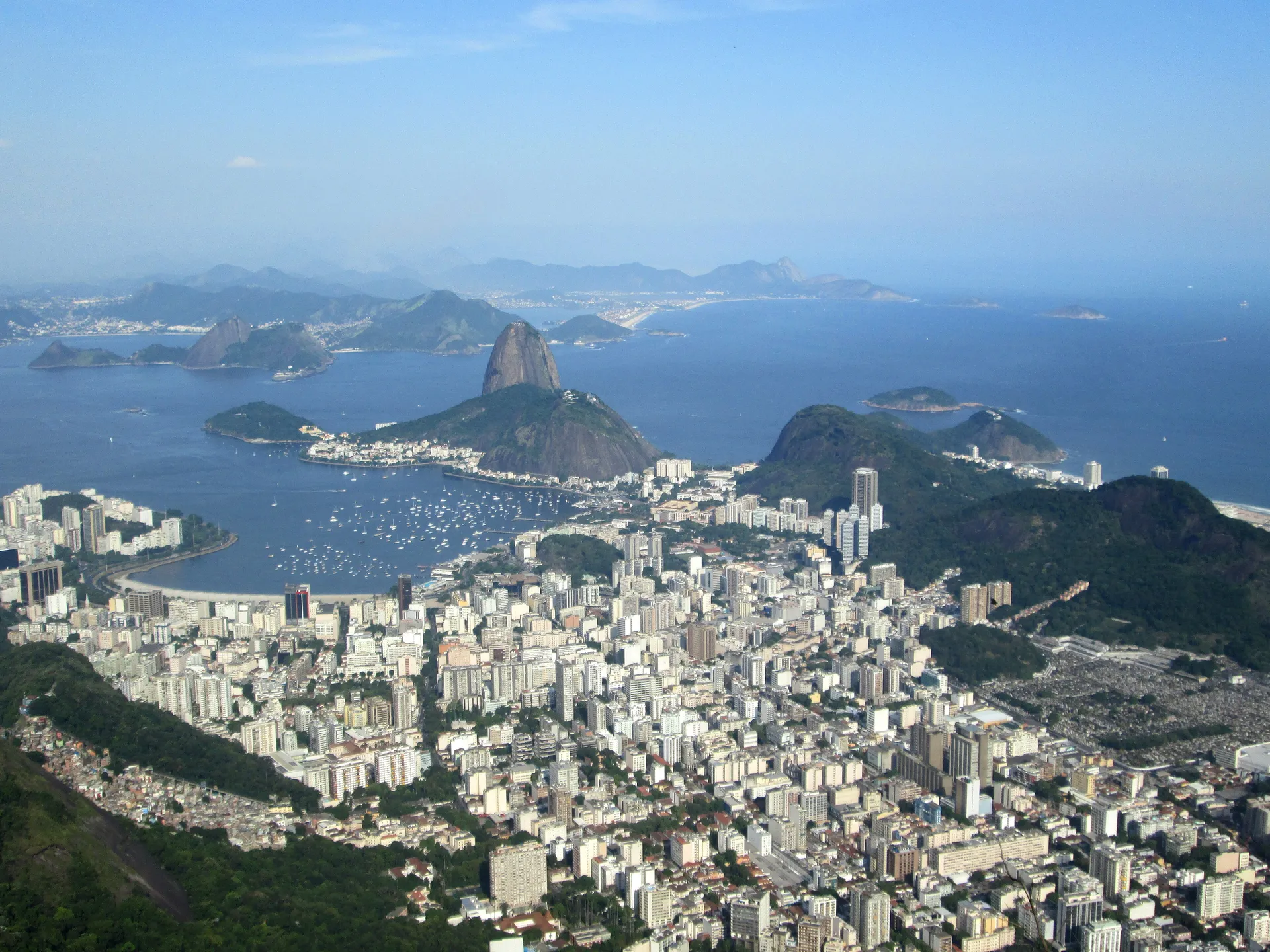
Come up at Botafogo station and you are in an older, tighter street grid. Rua São Clemente and Rua da Passagem date from the 1820s. Rua Voluntários da Pátria runs past bars that fill up after work. Look up and Morro Dona Marta is right there, with the Santa Marta favela climbing it at about 45 degrees, home to some 3,900 people. Walk the other way and the street opens onto a curved bay with Sugarloaf at the far side. Few streets anywhere end in a view like that.
Lunch
In Pinheiros, the municipal market has been trading since 1910, and Rua dos Pinheiros and Rua Teodoro Sampaio give you more restaurants than you will get through in a year. On Saturdays there is the fair at Praça Benedito Calixto, and up the hill in Vila Madalena the graffiti walls of Beco do Batman. Food is São Paulo's best argument, and this is where you would use it several times a week.
Botafogo's equivalent is the Cobal do Humaitá, a former tram garage now packed with bars and restaurants, and Rua Visconde de Caravelas nearby. It is good and loud, and much smaller in range. After six months, you may feel that.
The water at the end of the street
Do not swim at Botafogo. That beautiful bay sits inside Guanabara Bay, and the water is polluted. What you get instead is the metro: Copacabana is the next stop on line 1, a few more take you to Ipanema, and you can be in the open Atlantic before your 2 p.m. call. Rain is lighter too. Our station figures put Rio's wettest month near 155 millimetres, while São Paulo's January reaches about 297, and the city's old nickname is the Land of Drizzle.
From Pinheiros the sea is a road trip down off a plateau some 760 metres up. On Sundays you make do with Avenida Paulista, closed to cars since a 2016 decree and full of people on foot and on bikes. It is a good day out, though it is not a beach.
Walking home after dark
This part changes less than you would like between the two. Both cities have a phone-snatching problem, so you do not stand on a corner reading your screen, and you take Uber or 99 at night. Guides warn against the Botafogo promenade after dark, and in Pinheiros the rule is the same: phone away, car home. Rio's bigger headlines come from elsewhere: Operation Containment on 28 October 2025 left 122 people dead in Penha and Alemão in the North Zone, far from this walk. It matters to you less as a street risk than as a picture of who controls what in that city, and you should read up on it before picking a flat near any hillside.
What the walks cost
A furnished one-bedroom in Pinheiros runs about $690 to $1,200, and the same in Botafogo about $500 to $900. Over a whole month, we estimate $2,200 for São Paulo and $1,600 for Rio. The paperwork does not separate them: Brazil's nomad visa wants $1,500 a month in foreign income or $18,000 in savings, and either city needs at least survival Portuguese.
So settle in Botafogo unless your clients are on Faria Lima, in which case the extra money is simply a cost of doing business. Rio's weak spot is exactly what São Paulo sells, and the ponte aérea covers it. The world's first air shuttle, running since 1959, now flies more than 120 times a day from Santos Dumont to Congonhas. Fly down for a long weekend of eating, and come home to the bay.
 United States
 United Kingdom
 Germany
 Canada
 Australia
 India