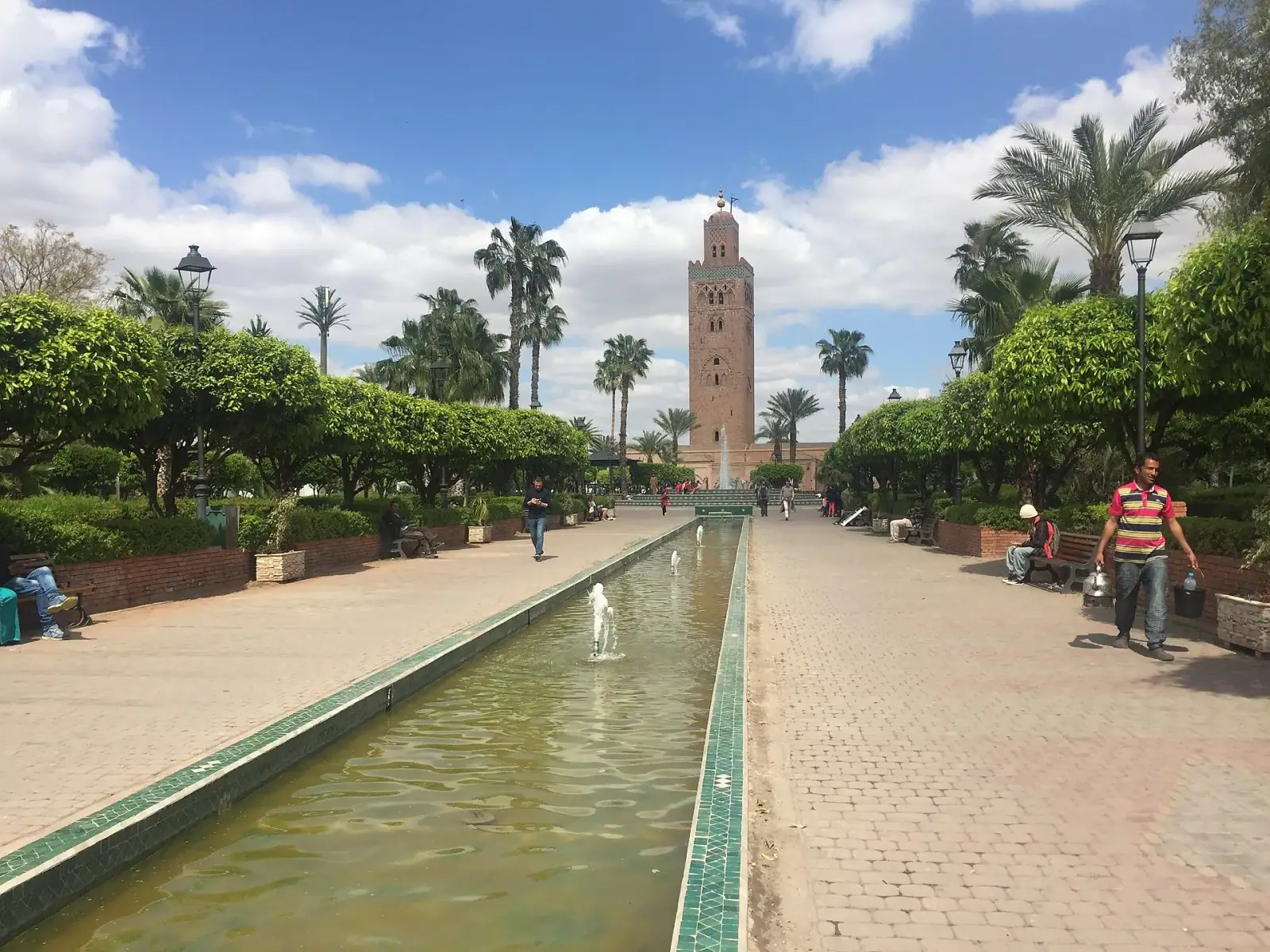
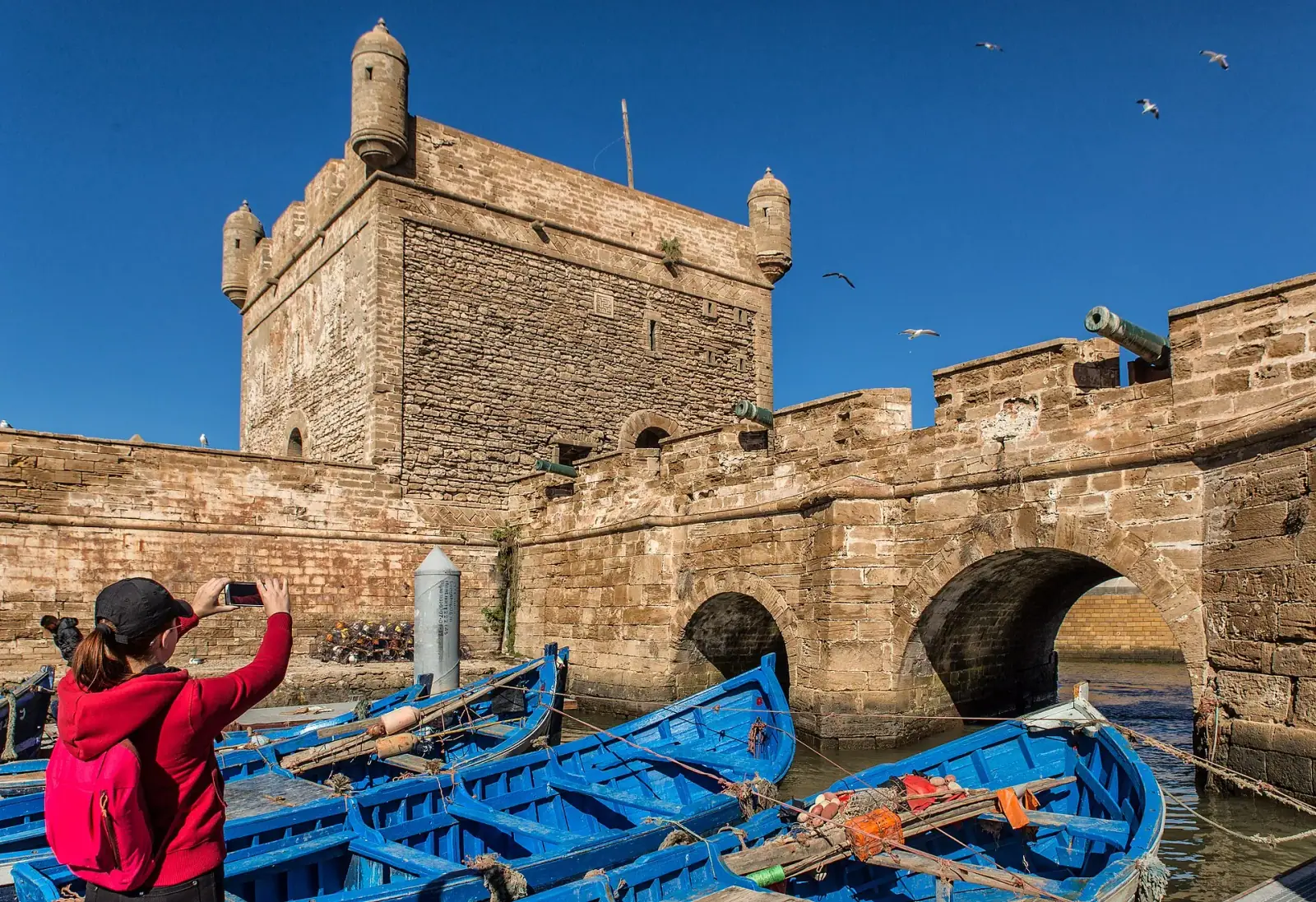
 Marrakech
Where you can go on Saturday morning tells you more about these two than anything you will read about riads. Marrakech sits at 466 metres with the High Atlas standing to its south, so its weekends point upward. Essaouira sits at the end of the road on the Atlantic, in a medina you can cross on foot in fifteen minutes, and its weekends mostly point down the beach. Live in one for a season and that difference starts to matter more than the souks or the sardines.
Weekends out of Marrakech
The list is long enough to last until spring.
- The Ourika valley, about 30 kilometres south. The paved road gives out at Setti Fatma, and the classic walk follows the torrent up to the waterfalls. Go on a Monday if you can take the day, when the weekly souk runs at Tnine-de-l'Ourika.
- Oukaïmeden, a ski area between about 2,600 and 3,200 metres, with six lifts. On paper it gets nine or ten snowy days a month from January to March, though snow has become less reliable, so treat a ski weekend as a pleasant gamble.
- Toubkal, at 4,167 metres the highest peak in Morocco. Its road-end village, Imlil, is the gateway to a two-day climb with a night at the Neltner refuge at 3,207 metres. Foreign climbers have had to hire a licensed guide since 2019, so this one needs booking. The 2023 earthquake hit this area hard, and climbers were back within months, but rebuilding in the region is unfinished.
- Essaouira itself, about three hours by CTM or Supratours coach at $9.50 to $12 each way.
Weekends out of Essaouira
The shorter list starts at Diabat, a village about five kilometres south beyond the Oued Ksob, whose dunes and old Jimi Hendrix stories are a pleasant walk rather than a trip. Next comes Sidi Kaouki, 25 kilometres on, an open beach with fairly reliable surf that peaks in winter, strong steady wind for kiters, and a local bus, the No. 2, from Bab Doukkala for less than a dollar. Both are lovely. Both are also more of the same coast and the same wind you were trying to get away from.
The surprise is the airport, about 15 kilometres out. Older advice calls Essaouira hard to reach, but the airport's current list runs to Ryanair flights to London Stansted, Madrid and Marseille and Transavia to Paris Orly, with seasonal Barcelona and Seville on Vueling. Frequencies are thin and they change, but a Friday flight to Europe is sometimes possible from a town of 83,000 with no railway. For many residents, the real weekend away is that flight or the coach back to Marrakech.
Summer and January
From June to September the argument flips, because a Marrakech weekend stops being a choice and becomes an escape. Marrakech averages 38°C in July. Essaouira averages 22°C, which is why people head there. The catch is that June to August is the windiest stretch, which is what the kiters came for and what wears on everyone else. If you can, avoid arriving during the last week of June without a reservation, when the four-day Gnaoua festival brings crowds put at about 450,000 over its run.
In January, the positions flip again. Essaouira holds 18°C by day and 11°C at night, damp, with almost no one around, while Marrakech has drier days at 19°C, and a ski lift within reach when the snow comes.
Which base we would take
Money will not decide it. On our estimate you are looking at around $1,500 a month in Marrakech against around $1,300 in Essaouira, and you will likely spend that $200 on coaches and taxis one way or the other. Essaouira's main coworking space, Noqta, also closes on Sundays.
For a stay of three months or more between October and May, live in Marrakech, in Gueliz, and treat Essaouira as your best weekend. Reverse the arrangement for high summer only. Before committing to the coast for longer, take that coach for a long weekend in June, spend an hour on the beach in the wind with a laptop bag, and see how much you still like the idea.
 United States
 United Kingdom
 Germany
 Canada
 Australia
 India