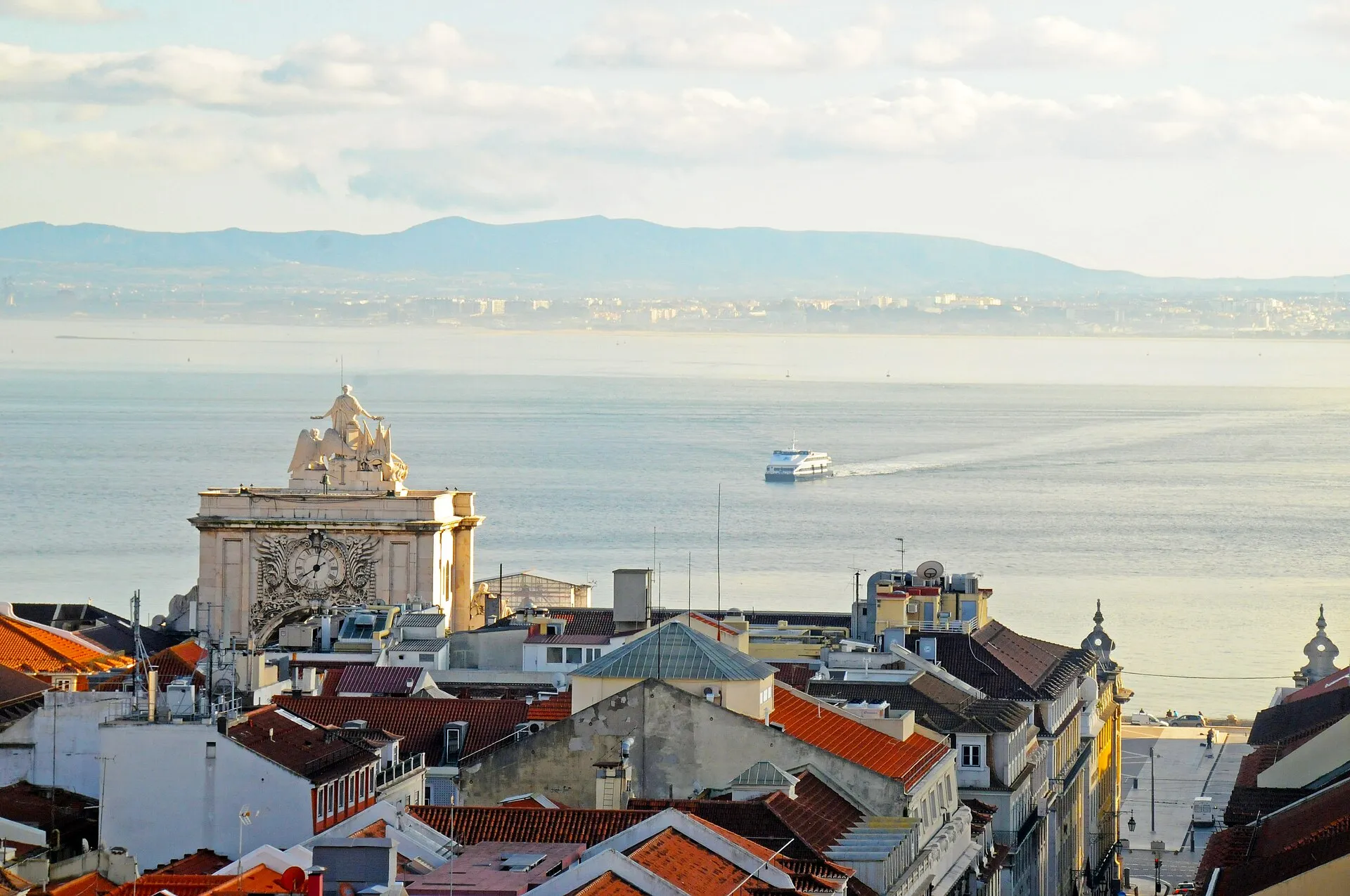
 Lisbon
Look at a map of the Atlantic before you look at anything else. Funchal is about 1,000 kilometres from Lisbon, a flight of around an hour and a half, and only some 520 kilometres from the coast of Morocco. It is the same country on the same clock, with the same remote-work visa threshold of $4,240 a month. Almost everything that separates these two cities comes from where they sit.
What a small, tall island does to your year
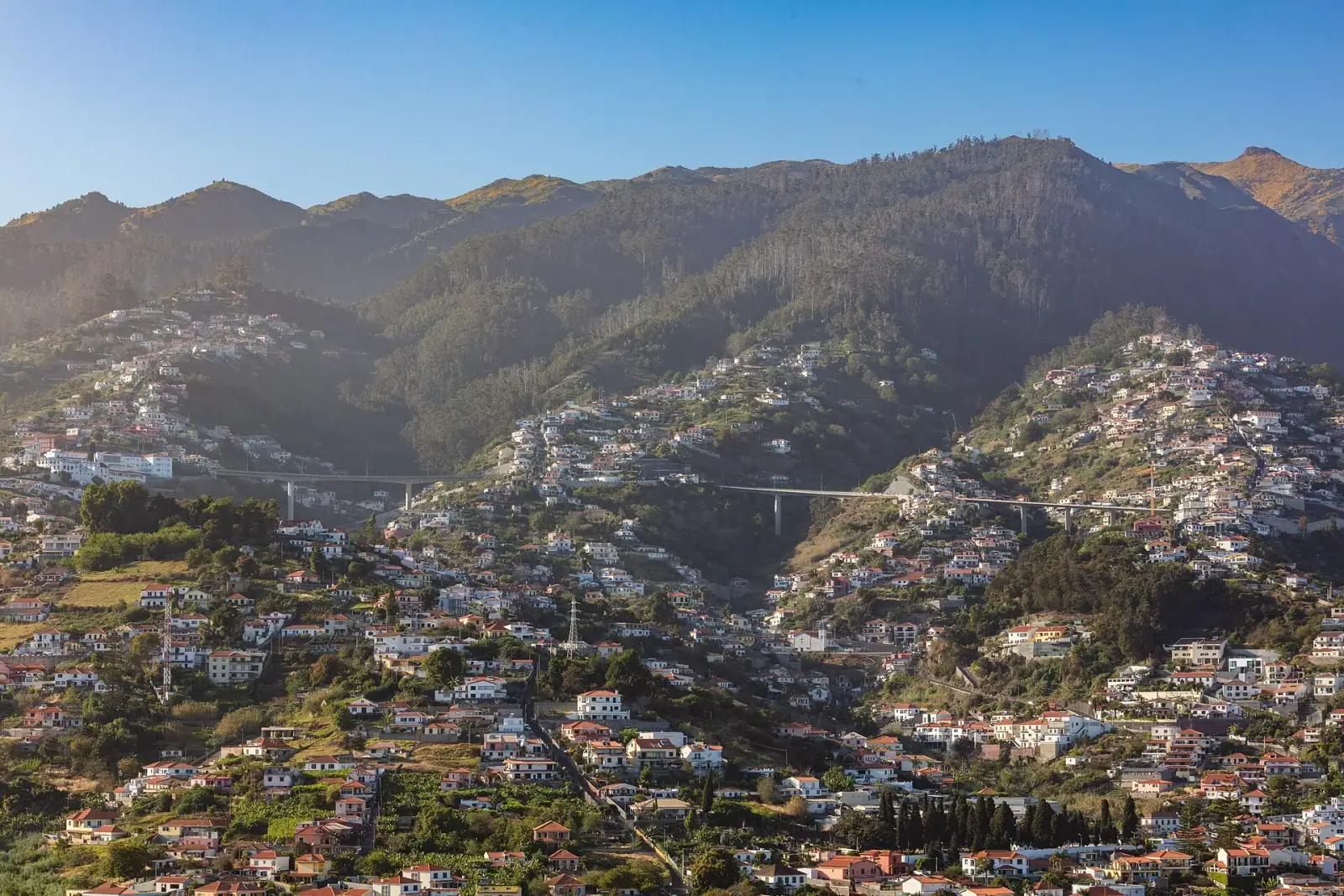
Madeira's main island is 57 kilometres long and at most 22 wide, and it climbs to 1,862 metres at Pico Ruivo. Funchal fills a natural amphitheatre on the south side, with streets rising from the harbour towards 1,200 metres. So the height of your flat is a real decision: the cheaper hillside parts of São Martinho have the views and need a bus or a scooter.
The mountains also do the island's weather. Funchal gets about 574 millimetres of rain a year, less than Lisbon's 793, while the high interior can get 2,800. The wet northern slopes hold the laurel forest on UNESCO's list, and more than 2,000 kilometres of levadas, the old irrigation channels, carry that water around the island with paths beside them. You could finish a morning of calls and be walking one by mid-afternoon.
The famous eternal spring needs a correction, though. Lisbon gets more sun, about 2,875 hours a year against Funchal's 2,314, and in August there is nothing between them: a high of 28°C on the mainland and 27°C on the island. Funchal's advantage is winter warmth. In January it reaches 20°C, with lows of 14°C and a sea at 18°C, while Lisbon manages 15°C with nights of 9°C.
The runway
Madeira's airport sits about 13 kilometres from Funchal, on a coast so steep that landfill was not an option. Part of the runway stands on 180 columns, each about 70 metres tall, with the sea beneath. Pilots need extra training to land there, and wind limits close it often enough to plan around. On 9 June 2026, 22 flights were cancelled in one day, with gusts of 94 km/h. On 1 July, 37 were delayed and five cancelled. Those were summer days, so do not assume this is a winter problem.
Diverted planes commonly end up in Lisbon, which says a lot about the relationship. Lisbon is the island's busiest route, and for most trips beyond Madeira it is your likely connection. Living in Lisbon, by contrast, you take the Red Line metro to an airport inside the city and fly direct to much of Europe. For someone with a client in Frankfurt every month, that settles it.
What the distance is worth in dollars
We put a remote worker's month at around $3,500 in Lisbon and $2,400 in Funchal. Most of that $1,100 is the premium for a central, furnished, short-lease flat in a much bigger market, since Lisbon's metropolitan area holds about 3.35 million people and all of Madeira about 250,000. Local tenants pay about $890 for a one-bedroom in Lisbon and $690 in Funchal, and everything else costs them the same.
Fewer people also means fewer choices. Furnished flats in central Funchal are in short supply, the coworking scene is a handful of spaces, and when you want a change of scene, there is Porto Santo: 43 kilometres away, a 15-minute flight, nine kilometres of sand. After that, the island has run out, and you are back at the airport.
Which way we lean
For a year-round base, we would choose Lisbon, because a career tends to need airports more than it needs January sunshine. But we would also spend a winter month in Funchal, and that is cheap to test, with no new visa and no change of time zone. Go in January, walk a levada on the first weekend, and book your flight home with a spare day in hand. Sooner or later the wind will hand you an unplanned night in Lisbon.
 United States
 United Kingdom
 Germany
 Canada
 Australia
 India