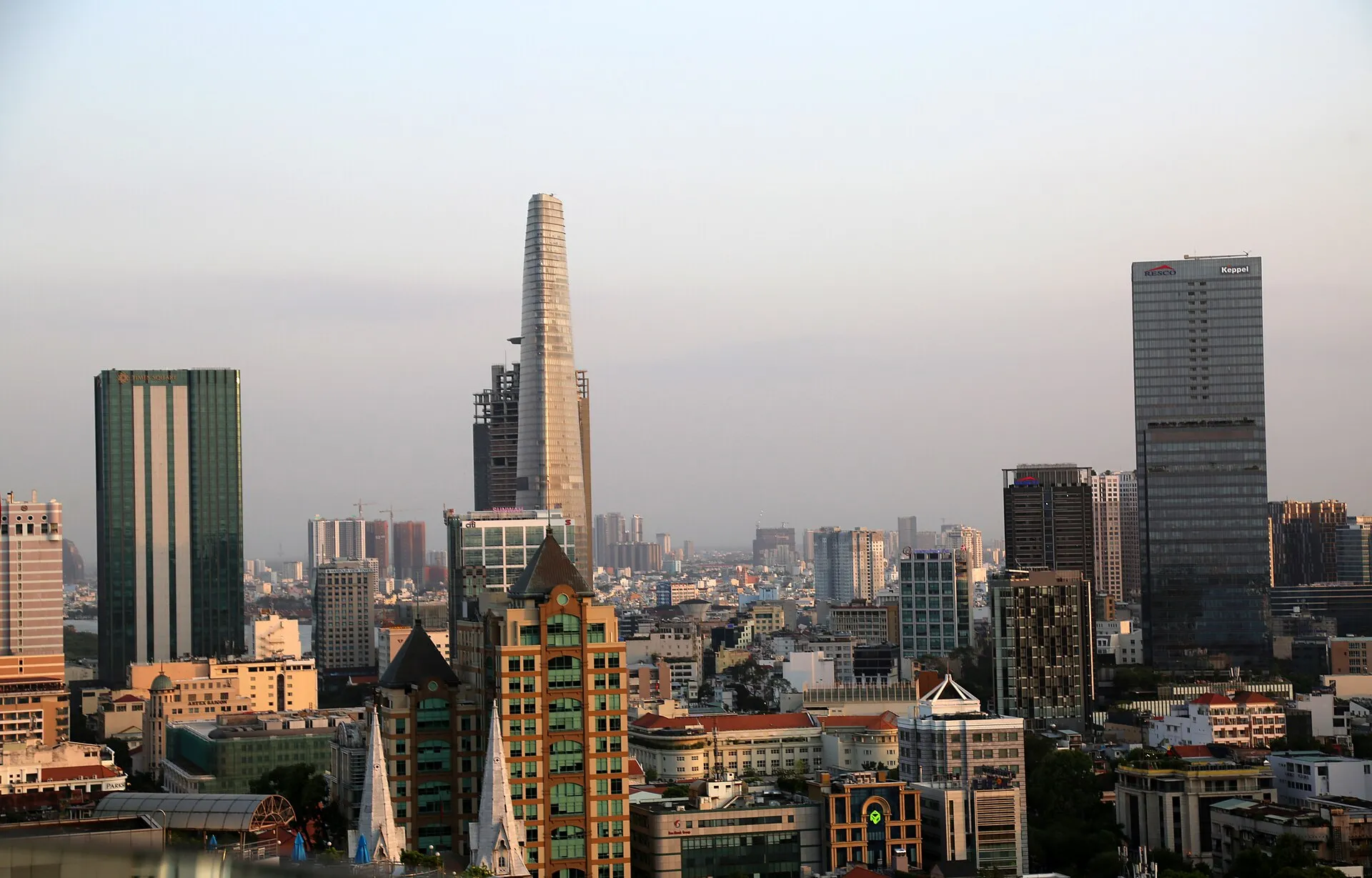

 Ho Chi Minh City
Take two people with the same laptop and the same plan to spend a year in Vietnam, one with a Dutch passport and one with an American. The Dutch traveller can walk in for 45 days without a visa, under a scheme that runs until 14 August 2028. The American cannot. Both, in the end, want the same thing: the e-visa open to every nationality, valid for up to 90 days, costing $25 for a single entry or $50 for multiple entries. Forty-five days is too short to unpack in, so assume the 90-day visa for both, and treat this as what it is, a clock. Your choice of city depends largely on how that clock runs out.
Day 85
From Ho Chi Minh City, the end of your visa is an easy problem. Mộc Bài, one of Vietnam's busiest land crossings, is about 70 kilometres up Highway 22, on the main road to Phnom Penh. You could also fly from Tan Son Nhat to much of Asia, and a second airport at Long Thanh, about 40 kilometres east, is due to begin commercial flights in December 2026.
From Da Nang, the land option is a real journey. The crossing at Lao Bao is in Quảng Trị, up National Route 9 and over into the Annamite Range toward Savannakhet. It takes e-visas, but nobody would call it a quick errand. Luckily the airport is close to town and better connected than its size suggests, with flights to Bangkok, Singapore and Kuala Lumpur, and a remarkable number to Seoul. Budget for a plane ticket every three months and the difference disappears, and we would not let it decide things on its own.
The city on your paperwork
Any guide you are reading from before mid-2025 is describing cities that no longer exist in that form. On 1 July 2025, Vietnam merged its 63 provinces and cities into 34 and abolished the district level. Ho Chi Minh City absorbed Bình Dương and Bà Rịa-Vũng Tàu and now counts about 14 million people, including a beach at Vũng Tàu that lies 95 kilometres from the old centre. Da Nang took in Quảng Nam, reaching nearly 3.9 million, so Hoi An's old town now sits inside it.
That matters for you more than it seems. Listings still say District 1 or Thao Dien, while your lease and any official form may use a new ward name, so have both written down. You will also want them right for your temporary residence declaration. Since April 2026, these have gone through a single Ministry of Public Security portal, filed by your host, and fines were raised at the end of 2025. Hotels do it routinely. A private landlord may not know about it, so ask before you pay the deposit, in either city.
What 90 days feels like
The clock also changes what these two cities ask of you. Ninety days in Ho Chi Minh City can be spent in almost any season, as the place barely varies, with highs from 30°C to 35°C and the rain peaking in September at about 375 millimetres. You could base yourself in leafy District 3 or in Thao Dien's riverside cafés, and Metro Line 1, open since December 2024, runs 19.7 kilometres out from Ben Thanh, for about $12 a month. The price is bad air, and a sea that is now technically in the city but still a long way off.
Ninety days in Da Nang can go very right or very wrong, depending on the dates. Arrive in January and you get highs of 25°C to 28°C, the long sand of Mỹ Khê, and Son Tra's forest on your way home. Stay into June and it is 35°C. Arrive in October and you meet about 726 millimetres of rain in a single month, with typhoon season running through December. A visa that makes you leave every three months suits this place rather well, since it pushes you out before the weather does.
For money, the gap is modest. On our estimate you will need about $1,700 a month in the south and about $1,400 on the coast.
We would spend a year like this. Base yourself in Ho Chi Minh City from about August to January, while Da Nang is drowning, leaving the country when the visa says you must. Then spend February to April in Da Nang, on the dry end of its year, and fly out from there. And pay the extra $25 for the multiple-entry visa from the start, because the one trip you did not plan for is the one that would otherwise end it.
 United States
 United Kingdom
 Germany
 Canada
 Australia
 India