 Goa
Take one ordinary Wednesday in January, with a call to London booked for 4 p.m. and a report due by evening. Both places run on India Standard Time, and both are dry and warm that month. By nightfall you will know which of them can hold a job, and we think it is Goa, by some distance.
7 a.m.
In Goa you could wake in Assagao or Siolim, among the old villas of a territory the Portuguese ruled from 1510 until 1961. Breakfast is likely to involve pão, the soft bread they left behind. Then you need the scooter, because these villages are spread out and no useful bus links them.
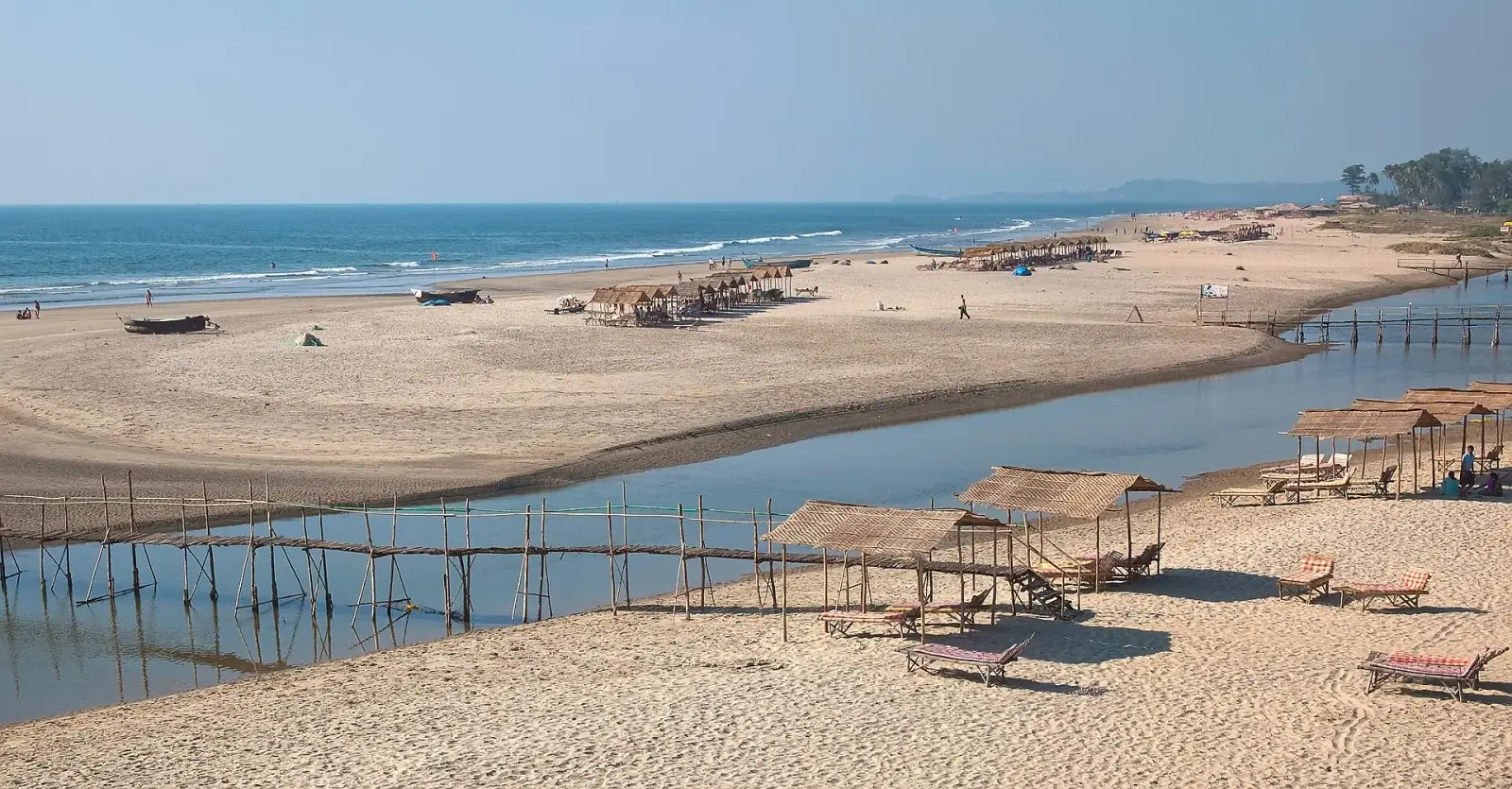
In Gokarna you wake in a bamboo hut on Kudle Beach, and the day begins on foot. Town is about 20 minutes over the headland, and at Pai Restaurant a dosa and a filter coffee will get you going before the heat builds. On the main beach close to the temple streets, pilgrims come to bathe.
10 a.m.
NomadGao in Anjuna has fibre and backup power, The Coworking Space runs several North Goa sites, and Barefoot in Parra is an air-conditioned café with fibre of its own. You choose a desk and forget about it.
Gokarna offers Namaste Cafe on Om Beach and Prema on Kudle Beach Road, both pleasant, both with wifi that is shared and slow. It drops when the shack fills up or the power flickers. A report written offline and sent later will survive that. Anything that lives in a browser tab will not.
1 p.m.
Lunch in Goa is fish curry and rice, the local staple. On a Wednesday you could ride to the flea market in Anjuna, the village the hippie trail reached in the late 1960s, and be back at your desk by three.
Gokarna gives you a cheap thali in the lanes around the Mahabaleshwar temple, and here the place stops being a beach and shows you what it really is. Legend says Ravana was tricked into setting down Shiva's Atmalinga on this spot, and that his struggle to pull it free left it shaped like a cow's ear, which is what the town's name means. Dress modestly and leave the beer for Om Beach. Town is a working pilgrimage site, and it can draw some 20,000 people at Shiva Ratri.
4 p.m.
The call. It is 10:30 a.m. in London, and everything else today has been preference. In Assagao you open the laptop and join. On Kudle you carry a second SIM and a power bank, you know which guesthouse has a generator, and you warn your client that you may vanish. Do that twice a week for a month and see how much the beach is still worth. Further along, on Half Moon, the huts have had no electricity at all.
6 p.m.
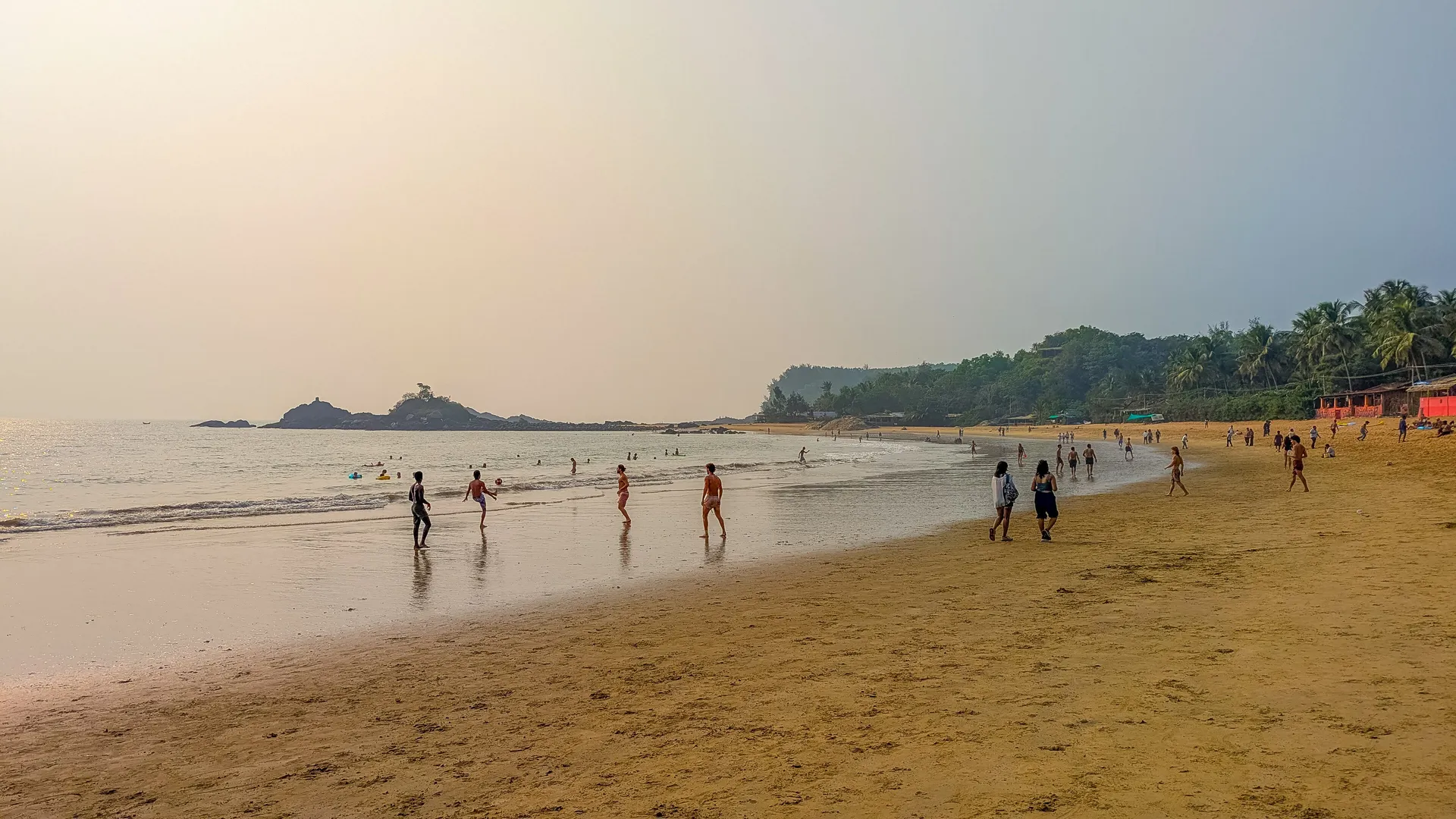
Now Gokarna takes the day back. Kudle faces west, so the sun goes down straight in front of you, and from Om a hill trail leads to Half Moon. Goa's sunset is good too, from the walls of Chapora Fort above Vagator, and then there is dinner in Assagao and a club if you want one. Gokarna has neither club nor anything like that choice of restaurants, and we suspect that is why you went.
The month
Our estimate of a remote worker's month is $1,400 in Goa and $500 in Gokarna, and that $900 gap is the real temptation. One lost client would eat it for a long time. Living there also leaves you further from a doctor: Gokarna's healthcare is basic, and serious cases get sent on to Kumta, Manipal, Mangalore or Goa itself.
Neither place works from June to September, when each gets over a metre of rain in July alone and many beach businesses shut. The Konkan Railway slows down for the monsoon as well, from mid-June to 20 October.
The rest of the year the two fit together neatly. Gokarna Road station is about 95 kilometres down the line from Madgaon and some 10 kilometres from town. So rent in Assagao, file the report on Thursday, and take a train south on Friday with the laptop left behind.
 United States
 United Kingdom
 Germany
 Canada
 Australia