
 Da Nang
In the central chamber of the Quan Thang house, at 77 Tran Phu Street in Hoi An, one wooden column carries red lines marking how high past floods came: 1964, 1999, 2007, 2009. In late October 2025 the Thu Bon River went past the oldest of them, at about 3.5 metres against 3.4. The old town became a lake, boats replaced traffic, and the water near the Japanese Bridge stood an estimated two metres deep. Families carried everything they owned upstairs.
We start there because nothing else separates these two. Our estimate for each is the same $1,400 a month, the road between them is about 30 kilometres, and Hoi An has formally been a ward of Da Nang since the city absorbed Quang Nam in July 2025. They share an airport and a monsoon. Water is the difference, because each of them relates to it in its own way.
A town on a river
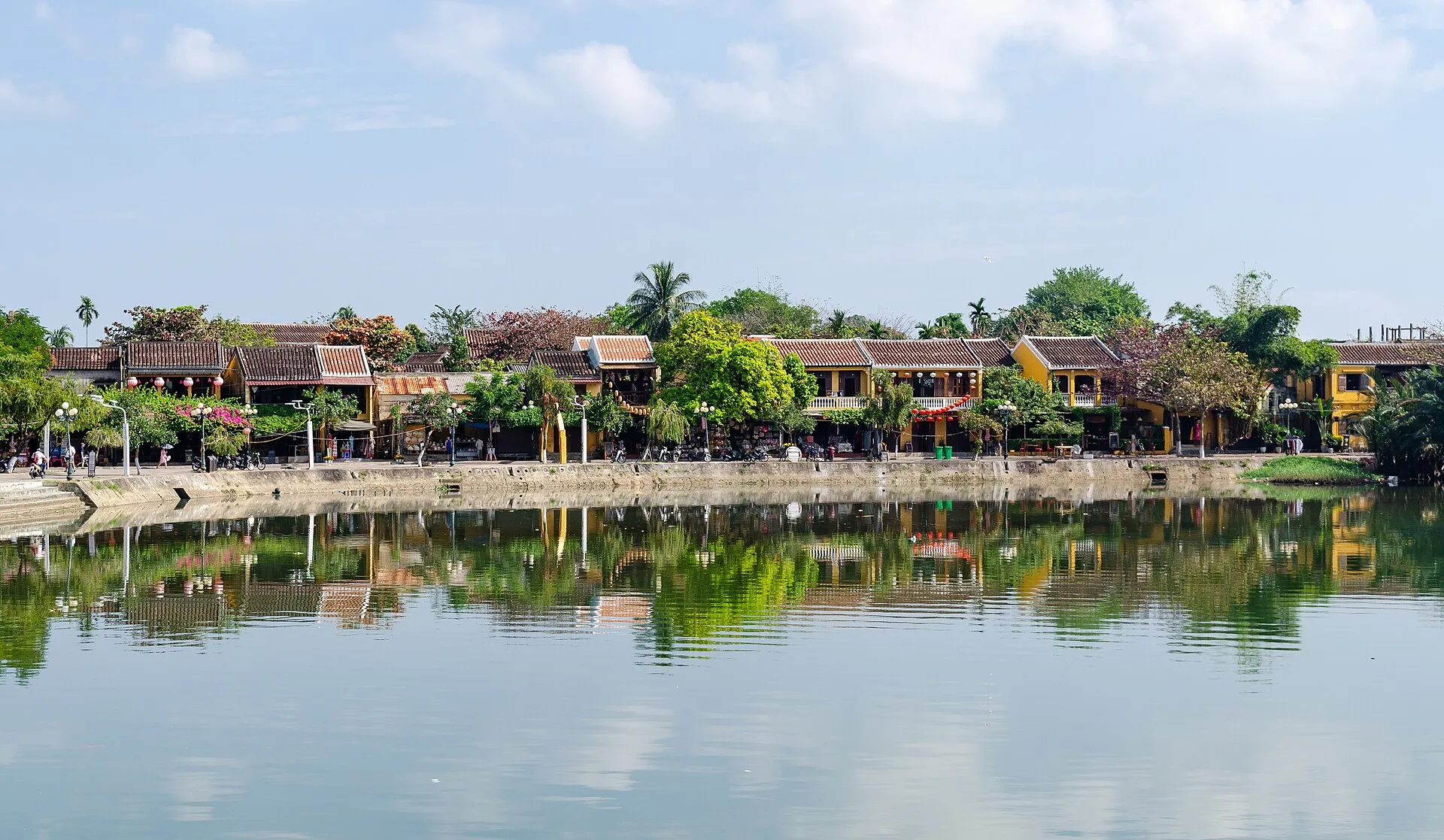
Hoi An grew rich as a river port. Japanese merchants built that famous little bridge in the early 1600s, Chinese traders stayed, and the town spent two centuries among the busiest posts in Southeast Asia. When trade drifted to Da Nang in the 19th century, the shophouses were left in place, and UNESCO listed them in 1999.
Living here means taking that river's mood seriously. From February to August, you could cycle out past rice paddies to Hub Hoi An, halfway to An Bang Beach, spend $155 a month on a desk among the fields, and be in the sea by late afternoon. It is the best version of this region. In the autumn the same low ground takes the whole basin's runoff. Treat a ground-floor flat near the old town as a place you will have to leave at short notice.
A city on a bay
Da Nang is built around a different water: the Han River through its centre, and My Khe Beach running along the seafront, where the An Thuong streets behind the sand hold dozens of cafés used to laptops. Life at the shore is practical. The airport is 3 kilometres from downtown, the fire-breathing Dragon Bridge puts on its show at 9 on weekend nights, and if something breaks, there is a hospital or a big shop nearby. It is less beautiful than Hoi An by a long way, and we would still rather be here in October.
It gets the same rain, mind you, more than 600 millimetres in that one month, with typhoon risk peaking in October and November. Storms bring power cuts on this side too, so keep a data SIM ready. What you get is a bigger, better-supplied place to wait out a bad week, with a lot of coworking spaces to choose from. Some, like the beachfront ones, run around the clock.
The calendar that follows
This pair does not really need a winner, because 30 kilometres is nothing, and the seasons split the year neatly. Spend September to January in Da Nang, in a building with a lift and a generator if you can find one. Move down to Hoi An or An Bang in February, when the rains have ended, and stay until the summer heat, which reaches around 35°C in June in both.
Before you pay a deposit in Hoi An, ask to see how high the water came in 2025. Your landlord will remember.
 United States
 United Kingdom
 Germany
 Canada
 Australia
 India