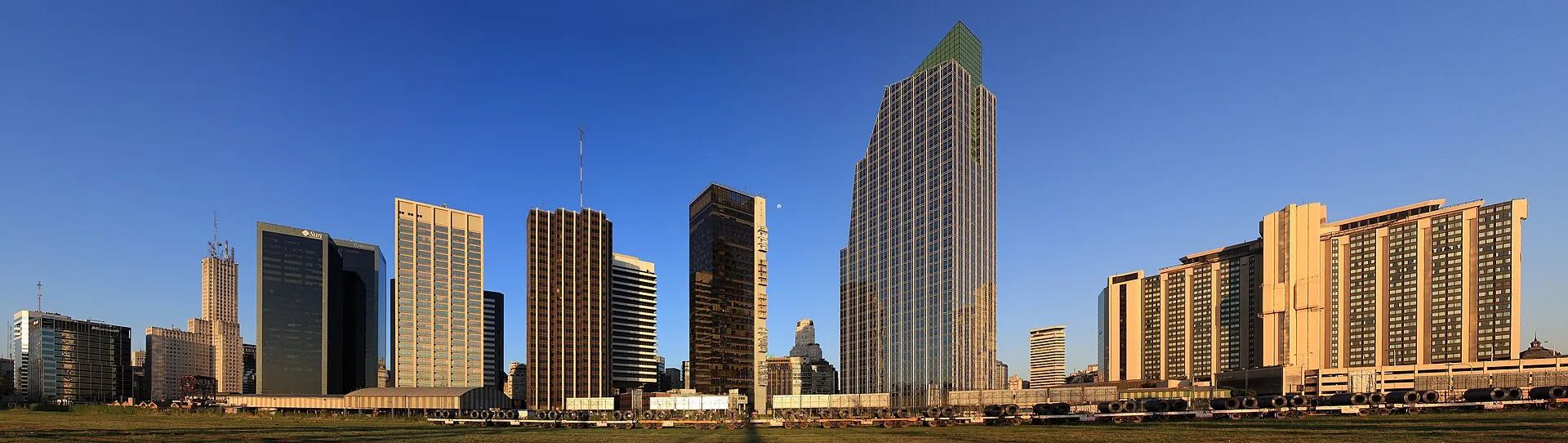
 Buenos Aires
Both cities keep the same clock, UTC-3, and both have a La Maquinita coworking space with the same reliable fibre. So we can run the same Wednesday in each and see where they part company. It happens sooner than you would think.
8:30
In Buenos Aires, say you have a flat in Palermo and a desk downtown. You tap your SUBE card and go down to Line D, one of six stations under Santa Fe and Cabildo, where a train comes every three or four minutes. The Subte has been doing this since 1913 and carries more than half a million people a day, and you will be pressed against quite a few of them. The metro area holds over 16 million people, and at this hour they all seem to have somewhere to be.
In Córdoba, there is no subway and you probably do not want one. It is a city of 1.5 million, but if you live in Nueva Córdoba or Güemes you can walk to a desk in a few minutes. The commute is over before Line D reaches Plaza Italia.
13:00
This is where Córdoba starts asking you to adapt. Many independent shops in the centre shut for the afternoon, roughly from one or two o'clock until five, so your errand at the hardware store has to wait until evening. The rule of thumb in the interior is simple: do your chores before lunch or after five. Malls and big supermarkets keep going. Coming from a place that runs all day, you will lose a week or two to this and then find you like the quiet streets, or that you have started napping.
Palermo does not make you adapt to anything. You could eat at the counter of a parrilla, walk around the block and have the whole city still working around you. Convenient, yes. It also means your afternoon never quite slows down.
17:00
Argentina stops for merienda, the snack that gets people from lunch to a very late supper: mate or coffee, and something sweet with dulce de leche. In Buenos Aires, the classic way to do it is in a café like El Gato Negro on Corrientes, with medialunas, a double espresso in a little jug and a glass of sparkling water. After that, you could walk the rose garden in the Bosques de Palermo as the light goes.
In Córdoba, five o'clock is when the city wakes up again. The National University has been here since 1613, longer than the country has, and it has over 100,000 students. At this hour they spill out across Nueva Córdoba, past the UNESCO-listed Jesuit Block, towards the green of Parque Sarmiento. A city this young keeps its social life cheap, loud and easy to join, as long as you can do it in Spanish. Almost nobody will switch to English for you, which is the biggest single difference between these cities and, if you are trying to learn, the best thing about this one.
22:00
Now for dinner. In both cities ten o'clock is a perfectly normal time to sit down, and you will have the wider choice in Buenos Aires by a long way. But the Subte stops at about 23:00, as it has since 1994, so you will go home by colectivo, which runs all night, or by Uber. Keep your phone in your pocket until you are in the car. The British government lists Palermo and San Telmo among the places where thieves snatch phones from people's hands.
In Córdoba, the walk home is part of the evening, though phone theft exists here too, and Nueva Córdoba's bars are noisy enough to matter if you rent above one. You may have a fernet and cola on the way. The province has been called the world capital of the drink, and it is an acquired taste that you will acquire.
Next morning
Our estimates put the month at about $1,600 in the capital and $1,300 here, a gap that buys a modest upgrade, though no change of life. So let Spanish decide. Start in Palermo, where bad Spanish is forgiven, and keep going until you can argue with a landlord. Then go the 700 kilometres northwest. By the third day you will have stopped looking for an open shop at three in the afternoon, and that is a sign you should stay.
 United States
 United Kingdom
 Germany
 Canada
 Australia
 India