
 Antalya
Go to Izmir. For someone living in Turkey for a year, working online, and hoping to end up with some actual life around them, it beats Antalya, and it does so even though Antalya has the better beach and the easier first week. The rest of this page is the case against that advice, which is strong, and which you should read before you act on it.
What the verdict rests on
Izmir is a working city of about 3.5 million that needs nothing from you. Its evenings happen on the Kordon, some 3,200 metres of seafront promenade running through Alsancak, with bars and cafés in the older streets behind. Its mornings can begin with boyoz, a pastry with Sephardic roots, and its Saturdays in the Kemeraltı bazaar, on land that was once the inner harbour. It has voted against the national government for decades and is known for it, and that shows in how the place feels.
It also moves well. The 27 kilometre M1 metro, the 136 kilometre İZBAN commuter line, three tram systems and 24 ferries all take one card, and any number of rides inside 120 minutes count as a single fare. People ride the boats to Karşıyaka for the pleasure of it. İZBAN goes straight to the airport, and on down to Selçuk once an hour, so Ephesus is a day out by train. Our estimate is about $1,700 a month, against about $1,800 in Antalya.
Against it: the ground
On 30 October 2020, a magnitude 7.0 earthquake struck off Samos, about 70 kilometres from Izmir. Samos itself saw only minor damage. In Izmir, 117 people died, nearly all of them in collapsed apartment blocks. The city sits on soft sediment in a basin, which amplified the shaking two and a half to three times, and in Bayraklı and Karşıyaka the loose ground was especially bad. The ferry neighbourhood you may be picturing is one of those places.
That is a serious fact, and the first thing to weigh here. You do have some control, though. Rent on firmer ground away from the bay, ask what year the building was finished, and leave the older blocks to someone else.
Against it: the water
This is the argument that nearly changes our mind. After a run of dry years, Izmir began cutting water overnight, from 11pm to 5am, in August 2025. The cuts lasted until February 2026. Tahtalı, the main reservoir, stood at 0.14 percent on New Year's Day. Then the rains came, it was over half full by April, and the crisis looks far less urgent than it did. Nobody sensible thinks it has been solved. The mayor himself says the city must find new sources, and wells are now being sunk hundreds of metres deep.
Ask any landlord whether the building has its own tank and pump. For a night owl with an online job, a dry tap at 11pm is a real part of the deal.
Against it: the sea and the language
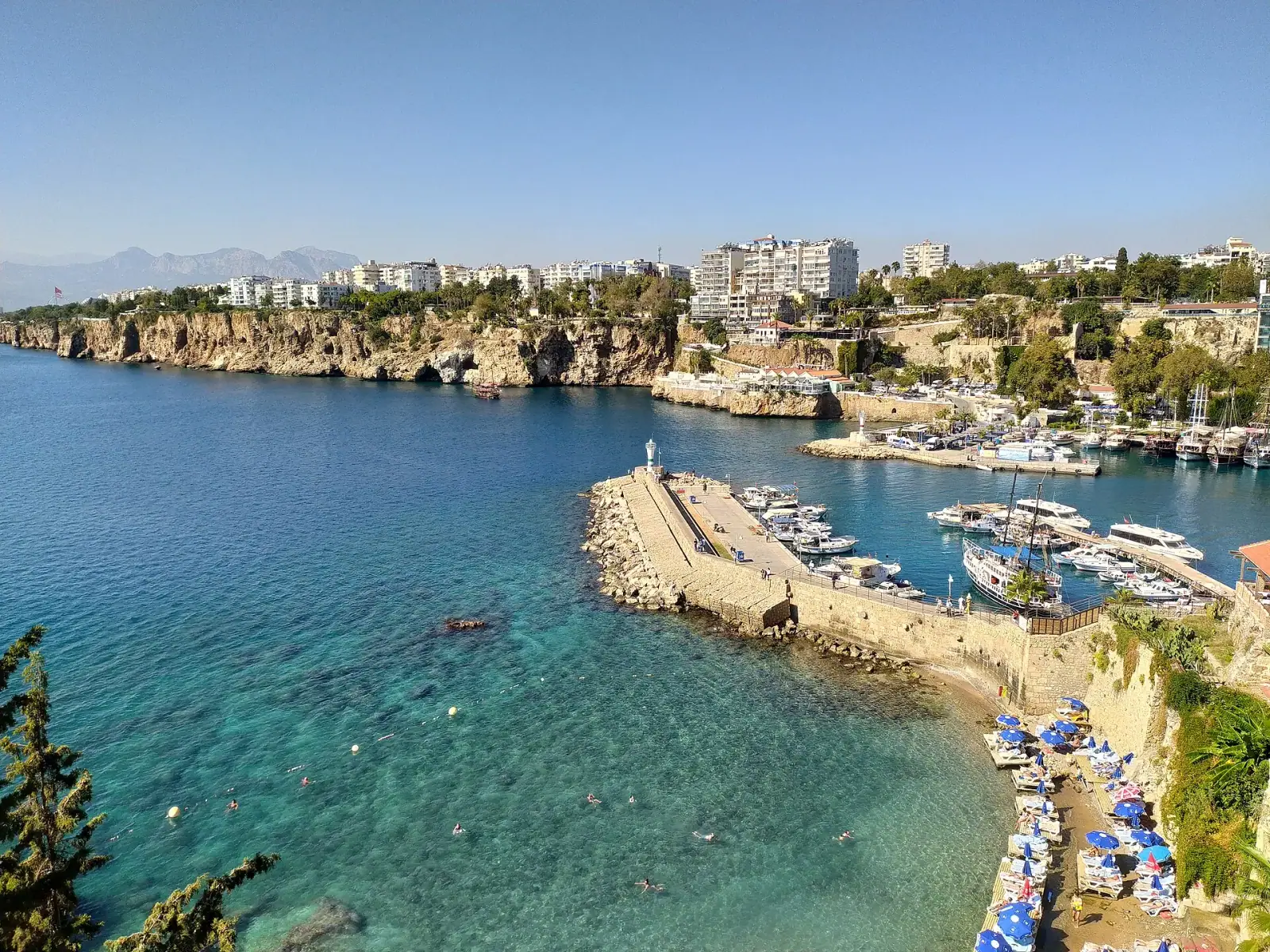
The bay took the city's wastewater for decades and people stopped swimming in it. A treatment system has run since 2002 and marine life has come back, but this is still a sea you sit beside rather than get into. For a swim you travel towards Çeşme. In Antalya you can walk down from a flat in Konyaaltı to 7 kilometres of pebble beach with the Taurus Mountains behind it, and Kaleiçi's old harbour is a short ride away. That is a daily pleasure that Izmir simply cannot match.
Antalya also knows how to deal with you. About 120,000 foreigners live there, so agents and doctors have seen your problems before, and Izmir will ask you to learn Turkish much sooner. The trade-off is that Antalya's life leans on a tourist season bringing tens of millions through its airport, 39 million in 2025 against Izmir's 12.7 million, and you will always be standing somewhat inside that machine.
Why it survives
Three of those objections have answers you can act on: choose your building, ask about the tank, and take a bus to swim. The last has none, and for anyone who will never learn the language or who needs that beach every morning, Antalya is the right call. Istanbul vs Antalya tests it against a bigger rival.
Everyone else should book a month in Alsancak in late April, when both the reservoirs and the promenade are at their best, and start a Turkish course the week they land.
 United States
 United Kingdom
 Germany
 Canada
 Australia
 India