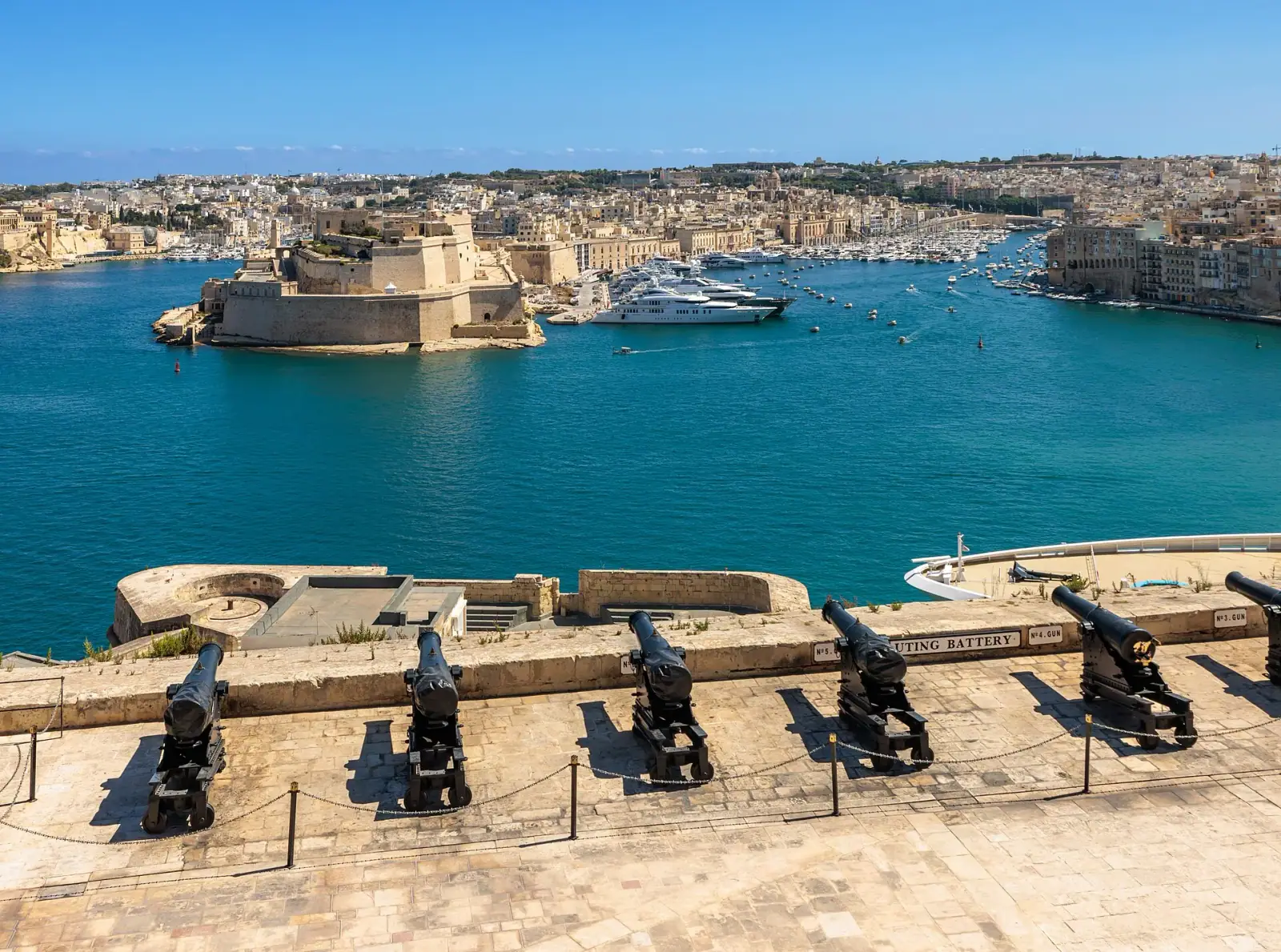
 Valletta
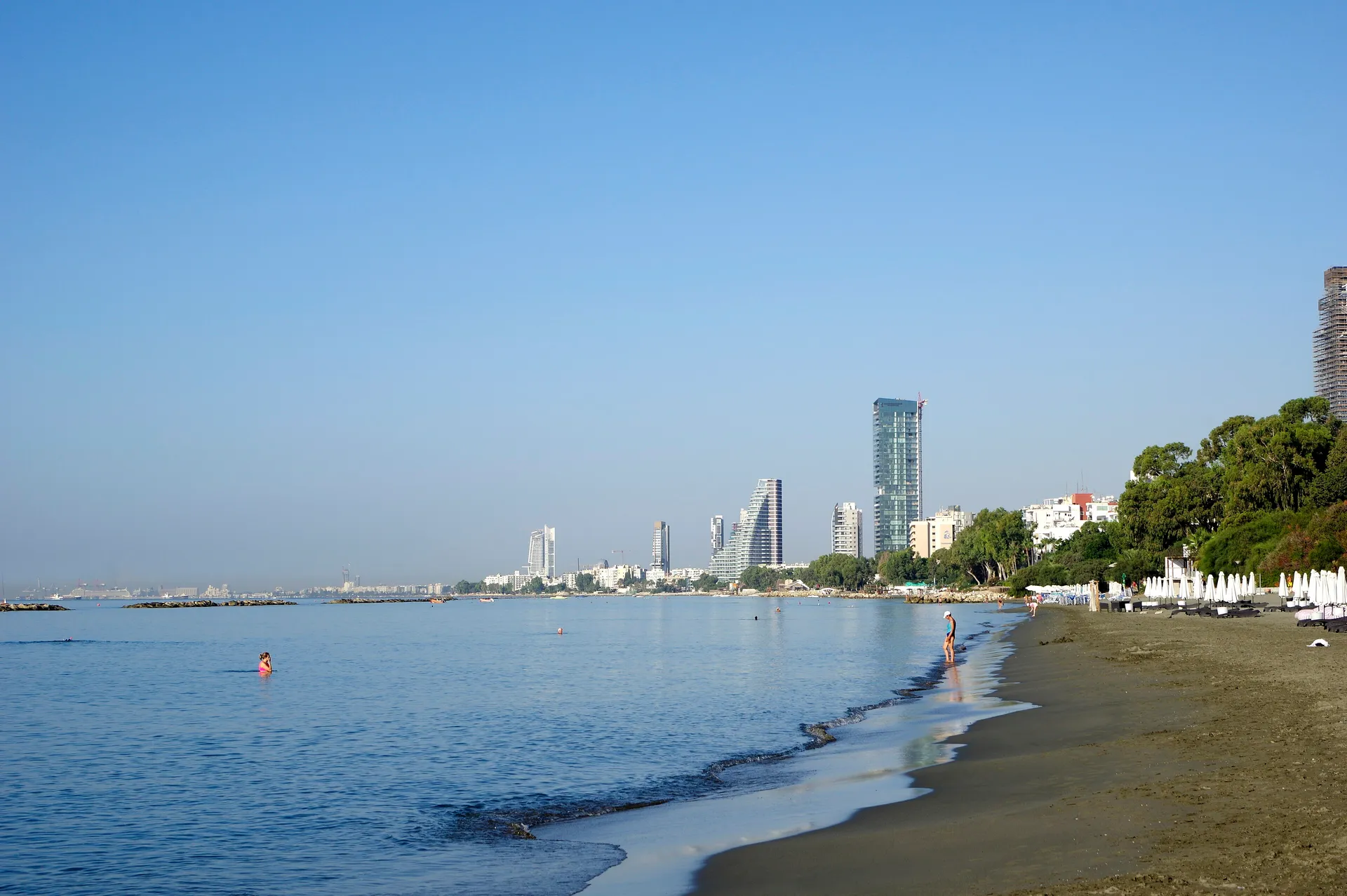
 Limassol
Your 90 Schengen days are nearly gone, your passport is not European, and you want to stay somewhere warm in the EU where English gets you through the day. Here is the answer first. Limassol gets you out of that count today, and Valletta does not. Over a longer horizon the answer reverses, and the reasons come down to one line on a map of Europe.
Which side of the Schengen line
Malta is inside Schengen. A day in Valletta burns a day of your 90, exactly as a day in Paris would. Cyprus is in the EU but outside Schengen, runs its own visas under its own rules, and has been used by nomads for precisely this purpose: a place to wait out the clock.
The trouble starts once you want a permit. A Maltese residence permit is your entry pass for short trips around Schengen, and it will get you into Cyprus as well. A Cypriot permit is valid in Cyprus only, so every trip to Italy may need its own visa. The income bars look the same, at about $4,030 a month, but read them closely on our nomad visa list. Malta counts about $48,350 a year gross, and Cyprus wants that monthly figure net of tax, which is a noticeably higher bar. For someone who wants a real European base with travel, Malta is the better document at a lower price.
This gap also has an expiry date. The Commission has given Cyprus a positive assessment on its readiness, a final Council decision is anticipated by December 2026, and the most hopeful scenarios have Cyprus joining in 2027. Once it joins, a day in Limassol counts like any other. Treat it as a stopgap and do not build a three-year plan around it.
EU citizens can ignore all of that and go straight to the next section.
Where you would actually be living
Valletta is 0.61 square kilometres with 5,226 residents, a grid on a peninsula that you enter through Renzo Piano's City Gate. You can walk it all before lunch and take the Barrakka Lift 58 metres down to the Grand Harbour. Few remote workers live there, though. Most choose Sliema or nearby, then ride the short ferry across Marsamxett harbour with the fortifications in front of them, which is among the best commutes in Europe. The X4 bus reaches the airport in about 20 minutes. You will not need a car.
Limassol asks you to drive. It has about 108,000 people strung along the coast, with more than 70 tall buildings added since 2013, and it lives on shipping, business and an international crowd in which Russian is common. The seaside park at Akti Olympion gives you about 7 kilometres to walk or run, ending near the old port and the castle where Richard the Lionheart may have married Berengaria in 1191. There is no airport: Larnaca and Paphos are each about 40 minutes by car, and the shuttle bus drops you in the outer suburbs, where you will need a taxi anyway.
The base next door
The city's western neighbour is RAF Akrotiri, and in March 2026, during the Iran war, the British base came under drone attack, with Greece and France sending forces to help protect the island's airspace. That is a fact about the location, and you should follow the news on it if you move there.
By our estimate a month costs $2,400 in Valletta and $2,800 in Limassol, a gap that widens once you price in a car.
What to do this week
Count your days first. A stopgap of a few months means Limassol, on a month-to-month let in the old town, with no twelve-month lease, because the rules may change under you. A base for several years means Malta: apply for the permit, rent in Sliema, and ride the ferry over to Valletta whenever you want to feel you have made the right decision.
 United States
 United Kingdom
 Germany
 Canada
 Australia
 India